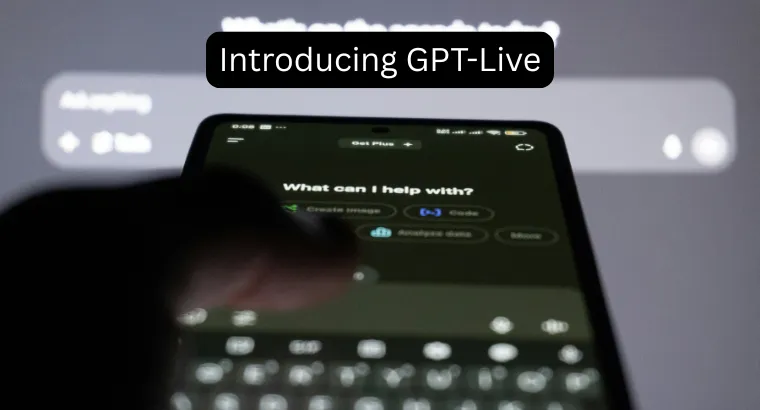
OpenAI’s GPT Live works to make AI voice less machine-generated and more like an actual conversation. Instead of adhering to a speak-halt-reply rhythm, the new voice can listen and speak at the same time. Ahead of that, it can also take pauses, interrupt politely, and answer in a way that suits how people communicate. That makes it useful not just for quick commands but for everyday life. From language practice to back-and-forth deep thinking, it has it all. It is not just about better command but a voice interface that feels adaptable, natural, and easy to use.
How OpenAI’s GPT Live Actually Works
As per OpenAI, GPT Live is set up in a way that it can listen and speak at the same time, instead of a turn-by-turn mechanism. In simple terms, that should make ChatGPT voice better at managing the dynamics of real conversation, including interruptions, pauses, corrections, and sudden topic changes. That matters because most people do not speak clearly. They think aloud, pause mid-sentence, ask follow-up questions randomly, and sometimes just want the assistant to remain quiet for a moment.
GPT Live is created around those real-life instances with more feasible back-and-forth and a voice experience that feels less mechanical. OpenAI also pairs the natural feel with tactical behind-the-scenes reasoning. If a request or a prompt needs deep reasoning, GPT Live can pass the task to a stronger model and get the answer back into the conversation without breaking the flow. That makes it more than a voice mechanism, but a live front end for bigger AI work.
Why GPT Live’s Everyday Use Is the Real Test
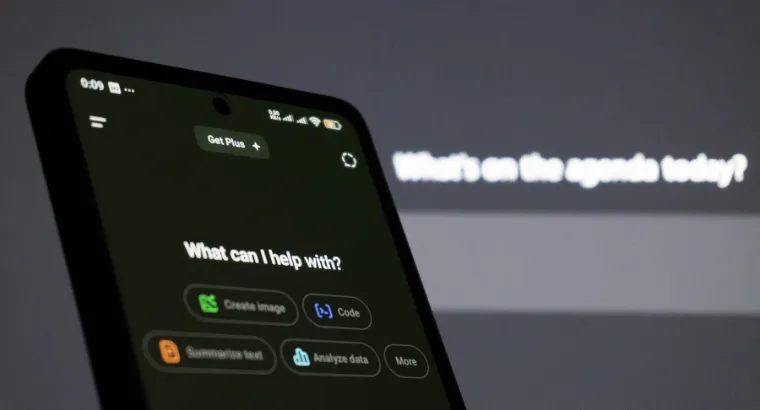
The biggest use case is our daily conversation. It includes things like asking for weather, reminders, translations, help of any sort, or quick advice. It also includes tasks like practicing a language, talking through an idea, or getting help while driving, cooking, or commuting. OpenAI bets that voice becomes key when it feels like a part of your daily life, not a separate feature users consciously turn on. This is also where GPT Live is distinct from earlier voice systems. Older voice modes often felt like back-and-forth response tools, where silence, pauses, or short or background noise could lead to awkward interruptions.
GPT Live is meant to decrease that friction so the assistant can be with the user’s train of thought instead of persistently restarting the exchange. Change is important for adoption. If voice AI feels easy in real-time situations, more people will use it outside experiments. In other words, it is not about just making a voice better, but also to make it a part of daily conversations.
Read More: GPT Version Timeline: How AI Got Smarter Over the YearsGet GPT Live
How GPT Live Compares To Grok Voice & ElevenLabs
OpenAI is not the sole provider. The voice AI mechanism has competitors. And that makes GPT Live more of a category battle. Grok Voice provides users with another consumer-facing AI voice option, while Eleven Labs has already established itself as a major provider in AI audio voice generation and speech tools. But the comparison is not about who sounds most human. It is about what the product is deemed to become. Eleven Labs is strong as a voice and audio platform used for dubbing, cloning, and creation.
Grok Voice is similar to a conversational assistant experience. OpenAI’s pitch with GPT Live is distinct, which is to make a voice assistant an integrated part of a daily life routine, with real conversation. It is not simply another voice model in the AI niche. It is OpenAI’s attempt to make artificial intelligence conversation feel simple, adaptable, and useful. This is the kind of assistant that fits into the daily flow of life rather than sitting outside it.
The significance of GPT Live lies in the fact, the way people interact with artificial intelligence every day. If OpenAI happens to make it right, voice will stop being an extra feature and become one of the most natural ways to use AI. That will push the competition with Grok Voice and Eleven Labs into a new niche, where the real question is not whether artificial intelligence voice assistants speak, but whether it can actually match the pace with how people actually talk.