Samsung Electronics is on an AI high and has yielded substantial profit. Some reports claim that it surpassed NVIDIA’s quarterly operating profit. The South Korean organization expects to achieve 89.4 trillion won in operating profit for the April-June quarter. It is a 19-fold jump from the previous year, with sales projected at 171 trillion won. The rise shows how artificial intelligence demand is revamping the tech supply chain, compensating the conglomerates that provide the chips and architecture behind the growth.
The magnitude of the increase shows how swiftly the artificial intelligence demand revamps the global semiconductor market, turning memory chips into a massive beneficiary. What started as a race for artificial intelligence processors is now integrating into the root of supply chains.
How Did Samsung Reach Here?
Samsung’s soar is being supplemented by the same force lifting the broad semiconductor market. This driving factor is the global demand for AI memory chips. Data centers and artificial intelligence architecture need massive high-bandwidth memory and other high-end chips. The supply also couldn’t keep up with the demand, which helped drive costs. That has given Samsung, one of the substantial chipmakers , a big boost at a point when buyers do not suffice supply.
The organization’s latest outcome suggests it procured 89.4 trillion won in operating profit and around 171 trillion won in total sales during the quarter. Those numbers indicate one of the strongest performances by Samsung and mark its third straight record quarter for operating profit. For stakeholders, the message is clear. The AI boom does not succumb to chip makers and model designers, but also memory suppliers that are deeply rooted within the stack.
Samsung’s achievement arises from a blend of unprecedented demand and stern supply. As artificial intelligence companies build data centers and increase their compute capacity, they need more memory chips to supplement the systems adhering to the workloads. Supply restrictions have helped Samsung to increase memory chip prices, bolster margins, and lift profitability across its semiconductor niche.
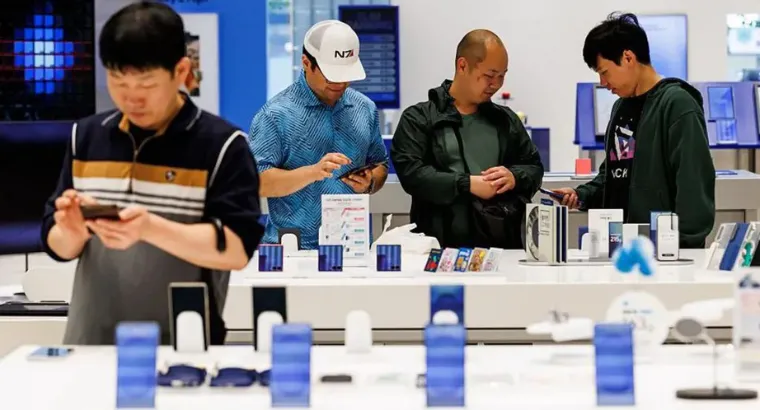
The company has also benefited through its broad role in the chip ecosystem. Samsung manufactures chips for consumers including NVIDIA and Google, while also supporting its own products. That magnitude gives it exposure to both customer electronics and proprietary artificial intelligence demand. This makes it one of the massive achievers from the current chip cycle.
What Does the Number Mean?
The projected 89.4 trillion won operating profit is not just the organization’s cornerstone. It is an indication of where the artificial intelligence economy is generating outputs. Samsung’s sales prediction of 171 trillion won shows that the earnings jump is being driven by actual volume as well as better pricing. It is not a one-spike curve, but two, of a massive demand cycle related to artificial intelligence architectural spending. Samsung’s outcome also accelerates the competitive picture. Some reports say that the organization has crossed NVIDIA on quarterly operating profitSamsung.
This is appalling, as NVIDIA has been one of the perennial winners of the artificial intelligence boom. If Samsung outpaces NVIDIA in a specific quarter, it shows the most important bottleneck may not be the evident AI chip, but the memory and architecture mechanisms supporting it. The company’s growth is not just about sales, but also a supply mechanism that has lifted prices across the market. That has given Samsung a distinct pricing advantage at a time when demand exceeds supply.
Samsung’s newest profit rise reminds the niche that the artificial intelligence boom is widening beyond headline-grabbing processors. The biggest achievements are going to the organizations that deal with the difficult bottlenecks, especially memory users and supply. If artificial intelligence data centers remain the core funding, Samsung’s outcome demonstrates that the organizations controlling the chips within those systems may become the biggest winners. AI is the new driving mechanism of this ecosystem. Memory chips will be the fuel that keeps it going. Samsung’s record quarter indicates that the most powerful organizations in the artificial intelligence era could also be the ones supplying the hardware beneath them.