Claude Code, China and the artificial intelligence blame game are central to rising US-China rift. It is turning artificial intelligence tools into safeguarded national assets. China’s Ministry of Industry and Information Technology has issued an advisory regarding Anthropic’s Claude Code. They state that it contains a back-door security threat, while Anthropic accused Alibaba of trying to extort its artificial intelligence abilities. This initiates a back-and-forth political rift over safety, accessibility and dominance. It is to be noted that instilling security fears under the rift affects the niche as a whole and creates imbalances.
Why AI Access Is Becoming a National Asset
AI was developed to be perceived as a mechanism for development, with frontier AI models available to researchers, developers, consumers, enterprises, across several markets. That era seems to be diminishing. Both the US and China proceed to add constraints to their high-end models, deciding who can use them, where they can be used, and under what circumstances.
China’s newest mandate came from the Ministry of Industry and Information Technology, stating that its cybersecurity threat platform found that Claude code contains a backdoor vulnerability that induces a substantial threat. The platform also mentioned that users should remove or upgrade from affected versions, which it identified as 2.1.91 and 2.1.196.
That directive was important because Claude Code is not just a chatbot. It is a sovereign coding tool meant to assist users to create, review, and assess software work. As per China’s cybersecurity platform, the tool could send sensitive and private information, such as a user’s location and identity, to a remote server without permission.
Anthropic’s Accusation & Alibaba’s Internal Ban on Claude
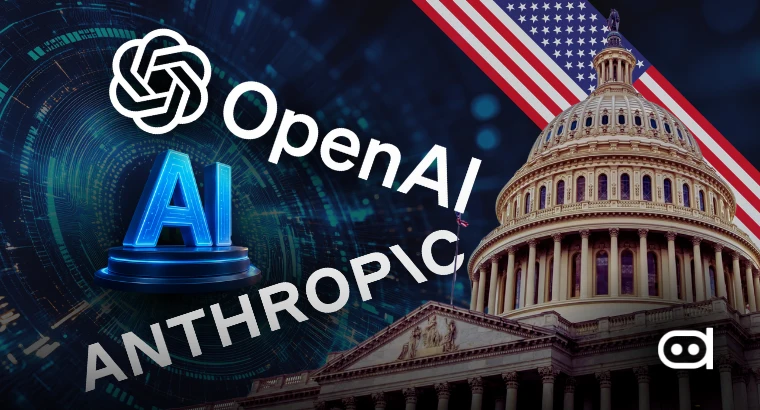
The disagreement did not begin with China’s warning. Previously, Anthropic accused Alibaba of attempting to extract its capabilities, which are not available in China. Alibaba did not answer these accusations, but the claim immediately raised the stakes by turning a product complaint into a strategic nuance. That accusation now gives the Claude code a clear symmetry. On one side, Anthropic is accusing a Chinese giant of extracting its model capabilities.
On the other hand, Chinese authorities are accusing Claude of containing security risks. The back-and-forth allegations result in a blame game, in which each side portrays the other as a threat to security, data, content, and national interests. This tension also steps into the corporate realm. Alibaba has asked the employees to stop using Anthropic tools from July 10. The shift suggests the problem is no longer limited to developers. It is now a key element in shaping internal policy at one of China’s biggest tech giants.
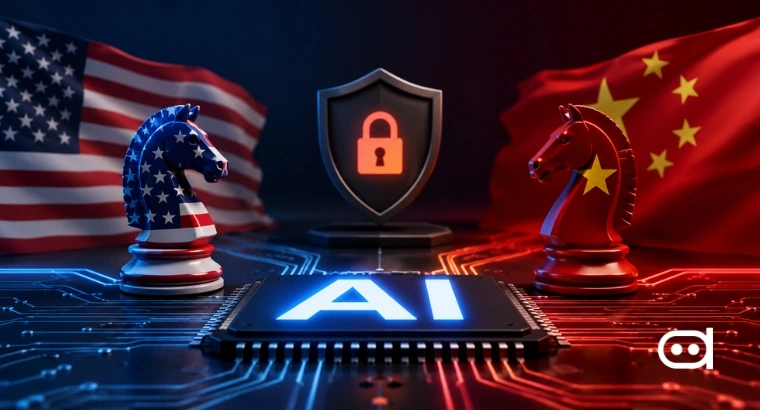
The new aspect is that AI adoption is now being fenced. For years, frontier AI models were effectively available across regions through cloud tools, API’s and integrated platforms. Now both the nations are vigorously controlling their advanced AI systems. This also portrays that access is the new strategic leverage.
The shift is pretty evident. Beijing is considering curbs on global access to China’s top AI models, adding yet another constraint to a market that was globally feasible. If that happens, it would mean the two largest AI powers are not just competitive, but also on who gets to access the models in the first place. That is where the rift becomes more than a technical quarrel. Security concerns are actual, but they are also becoming a medium of control. Each side can frame the other’s mechanisms as risky, unfair, or hostile. And that framing can justify bans, constraints, and oversight.
Claude Code has started a fresh debate in the AI cold war that is being fought on the basis of safety claims and accusations. Anthropic says that Alibaba tried to pull out its capabilities. China says Claude code poses a serious backdoor risk. Meanwhile, both the nations are restricting access to their most advanced models. The outcome is evident. AI is no longer being treated as a medium for development, but as a strategic asset. The question put forward is not whether which model is the best. It is who gets to use it, who gets to access it, and who gets to decide where the boundaries lie.