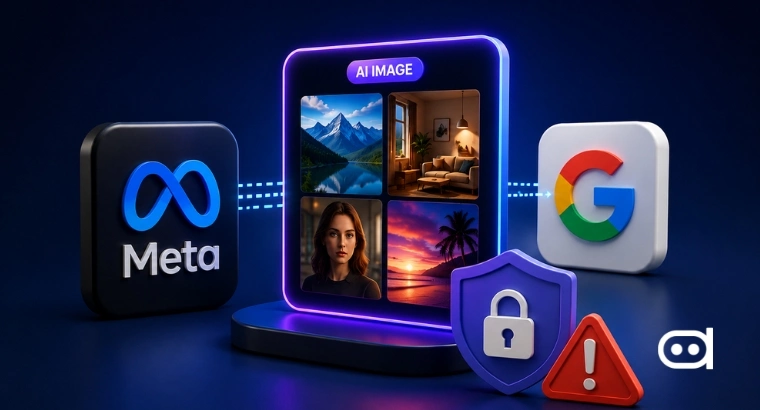
Google recently expanded personalized AI image generation by bringing Gemini’s Nano Banana model to Google Photos in the US, which allows users to transform their own photos using AI powered effects. While the feature showed how AI could create more personalised experiences, it also raised concerns around how personal content is being used by AI systems. Meta has entered the same space with the launch of Muse Image, which is an AI image generation model that uses social content to create customized visuals and is already facing similar privacy concerns.
Meta is aiming to integrate AI driven creativity deeper into its apps with Muse Image and Muse Video. As Muse Image launched, users started raising questions around its ability to use public Instagram photos when someone mentions a public username in a prompt. The backlash reflects the growing scrutiny surrounding personalised AI tools, where concerns over user consent and privacy are being overshadowed by the technology itself.
Meta’s Muse Image & Muse Video Bring Personalized AI Creation to Instagram, WhatsApp
Meta launched Muse Image as the lead AI image generation model under Meta Superintelligence Labs (MSL). The company says the model handles complex prompts and produces top notch images, plus supports interactive creative tweaks. You do not have to restart every time you adjust, Muse Image lets you keep refining the image with follow up prompts. It also combines reference photos, reads sketches and annotations for edits, creates more accurate text within images, and also offers ready-made prompts to speed up the process. A standout feature from Muse Image is its ability to access public Instagram photos when someone’s public username is in the prompt.
Alongside the release of Muse Image, we’re sharing an early preview of Muse Video. It offers competitive performance in prompt adherence, visual fidelity, and temporal consistency.
— AI at Meta (@AIatMeta) July 7, 2026
We’re investing in areas with current performance gaps, such as audio-video synchronization and… https://t.co/kftRoTgq6W pic.twitter.com/iIFeFGLzoE
Meta rolled out Muse Image on Instagram and WhatsApp. Facebook and Messenger get it soon. Meta also gave a sneak peek at Muse Video, made for reliable prompt matching, consistent visuals across frames, and native audio generation. It is still in preview, but it is clear Meta plans to spread these creative AI tools all over its ecosystem.
Why is Meta Muse Image Raising Privacy Concerns Among Social Media Users?
The feature allowing Muse Image to reference public Instagram photos has become the focus of criticism. TechCrunch reported about concerns surrounding users not realizing their public photos can be used in AI generated images just because someone referenced their public username in a prompt. It is about consent, transparency, and whether publicly available content should automatically be available for AI generated experiences.
"We stole all your pictures and videos, and are trying to profit off of them"
— NewProfessor93 (@NProfessor93) July 8, 2026
Meta says users who want more control over how their public photos are used can manage these settings through Instagram. According to Instagram’s Help Centre, users can take the following steps:
- Open Instagram Settings.
- Go to Sharing and reuse.
- Turn off the setting that allows others to reuse your public photos for AI generated images.
- Users looking for better privacy can also switch their Instagram account from Public to Private, which will prevent future posts from being publicly accessible for these AI experiences.
- Instagram also notes that these settings apply to future use of public photos.
The ongoing discussion around Muse Image really shows people want AI companies to be upfront about how personal and public content will be used for new features before anything launches.
Also read: Meta Business Agent Promises Personalization, But Can it Actually Capture Brand Voice?
Meta’s Muse Image is a sign that personalized AI image generation is a big priority for major tech firms, but it also shows that privacy concerns stay difficult to overcome. Meta’s latest announcement has shifted attention from new capabilities to questions around consent and transparency, similar to Google’s efforts to bring AI closer to users’ personal photos. As Muse Image and Muse Video start becoming available on all Meta’s platforms, user trust will hinge not just on how well the AI works, but on how clearly Meta explains and protects personal and public content.