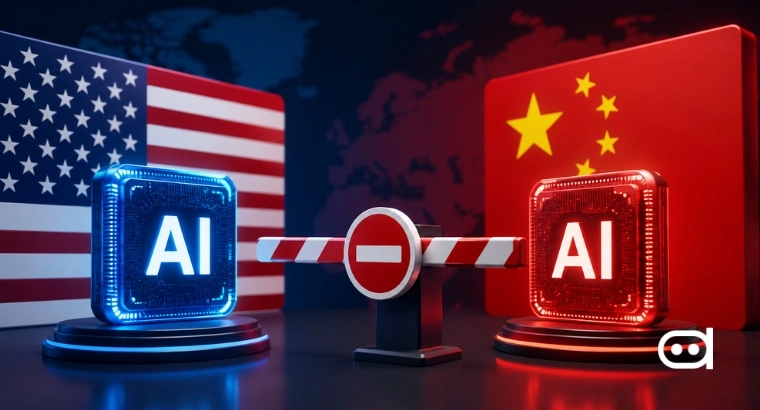
People used to see artificial intelligence as one of the world’s truly borderless technologies. Traditional industries needed factories and physical infrastructure but you could train AI models in one country and launch them anywhere. Developers, researchers, start ups, and businesses from all around the globe had the same access to powerful systems.
Now that frontier AI models are getting advanced, governments are starting to treat them as more than just commercial products. They see these systems as strategic assets with big implications for national security, economic power, military upgrades, and technology leadership. The United States already put restrictions on advanced AI chips and restricted access to certain models. China is also reportedly considering limiting overseas access to its indigenous AI models. These developments signal the emergence of a new geopolitical reality where access to the world’s most advanced AI systems is determined by state policy instead of market demand.
Why both the US and China are Restricting their Most Advanced AI Models
The United States recognized artificial intelligence as a strategic technology with national security implications. Washington rolled out export controls on advanced chips, blocked the most sensitive tech from leaving the country, and tightened rules. Several leading American AI companies have also implemented geographic restrictions on the availability of their most advanced models like Mythos and Fable, reflecting both regulatory obligations and security concerns.
China went down a similar path. After the US limited advanced chip imports, Beijing focused on building a domestic AI industry backed by local companies and government investment. Chinese firms developed their own large language models, and started to cut their reliance on foreign tech. Now, with news that China wants to curb overseas access to its AI, it is clear they see these models not as international tech but as a strategic, national resource.
Both countries are tightening their grip on who can get their most powerful AI models, which reflects a shared belief that frontier AI is too strategically valuable to remain completely open. What was once seen as a commercial technology is now becoming a major part of geopolitical competition.
Exclusive: Chinese authorities have held meetings with top tech firms over the past month about potentially restricting overseas access to China's most advanced AI models, including those yet to be released https://t.co/MeDry8fgJc
— Reuters (@Reuters) July 8, 2026
What does this Mean for the Future of Global AI?
Countries, businesses, and researchers may soon find themselves operating within separate technological spaces, each shaped by different regulations, standards, and geopolitical alliances. Access to frontier AI may depend not only on technical capability or commercial demand but also on country and state relationships and national policy.
This kind of shift changes innovation itself and sharing AI knowledge across borders could get more difficult. If you are in a country without strong local AI capability, you will probably have to align with either the American or Chinese ecosystem to access cutting edge technologies. The AI race would no longer be just about who makes the best technology; it will be about who gets to control where and how that technology is used.
Also read: Taiwan’s AI Chip Export Curbs Could Redefine China’s Technology Ambitions
Another emerging trend is the growing use of security concerns as a geopolitical tool in the AI race. The controversy surrounding Anthropic’s Claude Code reflects this shift. Chinese authorities accused the coding assistant of having hidden “backdoors” or security issues, but Anthropic has denied those accusations. Whether those claims turn out to be true or not, this situation highlights how AI products are slowly becoming subjects of strategic distrust rather than just technical models.
Just like Chinese telecom giant Huawei faced years of scrutiny in the West over national security concerns, American AI companies may now face similar accusations in China. This suggests that the next phase of the US China technology rivalry may not be limited to restricting access to advanced AI models, it could also involve competing over the trustworthiness and security of each other’s AI systems.
The era of universally accessible frontier AI appears to be ending soon. This is a bigger shift than just changing tech policy, it is part of a larger transformation in global politics. Frontier AI is on its way to becoming another domain where access, influence, and leadership, are all shaped by governments.