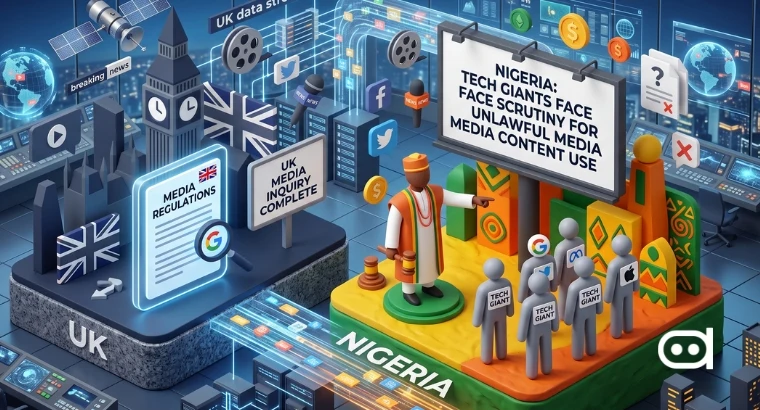
Nigeria began a formal investigation into whether big technology giants and artificial intelligence organizations are unethically benefiting from news content without compensating the publishers. The probe, initiated by the country’s competitive watchdog, reflects accelerating concern that worldwide platforms may unlawfully use journalistic work while decreasing the publishers’ ability to negotiate commercial terms. The inquiry places Nigeria alongside a broad group of countries questioning how artificial intelligence development, digital advertising, and content use reshape the dynamics of news.
Who Is Driving the Investigation?
The investigation is being conducted by the Federal Competition and Consumer Protection Commission (FCCPC), following a mandate from President Bola Tinubu. The shift came after a joint petition was submitted to the presidency by the Nigerian Press Organization (NPO), which consists of journalists, newspaper enterprises, and online publishers. As per FCCPC, the directive raised concerns that big technology giants were adhering to practices that undermine competition and affect local media organizations negatively.
FCCPC spokesperson, Ondaja Ijagwu, said that the commission would assess claims involving unfair dominance, anti-competitive conduct, and illegal use of journalistic content. This content includes news articles for the training and development of generative artificial intelligence models.
At the foundation of the mandate is whether big technology giants, including Meta, Alphabet, X, and other generative AI platforms, unethically benefit from Nigerian news content. This is happening without allowing or allotting fair compensation. The FCCPC said it would assess claims that local media organizations have been devoid of meaningful opportunities to bargain licensing fees or monetary agreements for the use of their work. As advertising revenue has shifted online, publishers demand that digital platforms focus on a disproportionate share of ad-spending-driven news consumption, leaving media houses with similar revenue despite their content acquiring engagement.
These problems are not limited to Nigeria. Similar questions have emerged globally as publishers struggle with how artificial intelligence-powered search and summarization tools use news contentFCCPC. In some cases, publishers were asked to opt out of artificial intelligence-driven features, though niche discussions suggest such moves may still affect, still impact organic traffic, highlighting the limited leverage publishers often have when dealing with bigger platforms.
Why Has the Problem Gained Urgency?
Nigeria’s mandate becomes urgent as generative artificial intelligence tools depend on media houses’ content, including journalism, to train their models. Media houses state that this use of content affects the originality of the context. This also strengthens the position of technology giants that are already dominating advertising. Countries such as Canada and Australia have pushed for features requiring platforms like Meta and Google to reimburse publishers whose stories drive organic traffic and boost their engagement. Nigeria’s moves ask for similar mechanisms, and Africa’s economy, particularly in artificial intelligence systems, embed themselves within social media and content reuse.
Nigeria’s massive and accelerating digital audience adds substance to this problem. As of April, the country had 154.7 million internet subscriptions, according to the National Communication Commission. Platforms such as WhatsApp, Instagram, Facebook, and X are among the most used services in the nation, making digital distribution key to how Nigerians consume news and entertainment.
Federal Competition and Consumer Protection Commission Director Tunji Bello emphasized that the assessment does not assume wrongdoing. Instead, he stated that it is an opportunity to cross-check the facts, hear from the affected parties, and reassess whether any conduct has resulted in anti-competitive results or unethical business practices. The Commission will assess technology companies, publishers, and other investors as part of the process. The regulator has not mentioned which AI companies are under speculation.
Nigeria’s directive emphasizes a rising worldwide reckoning over the power cluster between news publishers and tech giants. This is when artificial intelligence accelerates the use and reimbursement of journalistic content. While the investigation is yet to begin and is in its early stages, it will decide how publishers in Nigeria and potentially across Africa will deal with the artificial intelligence-driven media environment. This will also decide whether they receive fair compensation for the value their work helps create.