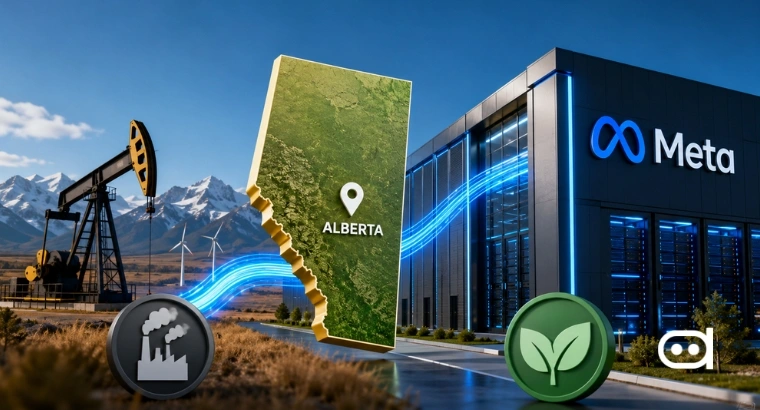
Meta is extending its worldwide artificial intelligence architecture with its first data center in Canada. It is committing 13 billion Canadian dollars to build a one gigawatt facility in Sturgeon County that can range to 1.8 gigawatt. The project marks Meta’s 33rd data center and highlights the organization’s bolstering investment in AI computing capacity. While Alberta’s abundant natural gas, suitable climate, and better investment policies helped secure the project, the declaration has also begun a new debate over whether the rapid expansion of AI architecture is coming at the cost of climate and environmental goals.
Why Did Meta Choose Alberta For Its First Canadian AI Data Center?
Meta’s plan was driven by an amalgamation of monetary and operational advantages. Alberta has spent a huge time promoting this advantage to major technology firms. The area offers substantial natural gas at costs below the U.S. benchmark, providing access to inexpensive electricity for intensive AI workflows. Alberta’s suitable climate also decreases cooling costs for high-end computing architecture, making it an appalling location for data centers.
Provincial officials have chosen Silicon Valley companies as part of a comprehensive strategy to bifurcate Alberta’s income beyond oil and gas. The new facility located in Sturgeon County depicts the first gigawatt-scale AI data center in the region. Alberta’s technology minister said several other projects are underway.
For Meta, the funding also extends its artificial intelligence architecture blueprint, as the organization continues building capacities to power AI models. The Alberta campus could use roughly as much electricity as 800,000 homes, making power architecture one of the major issues. Meta said it will fully fund new electricity generation and grid architecture to help the site. The conglomerate has built an alliance with Pembina Pipeline, whose Greenlit Liquid Central, a natural gas-fired power generation facility, will begin operations in late 2030 under a long-standing alliance with Meta.
Until then, Capital Power will supply 250 megawatts of electricity with its natural gas-fired generation fleet. Meta also stated that it will offset its electricity usage by investing in clean and renewable energy projects. Additionally, the organization also plans to embed a closed-loop liquid cooling system that will use less water. While Meta has promised to renew energy investments, the project will initially depend on Alberta’s existing energy architecture, emphasizing the issue of balancing AI demand with sustainability and environmental protection.

Why Are Environmental Groups Raising Issues?
Despite the feasibility, the project has garnered criticism from environmental groups. Although Canada has promoted its relatively clean electricity grid as a benefit for AI development, Alberta remains an exception. Around 50% of the region’s electricity comes from natural gas, and the release intensity of its grid is nearly five times the national average. Environmental organizations argue that locating large AI data centers in fossil-fuel-dependent provinces increases emissions while placing extra pressure on energy sources.
Greenpeace Canada called for a moratorium on mega data centers until better environmental and human rights protections for artificial intelligence software are launched. The debate depicts a comprehensive challenge within the artificial intelligence niche. The locations that offer the cheapest and most dependable power are not those with the lowest environmental impact. As organizations compete to build AI data centers, federal authorities are increasingly weighing funding against long-term climate commitments. Previously, similar concerns were witnessed in the United States regarding minimal scrutiny to secure power plants to build new AI data centersMeta Chooses Alberta For First AI Data Center.
Meta’s Alberta funding depicts how accessibility to affordable energy decides the outcome in the global AI infrastructure race. The region’s low-cost natural gas, suitable climate, and supportive government policies made it the model destination for the company’s first Canadian data center. However, it also emphasizes the growing tension between artificial intelligence architecture and sustainability. As hyperscale AI facilities grow and become more energy-intensive, questions around renewable resources, emissions, and sustainability are likely to become a crucial part of the technology’s support.