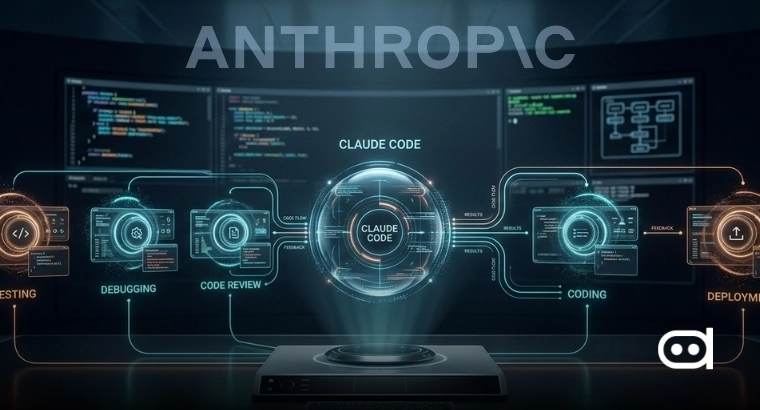
Claude Code introduces a new juncture to shared technical work. Developers can convert an active Claude Code session into a live artifact, a web-based visual page that depicts the development, progress, and output of the work in real time. These artifacts can represent incident investigations, pull request walkthroughs, dashboards, system maps, and release checklists. Instead of aggregating the work after the fact, Claude Code turns the session into a continuously developing web page that coworkers can open, review, and edit the work while it is still in progress.
What Are Claude Code Artifacts?
Artifacts are live web pages that arise from an existing Claude Code session. A session might include debugging an incident, service refactoring, facilitating large volumes of data, and that artifact turns the work into an outcome others can explore. Examples include full request walkthroughs built from surrounding code, dashboards that can be arranged and filtered, and a release checklist that automatically fills in as tasks end. The key differentiation is that artifacts are not static data. They are created from a full-fledged coding session and reflect the actuality of work as it develops.
Claude Code builds artifacts using the information that is already available in the session. The codebase, the connected tools, the conversation, the information, the statistics, and the data are the prerequisites to build an artifact. This allows a single artifact to blend several perspectives into one page from Claude Code. For instance, an incident artifact can include trial and error, failing tests, relevant functions of the code, error rate spikes from a connected monitoring tool, and the context developed during the investigation.
As artifacts are built from the prevailing context, teams do not need to prompt several times or embed the infrastructure. The page stems from the session’s prior materials, keeping the technical evidence and reasoning interconnected.
Read More: What Is Anthropic’s Claude Verification Policy & How to Appeal For Your Banned Account
Why Real-time Updates Affect Collaboration?
As per Claude’s announcement, artifacts update in parallel as the Claude code continues to work. When a new model is published, the page refreshes itself within the same link, and the co-workers see the changes immediately. Each change is stored in the version history, allowing the workers to restore if needed, with an additional gallery that allows browsing and managing all created artifacts.
Internal testing depicts debugging to be a common use case. In these conditions, an engineer begins an investigation, publishes an artifact containing timelines, incomplete commits, and error charts, and shares the link with the team. As the investigation progresses further, the artifact is redeveloped with new findings, allowing everyone to be on the same wavelength without repeated updates or mockups.
Artifacts place themselves as a collaborative tool across various sectors and niches. Legal teams can create license audits from repositories. Privacy reviewers can pinpoint how personal data flows through coding. Security teams can create findings linked directly to specific lines of code. FinOps teams can visualize cloud resources and cost drivers through infrastructure as code. Engineers can produce public relations walkthroughs. Designers can explore UX patterns built from real components. SREs can grow incident pages into postmortems, and managers can track multiple requests. In each of these cases, the artifact serves as a common reference point built from real-time rather than manually assembled summaries.
Artifacts decrease the cognitive gap between findings and communication. Instead of converting technical discovery into slides, summaries, static data, or messages, teams can directly pinpoint to the source of truth. This shift turns documentation into a byproduct of real-time work, rather than a separate nuance that helps teams stay vigilant on solving problems instead of explaining them.
Claude’s Code depicts how technical advancement is captured and shared by turning live sessions into monotonous updating pages, decrease in needs for manual communication, and keeping the teams on a single platform around a single source. With embedded privacy controls for organizations, inbuilt versioning artifacts are created to adopt existing workflows while making difficult work easier to review, understand, and collaborate as it propels further.