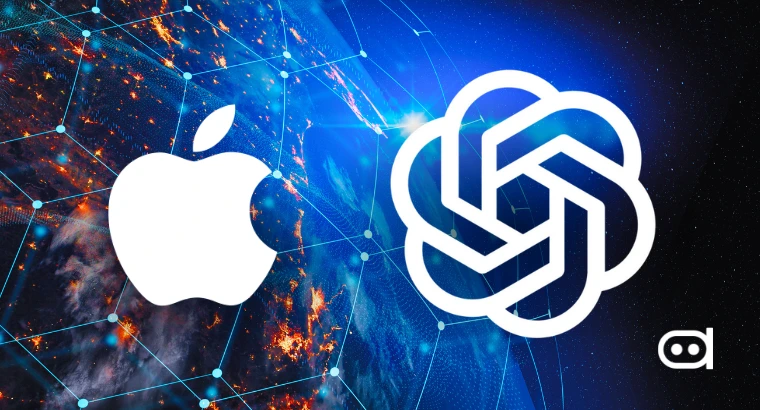
OpenAI is contesting Apple’s lawsuit over former employees, arguing the accusations are inaccurate. OpenAI says Apple’s outside counsel had emailed the wrong recipient, later stating the message was intended for a different person. It was later clarified after OpenAI challenged them.
The dispute comes while the two companies maintain a partnership around ChatGPT integration on Apple devices. This helps the users to access AI systems through Siri and systemwide writing tools. That creates an unusual position, with Apple suing OpenAI while shipping OpenAI technology inside its consumer software.
Why Is OpenAI Challenging Apple’s Allegations?
OpenAI says Apple claims it contacted the company in February but did not receive any response. As per OpenAI, Apple’s outside lawyers had emailed the wrong individual after confusing two Asian surnames. OpenAI also disputes Apple’s claim that its representative spoke with OpenAI’s general counsel, saying the conversation never took place and that Apple later acknowledged the error. The company said that the communication never happened and that Apple accepted the communication error. Emails filed by OpenAI show Apple’s outside counsel, Gabriel Gross, initially contacted OpenAI general counsel Che Chang about former Apple employees allegedly retaining confidential information.
Gross then sent a further email saying he had spoken with Chang. Chang answered that he had never spoken with Gross and questioned why the lawyer claimed otherwise. To this, Gabriel replied he had answered to a wrong email chain. He said the second message was for another former Apple employee named Wang and apologized for the same. Apple’s in-house counsel confirmed that the firm was representing Apple and asked Che Chang to cooperate with it.
OpenAI argues the accusations later raised in Apple’s lawsuit never featured in those exchanges. According to the organization, Apple’s counsel directed that they were working towards solving the issues after which OpenAI said that it heard nothing for five months before the lawsuit was filed.
Also Read: GPT Version Timeline: How AI Got Smarter Over the Years
How Former Apple Employees Became Central to the Case
Apple also accused past employees of retaining or using sensitive company information. One of those employees, Chang Liu, is accused of using Apple’s confidential information after leaving the company. OpenAI argues that Apple employees contacted Liu themselves and asked him to help locate files and information. OpenAI says Apple now describes this as residual access, and argues such access commonly persists when employees leave.
OpenAI also denied accusations involving Tang Tan, another former Apple employee who joined the company. OpenAI says Tan made clear to his team that confidential information belonging to other companies should not be used. According to OpenAI, Tan has spent more than two decades at Apple and was recognised as one of the most innovative leaders there.
OpenAI has also pushed back Apple’s request for a preliminary injunction, saying it does not contain or require Apple’s trade secrets. The company said its focus remains on creating new products and technologies rather than using competitor information.
Where the Apple and OpenAI Partnership Stands
The dispute has surfaced against the backdrop of a continuing partnership between the two companies. Apple announced that ChatGPT would be embedded into iOS, iPadOS and macOS. This would allow users to access ChatGPT capabilities without shifting between separate applications. Siri can call on ChatGPT when it determines the model may produce a better response. Apple users are notified before the questions, documents or photos are sent to ChatGPT, with the result then presented through Siri.
ChatGPT is also present through Apple’s systemwide writing tools, where users can generate content and images while working in documents. Apple says privacy protections are built in, that OpenAI does not store requests, and that users’ IP addresses are obscured. Users can also link their ChatGPT accounts so their existing settings apply.
The integration powered by GPT-4o was placed in a way that Apple users can avail advanced AI capabilities with the company’s operating systems. The alliance was also presented as a joint effort between Apple and OpenAI to make AI more feasible.
OpenAI’s position is that the sequence of events does not support Apple’s claims. With the two companies still working together commercially, the case adds strain to an already complex relationship.