Right now, the artificial intelligence industry is in the middle of one of the biggest investment booms tech has ever seen. All over the globe, companies are investing billions into new data centers, securing advanced chips, and expanding their computing power.
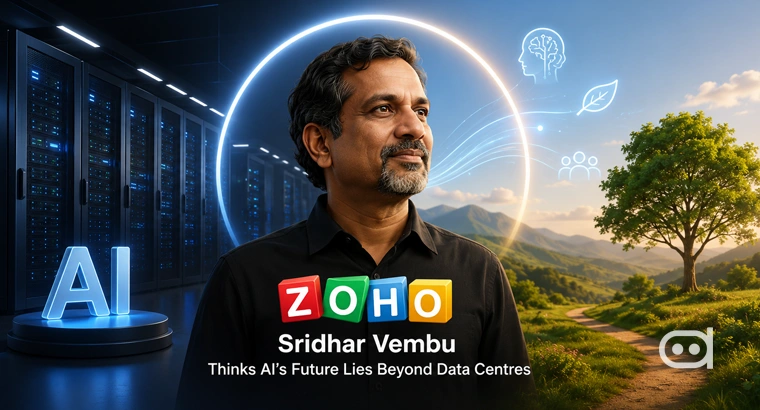
But Zoho is steering in a different direction. This software company, well known for its suite of business tools, has indicated that it does not intend to participate in the aggressive spending race that has come to define the AI industry. Instead, Zoho wants to focus on making AI actually work better and create real value in practical situations.
Zoho’s founder and chief scientist Sridhar Vembu backed up IBM CEO Arvind Krishna’s skepticism about the sustainability of investments in AI infrastructure. Their remarks are getting noticed because they push back against a core belief driving AI investment: spend more on data centers and computing, and you will guarantee growth.
Zoho Questions the Economics of the AI Infrastructure Boom by Betting on AI Reliability rather than AI Infrastructure
Vembu’s comments come at a time when tech companies are making huge, bold commitments to building AI infrastructure. Data centers form the foundation of today’s AI economy, they house all that specialized hardware needed to train and run those massive language models. Some industry leaders have announced plans for investments totalling hundreds of billions, confident that demand for AI will just keep climbing.
However, Vembu has expressed concerns that the scale of investment may not be supported by long term economic realities. By endorsing Krishna’s warning about out of control data center investments, he is suggesting the industry could be heading into an investment bubble. The point is not that AI has no future, obviously, it does, but there is a real risk, companies are overestimating how much infrastructure we will actually need, and how fast those billions will pay off.
IBM CEO Arvind Krishna says the muli-trillion dollar AI data center build out is a bubble.
— Sridhar Vembu (@svembu) June 22, 2026
We are investing in creating capabilities like data curation, reinforcement learning, and most crucially the compiler infrastructure to ensure AI output can be verified but we will not… https://t.co/jHQprajTn3
Zoho has a different set of priorities. Instead of chasing expensive, large scale infrastructure, the company plans to invest in areas that make AI more effective and trustworthy. These include: better data preparation, reinforcement learning, and tech that can check and verify what AI gives out as an outcome.
This focus on data preparation comes from a basic belief that AI is only as good as the data you train it on, not just the hardware underneath. Well organized, clean, context rich data leads to better results, especially in business, where accuracy is not optional.
Reinforcement learning is another major focus as it helps AI get smarter through ongoing feedback. As more companies look for AI tools that actually adapt to what users and businesses need, this kind of learning becomes vital.
But maybe the standout part of Zoho’s approach is its emphasis on verifying AI’s outputs. One of the biggest hurdles to AI adoption is that these models still generate misleading information sometimes. As businesses lean harder on AI for customer support, productivity, and decision making, the need for mechanisms to validate responses just grows.
Also read: Satya Nadella Urges Indian Firms to Invest in Sovereign AI Systems
While most of the AI world races to build bigger models and invest even more in infrastructure, Zoho is deliberately questioning the logic of endless data center investments and focusing on data preparation, reinforcement learning, and output verification. Whether the rest of the industry will follow this approach, is not clear yet. However, Zoho’s strategy highlights an important debate emerging within the AI sector: will long term success come from building larger infrastructure or from creating AI systems that are more accurate, reliable and useful?