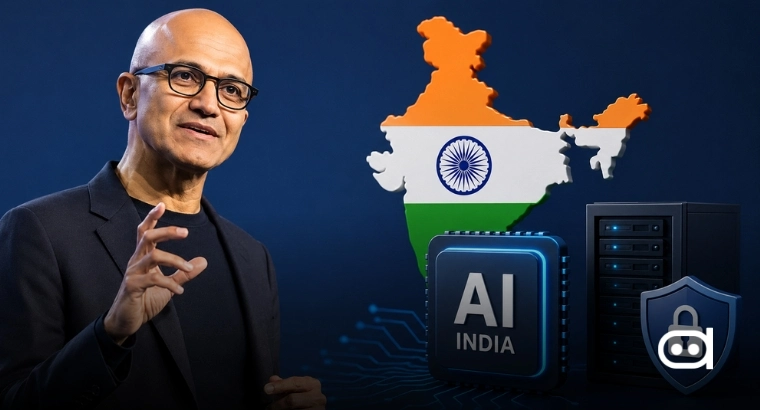
Chairman and CEO of Microsoft, Satya Nadella, issues an advisory. It states that experimenting with AI models would lead to control restraints. Writing on X, he claimed that the opportunity to scale lies in building independent and sovereign AI ecosystems where organizations can control their own information, learning, and intellectual property. His remarks carry weight for the IT industry navigating AI architecture, depending on foreign AI systems.
What Does Satya Nadella Emphasize ?
Satya Nadella said that the artificial intelligence transition differs from a regular platform shift. Previously, digital systems were created to accelerate human capital. However, AI facilitates a cognitive loop between humans and machines, changing how work is done inside a company.
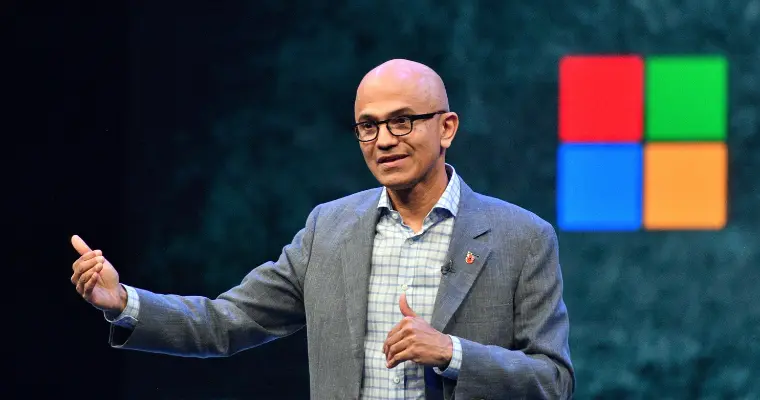
He stated that every organization should possess two forms of capital: one is human capital, and the other is token capital. Human capital consists of the information, creativity, judgment, and pattern recognition of employees, while token capital includes the artificial intelligence capital capabilities a firm forms. Moreover, Satya Nadella stressed that human capital should not lose its importance as artificial intelligence grows further.
Mr. Nadella wrote, “Human agency will be the driver of token capital growth”, which means that without guidance, AI systems would continue to run in loops. He highlighted that while organizations can shift their task or hand over their jobs to AI, they must never give away their knowledge.
Also Read: Chinese Govt. Rules Quietly Replaces Humans with AI
Why Does Sovereignty Matter for Indian Firms?
Nadella advises everyone against the common claims that AI models would take over and that industries would lose ownership. This sort of power in a few hands would lead to economic unsustainability. For India, this warning is highly relevant. The country’s IT sector is undergoing a reshaping marked by layoffs and high AI adoption.
Similarly, India is a small player in frontier AI development, accelerating its dependency on foreign models. Satya Nadella compared the first phase of globalization, where the GDP appeared to be better, but the displacements of workers and local capabilities served long-lasting consequences. He cautioned the firms to repeat similar mistakes in the artificial intelligence era, where industries compromise knowledge by external systems.
Rather than picking a suitable AI model, the company should focus on building learning loops. These loops would correlate human knowledge and AI systems to succumb to competitive advantages. He claimed that a new approach, where businesses develop agentic systems while retaining control over knowledge, is crucial. Organizations should be able to exchange AI models without losing the knowledge that is embedded in the systems.
Satya Nadella described this continuous loop as the firm’s new intellectual property. Each workflow generates better signals and boosts the system. Unlike conventional assets, this form of intellectual property is difficult to copy. For Indian entrepreneurs, this offers reduced reliance on foreign artificial intelligence systems while sustaining the expertise in the sector.
Addressing matters about higher concentration of artificial intelligence power is one thought by several federal authorities, including Canadian Prime Minister Mark Carney, Zoho founder Sridhar Vembu, and Infosys co-founder Nandan Nilekani. These discussions have grown since the advent of advanced AI systems and their impact on the economy.
India has witnessed multiple attempts to curb this challenge through native initiatives like Sarvam AI, pursuing a buy strategy of indigenous models on top of open-source structures. This reflects Nadella’s vision of an ecosystem of AI development through independence.
Satya Nadella’s concerns regarding frontier AI models without an ecosystem are legit. For the Indian companies extending beyond efficiency, long-term independence over value and knowledge is crucial. By prioritizing human learning systems and retention over AI workflows, companies can avoid becoming passive to foreign AI models. In his vision, the future of AI belongs to those who build AI ecosystems where human knowledge and AI survive together.