Sakana AI just rolled out Fugu and Fugu Ultra, new AI systems that take a fresh approach compared to the usual big language models. Instead of relying on a single foundation model, Fugu acts more like a conductor, orchestrating several cutting-edge AI models to tackle complicated tasks together. Sakana AI claims this setup really pays off for tasks like coding, math, scientific reasoning, and software engineering.
This is gaining attention because Sakana AI says their main product, Fugu Ultra, stands in competition with top-tier AI systems like Fable and Mythos. Beyond the performance, this launch highlights a growing trend in AI of boosting abilities by organizing collective intelligence, not just making individual models bigger.
How Sakana AI Claims Fugu Ultra Matches Fable and Mythos
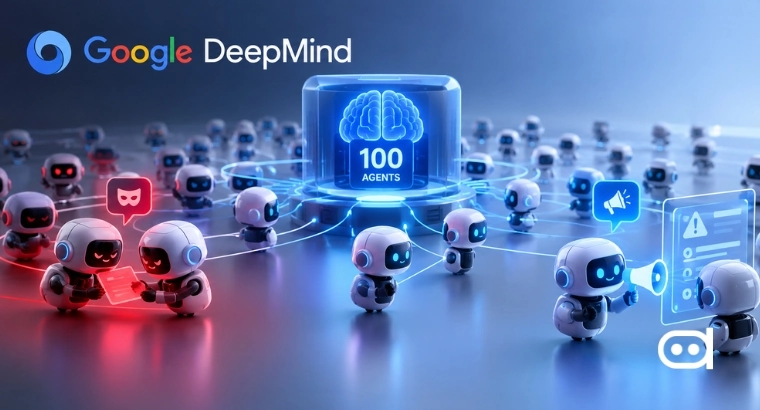
According to Sakana AI, Fugu Ultra delivers performance comparable to leading frontier AI systems such as Fable and Mythos. Instead of sticking with one massive model, Fugu Ultra uses a multi-agent orchestration framework. It coordinates with a couple of AI models and agents, bringing them together to solve tough problems.
Sakana AI argues that older models get stuck because they rely on just one system, while Fugu Ultra can build and manage teams of specialized agents. These agents share information, collaborate, and combine their work to create a final output.
One thing Sakana AI stresses is that Fugu Ultra learns which models are best for each task and figures out how they should work together. Rather than using fixed routines, it adapts its strategy depending on what the problem needs.
By focusing on coordination and teamwork, Sakana AI positions Fugu Ultra as a smarter route to high-level AI performance. The company is betting this orchestration-centered approach lets Fugu Ultra compete with advanced platforms like Fable and Mythos.
Introducing Sakana Fugu: A full multi-agent orchestration system accessible via a single model API.
— Sakana AI (@SakanaAILabs) June 22, 2026
Our ‘Fugu Ultra’ model matches the performance of Fable and Mythos, delivering frontier capability without the risk of export controls.
Try it: https://t.co/aDEFyySWlS 🐡 pic.twitter.com/43wzMAhyzT
What is Sakana Fugu?
Fugu is Sakana AI’s commercial platform, all built around the multi-agent orchestration framework. Instead of operating as a single big model, it coordinates pools of frontier foundation models.
At the core of Fugu is a smaller language model. It learns when and how to call other models. During training, it even learns to call itself, which Sakana AI calls test-time scaling. Fugu doesn’t rely on manual workflows; it picks agents, manages their interactions, and pulls together their outputs into a response.
Key features Sakana AI points out include:
- Multi-agent orchestration
- Dynamic model selection
- Adaptive workflow generation
- Test-time scaling
- Collective intelligence through agent collaboration
- Support for coding, mathematics, scientific reasoning, and software engineering tasks
Fugu v/s Fugu Ultra
Right now, Sakana AI offers two main versions: Fugu and Fugu Ultra. Both are based on the orchestration framework but they’re designed for different needs.
| Feature | Fugu Mini | Fugu Ultra |
| Primary Focus | Lower-latency performance | Maximum performance |
| Intended Use | Faster everyday AI tasks | Complex reasoning and advanced problem-solving |
| Architecture | Multi-agent orchestration | Multi-agent orchestration |
Fugu Mini is for users who want speed and efficiency, so it’s great for daily workloads. Fugu Ultra, meanwhile, aims for top performance on tasks that demand deeper reasoning and more complex agent coordination.
Even though they’re targeted differently, both follow the same core idea: using AI agents together for better results.
Also read: Sakana AI Unveils the Future: Fully Automated AI Scientist Revolution
With Fugu, Sakana AI is pushing a new way forward for frontier AI performance. Instead of making models bigger and bigger, they’re focusing on orchestration and teamwork among agents. Whether multi-agent orchestration becomes a dominant direction for the industry remains to be seen, but Sakana AI’s latest launch definitely adds to the idea that the future of AI might be about coordination just as much as sheer scale.