Artificial intelligence is now part of everyday scientific research. Researchers rely on artificial intelligence to search through huge piles of papers, write code, analyze datasets, and draft reports. But, running a full research project usually means switching between all sorts of tools for search, coding, data analysis, and documentation.
Synthetic Sciences built an open source platform called OpenScience to put everything researchers need in one place, basically a workspace powered by artificial intelligence that keeps things simple, transparent, and reproducible. It is not just another chatbot, this tool automates much of a project’s life cycle and lets you see exactly what is going on at every step. Plus, OpenScience does not tie you to one AI model; you can pick between commercial or open source large language models based on what fits your project.
What is OpenScience?
OpenScience is an open source platform built to handle your research from start to finish. Instead of just answering your questions, it pulls scientific papers, runs code, analyzes data, and generates research reports with supporting citations and visual outputs.
Here is what makes it stand out:
- Direct integration with scientific databases and repositories, including UniProt, PDB, Ensembl, ChEMBL, PubChem, arXiv, OpenAlex, Semantic Scholar, and around 30 more.
- 290+ built in skills that enable artificial intelligence agents to perform specialized scientific and technical workflows.
- Automatic code generation, execution, debugging, and rerunning of analyses within the same workflow.
- Agents that review findings for unsupported claims, weak evidence, and inconsistencies before the final report is generated.
- Local storage of prompts, code, outputs, figures, and citations to support reproducible research.
Introducing OpenScience. A better, open-source Claude Science.
— Synthetic Sciences (YC W26) (@SynScience) July 5, 2026
• Any model: GLM, Kimi, DeepSeek, Claude, GPT, your own fine-tune. Switching is one flag.
• 250+ research skills across ML, comp bio, cheminformatics. All readable, editable, extensible.
• No throttling, no… pic.twitter.com/Fu7al1P37P
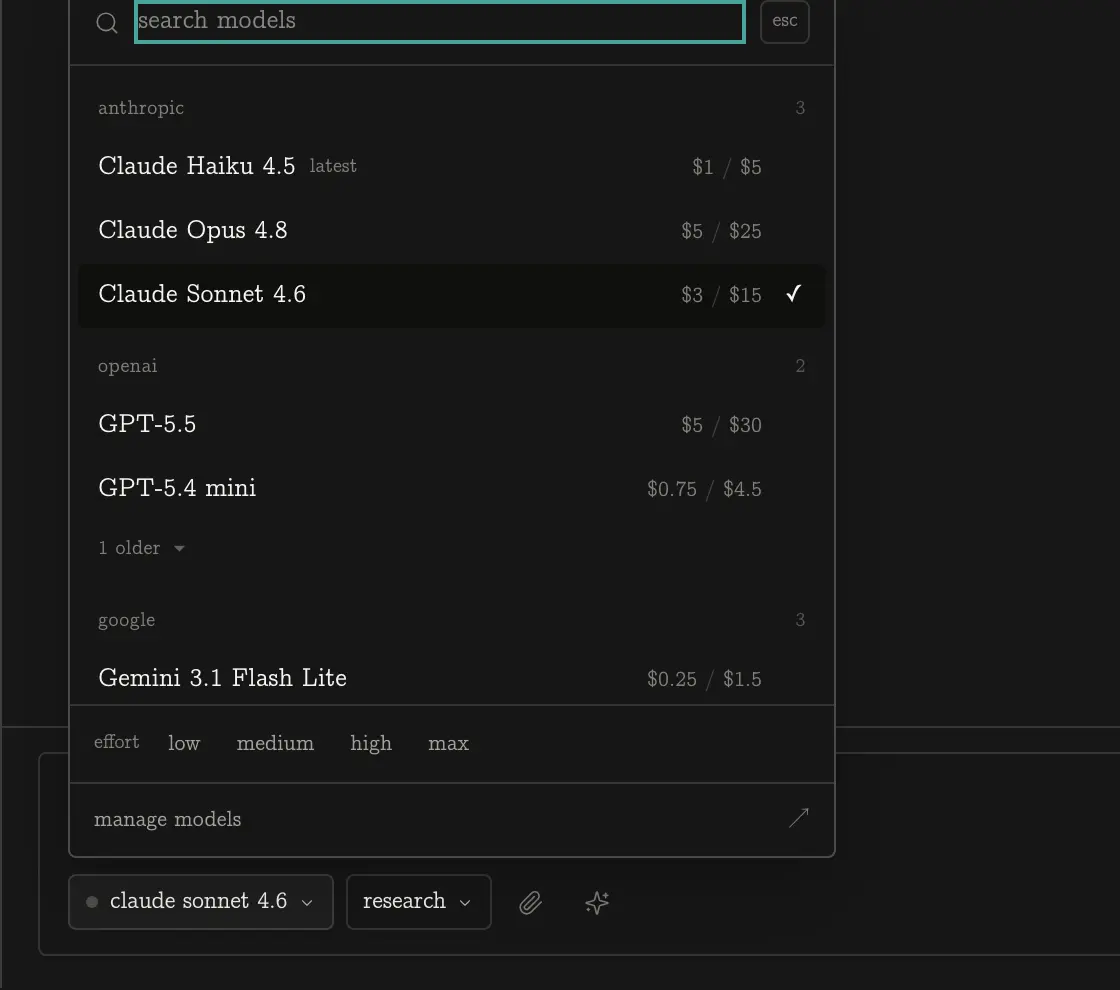
Image Credits: OpenScience
OpenScience is model agnostic, meaning you can use artificial intelligence models from OpenAI, Anthropic, or Google, or run local models through Ollama like Llama, DeepSeek, Qwen, Mistral, Gemma, and other open weight models. Switching between models does not mess up your workflow.
How OpenScience Handles a Project
According to the OpenScience documentationimage of openscience model picker, the platform follows a streamlined workflow that takes a research goal through planning, execution, and report generation.
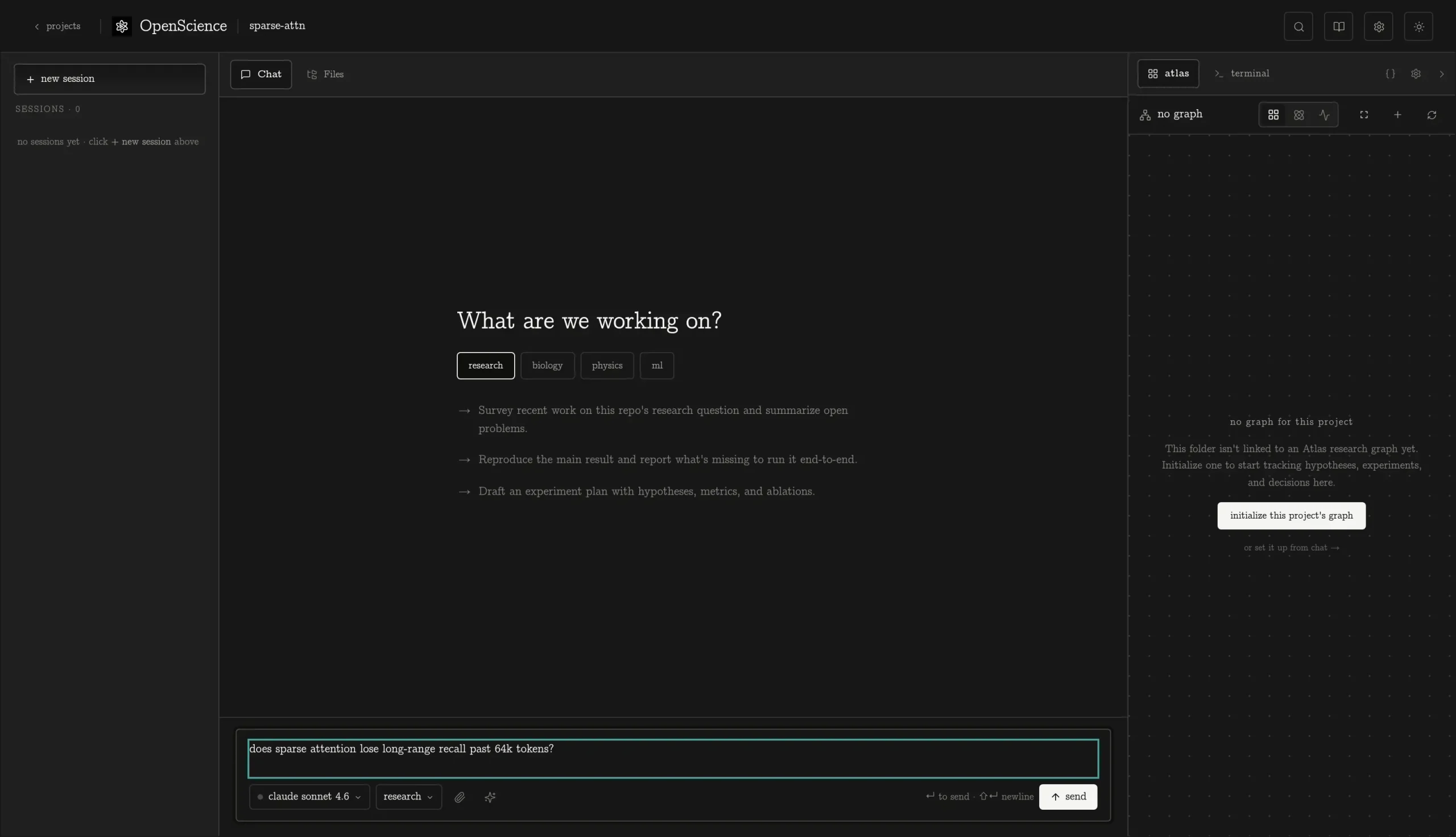
Image Credits: OpenScience
Step 1: Ask
The workflow begins by stating a research goal, similar to how a researcher would explain it to a colleague. In this stage, plan mode thinks through the task before any actions are performed.
Step 2: Run
Once the goal has been planned, the agent carries out the research process. It reads relevant papers, writes the required code, executes it, and continues working through the task. During this stage, critique agents review the work and challenge weak claims as the research progresses.
Step 3: Read
After the research is completed, OpenScience generates a write up that includes figures and citations. And according to the project, every claim in the report is linked to the run that produced it, which supports transparency and reproducibility.
OpenScience further describes this workflow as a continuous research loop of literature, hypothesis, code, experiments, and write up, bringing multiple stages of scientific research into a single AI powered platform.
Also read: OpenWiki Introduces an AI-Focused Approach to Codebase Documentation
OpenScience brings literature search, data retrieval, code generation, execution, analysis, and report writing into one open source platform tailored for AI powered scientific research. With hundreds of built in skills, broad database integrations, support for commercial and local models, and a focus on reproducibility, it is built to make research easier and more efficient for you. Obviously, you will still need expert review and validation for your results, but OpenScience shows how artificial intelligence can help researchers automate huge piles of the workflow without swapping between multiple tools.