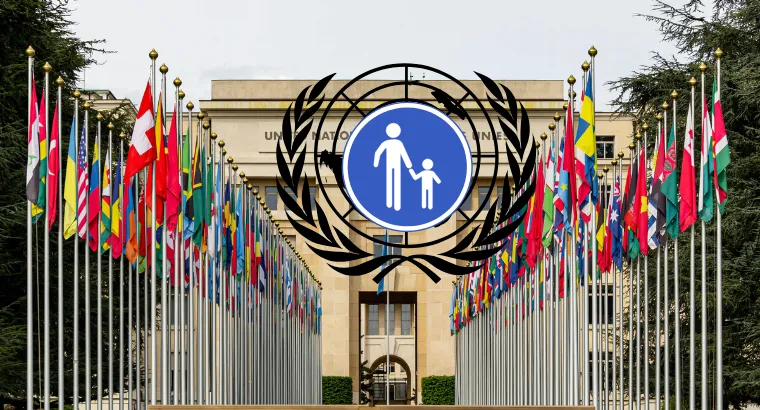
Artificial intelligence is rapidly growing and federal authorities and institutions are unable to match its speed. This is a statement that is given by UN Secretary General Antonio Guterres, who warned the members of the UN about the rapid deployment and its risks. Speaking at the global gathering in Geneva, the UN Secretary General emphasized that artificial intelligence has an influence across finance, workplaces, elections, and safety needs similar rules. He focused on the fact that risks facing children are increasing and that inventiveness without guardrails could expose the most vulnerable to harm before the protections are integrated.
What Warning Did the UN Secretary General Issue?
The UN Secretary General Antonio Guterres told the delegates that AI’s rollout is faster than ever, including the people who are behind it. AI can keep up despite its ability to reshape societies at a foundational level. He mentioned artificial intelligence as a mechanism strong enough to redevelop economies, alter the line of work, influence outcomes, and affect global safety balances, all while accelerating with limited oversight. Innovation needs guardrails, Guterres said, arguing that if artificial intelligence becomes fully transformative, it also must be regulated.
His words framed artificial intelligence not as a disadvantage but as a strategic challenge that affects geopolitics, stability, finance, equality, and social order. Without cooperative regulation, he warned that AI’s speedy development could outmove the capacity of federal authorities to deal with its consequences.
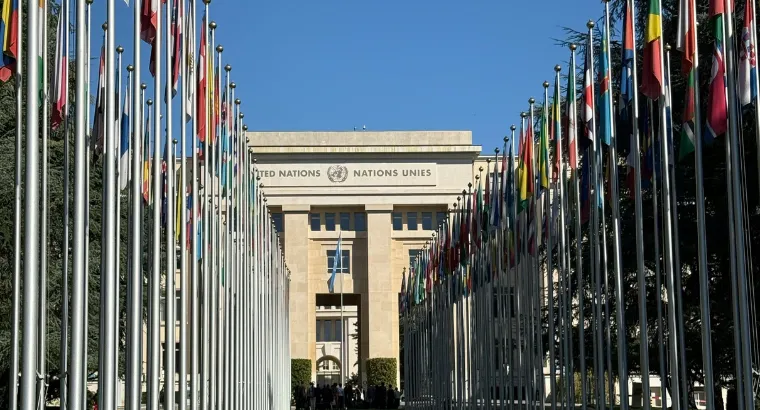
The remarks were delivered on Monday at the first government-level UN global dialogue on artificial intelligence governance, conducted in Geneva. The two-day conference marks a novel step in the United Nations’ efforts to bring federal authorities together around artificial intelligence deployment at the highest policy level. The comment is not intended to create a binding treaty.
Instead, it serves as a platform for governments to discuss and talk about how global rules might be reshaped to decrease AI’s harms while still acquiring its benefits. A second global meeting will be conducted next year in New York, along with the release of a more massive report on artificial intelligence regulation.
Why Is Child Safety Key to AI Regulation?
UN Secretary General Guterres positioned child safety at the centre of his request for globally coordinated artificial intelligence rules. He quoted examples of children and adolescents being guided towards self-harm or deceived by machines posing as friends. He argued that children are vulnerable to artificial intelligence systems before their safety has been assessed. “Would we let a medicine reach a child until it is safe? We test every time,” he quoted. Contrasting those benchmarks with the current reality in which artificial intelligence systems communicate with children’s learning, friendships and vulnerable questions.
To deal with these risks, UN Secretary General Guterres called for an AI child safety pledge, under which organizations creating those artificial intelligence systems would be necessitated to demonstrate safety before making them available to the marginalized. He also supported that artificial intelligence systems should not be allowed to generate implicit images of children and should be created to stop interactions and connect the children to human help if a child shows agony or pain. These steps, he argued, would be the foundation for worldwide AI governance.
Beyond adolescent safety, UN Secretary General Guterres warned the federal authorities around the world about the machine’s autonomy with minimal human oversight. He emphasized the magnitude of artificial intelligence adoption, to illustrate the challenge, noting that while the internet took 15 years to reach such a big number, AI reached that level in two years. He also emphasized the concentration of advanced AI capabilities within a few companies and countries. According to a scientific report considered by delegates, artificial intelligence adoption is heavily concentrated towards major powers, with the United States accounting for 17% of the computing power among the world’s top 500 AI supercomputers, and China holding 15%.
This cluster leaves developing countries with less influence over artificial intelligence’s disadvantages and risks, increasing global inequality. While more than a billion people across the globe use conversational AI regularly, adoption in developing countries remains lower, underlining fears that the benefits of AI are uneven.
The UN Secretary General Antonio Guterres’ remarks at the UN Global Dialogue on Artificial Intelligence Governance highlight a need for global cooperation. As artificial intelligence systems scale and enter everyday life, the gap between capability and readiness is increasing. By asking for harmonized worldwide rules, especially to protect the marginalized, the UN chief pushes federal authorities to treat AI not just as an innovative mechanism, but as a responsibility. Whether the conversation in Geneva can translate concern into robust standards may shape how security and reliability evolve in the coming times.