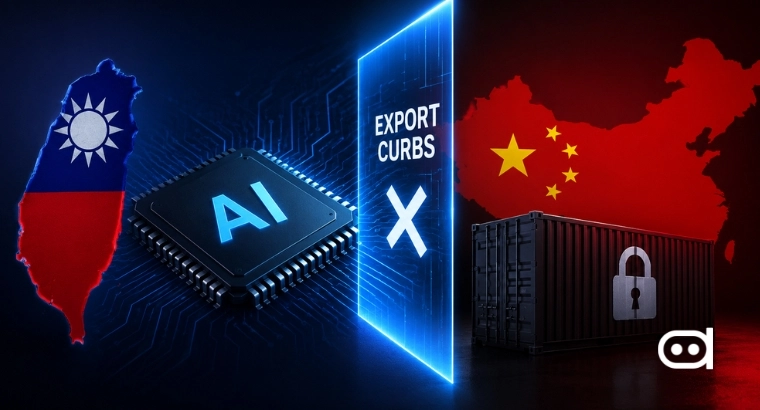
- Taiwan is reportedly thinking about tightening restrictions on exports of advanced AI chips to China, aiming to align itself more closely with U.S. moves to curb Beijing’s access to cutting-edge semiconductor technology.
- This possible policy change comes as Taiwan continues to hold its spot as the world’s top manufacturing hub for advanced AI chips, supplying crucial components to leading American tech giants and AI developers.
- While making export rules stricter could slow down China’s access to high-performance computing hardware in the short term, it might also speed up Beijing’s push to build up domestic semiconductor capabilities and cut down its reliance on foreign suppliers.
Taiwan’s consideration of tighter controls on AI chip exports to China is the latest sign of the growing global competition over advanced semiconductor technology. Taiwanese authorities are looking at steps that would bring the island’s export policies closer to those of the United States, which has spent years working to block China’s access to advanced chips and manufacturing tools for semiconductors.
This move highlights how vital Taiwan has become in the geopolitical fight over AI. With the world’s most advanced semiconductor manufacturing facilities, Taiwan is right at the core of a supply chain that powers everything from AI training models to data centers and new generations of computing infrastructure. Any decision that affects chip exports from Taiwan will impact not just China and the United States, but the broader world tech industry as well.
Taiwan’s Strategic Position in the AI Supply Chain
The significance of Taiwan’s potential export restrictions comes from its dominant role in advanced chip manufacturing. The island has become the backbone of the world’s AI ecosystem, building many of the advanced semiconductors needed to train and run complex AI systems.
According to Bloomberg reports, American tech firms have come to depend heavily on Taiwan’s manufacturing power. Advanced AI processors designed in the U.S. are mainly made in Taiwan, then shipped to customers around the globe. This close manufacturing relationship has raised Taiwan from a regional semiconductor leader to a strategic asset in the world race to lead in AI.
As AI spreads across industries, demand for powerful chips keeps rising. Data centers, cloud companies, research labs, and tech firms all want top-tier processors that can handle the heavy lifting required by today’s AI models. Taiwan’s capacity to produce these chips makes it indispensable to the global tech supply chain.
For policymakers in Washington, keeping China away from this advanced hardware is now a central element of national security. Their case is that blocking China’s access to top-tier chips can slow its progress in AI, advanced computing, and even related military uses. Taiwan moving in step with these export controls would make them a lot more effective.
Taiwan weighs stricter controls on AI chip exports to China, backing US efforts to curb semiconductor smuggling https://t.co/vNZS8a4jjH
— Bloomberg (@business) June 9, 2026
Why Restrictions Could Accelerate China’s Chip Ambitions
The long-term impact of these tighter export rules is still remain a subject for debate. While they might cut China’s access to advanced chips for now, they could also push Beijing to work even harder on building a self-sufficient semiconductor industry.
China has already invested a lot of money into domestic chip development as the U.S. as a response to growing technology restrictions from the United States and its allies. Every new limit on foreign semiconductor technology just makes homegrown innovation and manufacturing more important.
History shows that countries often answer tech restrictions by ramping up local R&D. In China’s case, less access to advanced imported chips could trigger more government support, increased investment from the private sector, and a sharper focus on making semiconductors at home.
The challenge for China remains significant. Making leading-edge AI chips takes advanced factories, excellent design expertise, mastery in materials science, state-of-the-art equipment, and complex supply chain management. Copying what Taiwan has built won’t be easy or quick.
Still, export controls might create strong incentives for long-term technological independence. As foreign technology becomes more uncertain, homegrown options look a lot more attractive. The result may be a scenario in which short-term constraints eventually contribute to greater self-reliance and reduced dependence on external suppliers.
Also read: China’s $295 Billion Investment to Lead in Quantum Computing and Humanoid Robots
Taiwan’s reported look at new AI chip export restrictions reflects how technology, economics, and geopolitics are all connected these days. Leading the world in advanced semiconductor production puts Taiwan right at the center of the global AI race. Getting closer to U.S.-style export controls could further curb China’s access to critical computing hardware and boost Western efforts to keep their technological edge.
At the same time, these restrictions might lead to unintended outcomes. While they could hold up China’s AI development for now, they might also make Beijing double down on building an independent semiconductor industry. This unfolding contest over AI chips isn’t just about who has technology today, it’s about shaping who leads the world of innovation tomorrow.