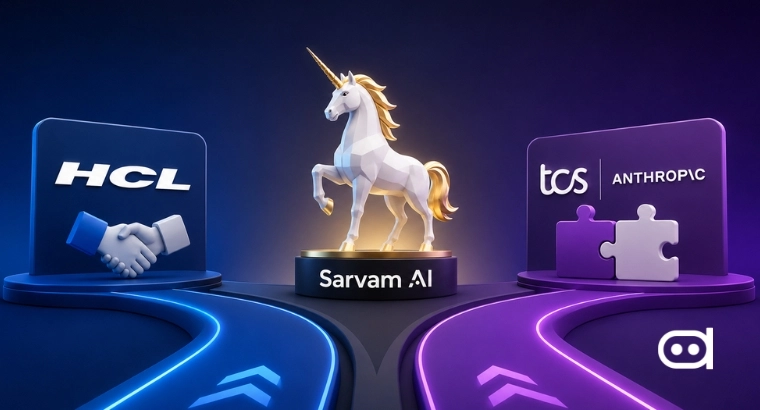
India’s artificial intelligence is bifurcating into two parts: partnering with foreign AI companies for exposure and investing in domestic startups for control. The distinction is clear as Indian conglomerates answer stone geopolitical controls around frontier AI and computing structures. To tackle this, Bengaluru-based Sarvam AI becomes India’s newest AI unicorn, raising $234 million. On the other hand, partnerships between Indian giants and global AI players like Anthropic and OpenAI focus on how organizations balance exposure with independence.
Why Does Sarvam AI Indicate About Domestic Control?
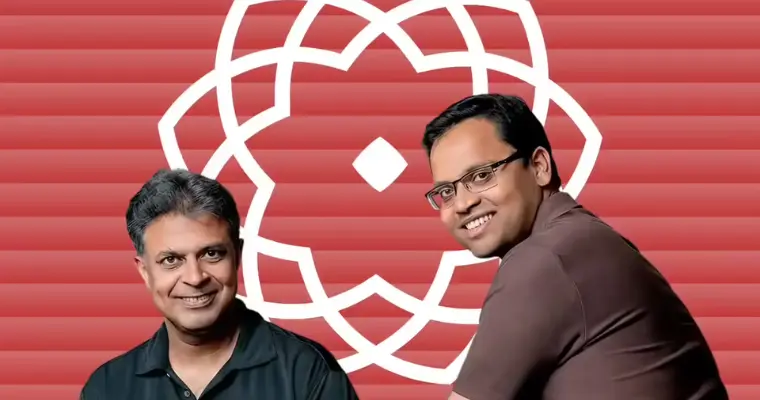
Sarvam AI is valued at $1.5 billion, which is a cornerstone for independent AI in India. The Series B round raised $224 million, with $150 million investment from HCL Tech as its lead stakeholder alongside Messmer Venture Partners, Khosla Ventures, and Peak XV Partners. Sarvam AI’s proprietary model contains the full AI stack, including the foundation model, inference architecture, research and training, and proprietary applications.
These are specifically designed for Indian language dialects and local use cases. The company said that these investments would help to boost the research for new models focused on agentic AI, cybersecurity, and expanded AI compute. The products are already deployed in two crucial niches, such as banking, defense, and government services.
For example, Sarvam AI’s multilingual voice agents have been used by the Ministry of Agriculture and Farmer Welfare to collect information from 17 million farmers, whereas its Sarvam AI system supports a campaign for 45 million policyholders. The investment reflects a comprehensive push to develop artificial intelligence relying on local language domain expertise. This is crucial for business continuity, control, and data residency.
How Indian Companies Partner With Global AI Giants?
Several Indian technology companies sustain partnerships with AI giants to bring advanced tools to native enterprises. One such collaboration is between Tata Consultancy Services with Anthropic, which aims to facilitate proprietary AI adoption.
Under this collaboration, Tata Consultancy Services will equip 50,000 employeesSarvam AI’s Unicorn Round Reflects India’s Differentiating AI Strategy with access to floor. These will jointly discuss AI solutions for regulated sectors. The partnership focuses on helping consumers to adopt AI by blending Anthropic’s technology and Tata Consultancy Services’ client network. It also allows organizations to embed advanced AI capabilities into their workflows.
Organizations are also partnering with OpenAI to expand its services. The broader Tata group also partners with OpenAI to embed proprietary solutions across its businesses and build AI infrastructure. Specifically, these collaborations give Indian organizations the right exposure for frontier AI.
Also Read: Satya Nadella Urges Indian Firms to Invest in Sovereign AI Systems
Why is the AI Independence Debate Essential?
Pending matters around AI independence were circling in the headlines amid restrictions on foreign models. A US government export control order banned the access of Anthropic’s Fable 5 and Mythos models for foreign users, including enterprises in India. This sudden shift emphasized how high-end artificial intelligence remains in the hands of a few and can be affected by geopolitics.
This has urged India’s tech and policy communities about the overreliance on foreign AI architecture and the need for indigenous alternatives that can withstand geopolitical changes. Similarly, India’s artificial intelligence market is one of the largest consumers of AI tools, with both Anthropic and OpenAI valuing it as a key market. Developing independent abilities while maintaining exposure presents a dual strategic challenge for firms.
India’s artificial intelligence runs parallel in two aspects. One is foreign partnerships for rapid exposure and parallel investments in domestic startups for independence. Sarvam AI’s rise to a unicorn startup talks about the capabilities of Indian AI systems using vernacular languages.
On the other hand, partnerships with global AI agents such as Anthropic and OpenAI help enterprises to embed high-end technologies into their workflows. To strike a balance between these two approaches will be essential for India’s long-term dominance in the AI economy. It would also ensure that these innovations benefit enterprises and society as a whole without over-relying on external powers.