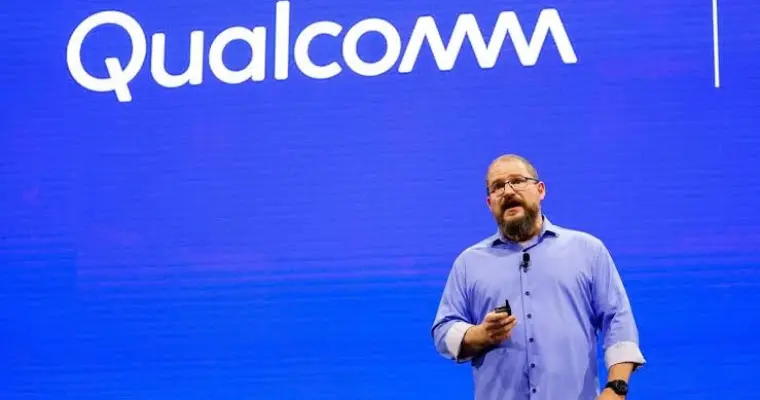
Qualcomm prepares itself for a future where AI agents represent the primary interface for users. The company is developing more than 40 partners with new AI-powered devices, including wearables and reference platforms. Qualcomm CEO Cristiano Amon says this shift will reduce the dependency on conventional applications and elevate contextual devices such as smart glasses and wearables. This change will affect comprehensive shifts from headsets to AI-powered wearables. This change will affect comprehensive shifts from headsets to AI-powered wearables, which will affect the organization, experiment, and digital systems.
What Is Qualcomm’s AI-First Strategy?
Rendering the idea is Cristiano Amon, who spoke about it on the Tech Download podcast. Amon quoted that Qualcomm is in the process of working on 40 designs for AI devices, reflecting wide experimentation. These designs include TVs, pins, earbuds, and watches with embedded cameras. As per Amon, the common aspect of these devices is their constant presence. These are the devices that people wear all the time, and thus can be used to perceive the context and information to an AI agent through words or voice.
Among said that these AI agents are beyond capable of handling lengthier, complex tasks without navigating conventional applications. Instead of these applications to look up information, users would be in direct contact with AI agents that execute tasks autonomously. Among said that the apps are not dead, but their role will substantially change. With the presence of change from app-focused ecosystems that have been a part of the smartwatch companies, such as Samsung and Apple.
Prior to the tests and experiments across these niche points, in this direction. Apple’s vision pro re-develops computing around interactions with context, while Meta’s camera-equipped glasses aim to blend artificial intelligence into daily life. These devices reflect our interest in a futuristic interface that is in closer proximity to humans than conventional screens.
Also Read: Qualcomm Targets Entry-Tier Laptops With AI Integration and Portability
How are Organizations Entering the AI Hardware Race?
Qualcomm is positive about these smart glasses. With Cristiano among them believed could defeat smartphones any time. He said that the deliveries could reach tens of millions and in annual stats could reach hundreds of millions. In this vision, artificial intelligence agents become the core of digitalization with devices revolving around them. The phones will not disappear from the market, but their roles will be taken up by AI agents.
Several organizations are already pushing this into the sector. Meta is developing smart glasses with additional cameras, while Samsung is exploring similar devices. Earlier attempts at the Humane AI pin depicted the conviction and the disadvantages of agent-first hardware, emphasizing how strenuous it is to balance patterns and reliability on AI devices.
Cristiano Amon also stated that device design is relevant to consumer hardware. He quoted OpenAI’s acquisition of IO, the startup founded by Jony Ive, as an example of artificial intelligence controlling endpoints. One major focus is data. Wearable regular devices generate a massive amount of data, exceeding regular limits.
The data is crucial for training artificial intelligence systems and delivering a tailored experience. As the form factors reduce, chips will also need to develop. Qualcomm is accelerating the roadmap to deliver substantial performance with high efficiency. Amon also stated that the devices present right now are not suitable for an agentic AI future.
The platform strategy for Agentic AI smart glasses depends on a shift away from app-focused smartphones towards AI-centered devices that are contextual. As experiments like Vision Pro, Meta smart glasses, and Humane AI pin show, the aim to determine the dominant interface is still in progress. Qualcomm places itself as the center, vetting the AI agent and their respective devices, which will define how we can interact with technology.