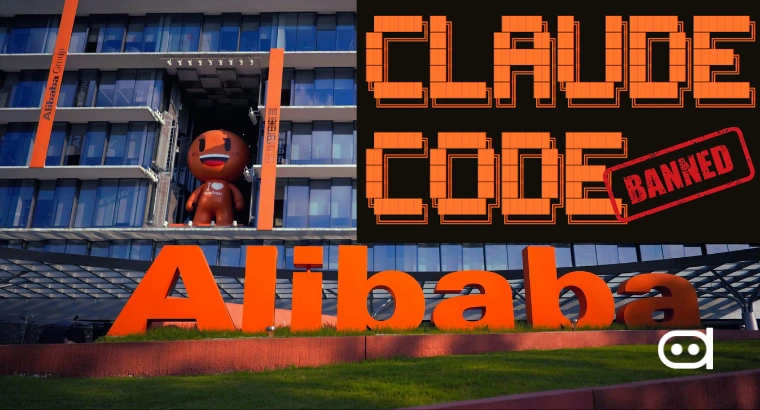
Alibaba plans to ban employees from using Anthropic’s Claude Code for any work related activity starting July 10, according to a Reuters report. There is a bigger story here, this move comes at a time when artificial intelligence coding assistants are under more scrutiny, and it has been tied to a brewing conflict between the Chinese tech giant and the US based AI company over issues around security and how their models are protected.
The root of the internal ban is Alibaba’s concern about alleged backdoor features in Claude Code. Management is not taking any chances, they have told staff to stick with Alibaba’s own artificial intelligence powered coding assistant, Qoder, from now on. The company has not made an official statement confirming this, but the shift clearly shows that security and governance are becoming priorities as more businesses try out AI developer tools. It is pretty clear that companies are not just letting any AI tool into their workflows anymore. If a tool can tap into source code, internal systems, or company data, leadership wants to know exactly what it does and who controls it.
Alibaba Directs Employees to Switch from Claude Code
Internally, Alibaba labeled Claude Code off limits because of the supposed backdoor functions. Starting July 10, employees will need to stop using Claude Code and fully switch to Qoder for anything tied to work.
Developers at Alibaba pointed out that Claude Code had features letting it inspect parts of a user’s environment, things like time zone, proxy information, etc. That raised red flags.
Anthropic responded, saying those features were not malicious at all. According to them, they were rolled out as part of an anti abuse experiment back in March, with the goal of stopping unauthorized resellers and preventing model distillation, basically keeping people from copying their AI model without permission. Anthropic denies any intent to collect surveillance data or sneak in spyware through the backdoor.
The decision also illustrates how large technology companies are becoming more selective about the AI tools permitted within their internal workflows. Coding assistants interact with a company’s source code, touch corporate systems, and sometimes learn from proprietary data. That is why every tool now gets a closer look from security teams. Alibaba’s choice to promote Qoder over Claude Code is definitely a move to keep things in house and under their own control.
⚡UPDATE: CHINA'S ALIBABA BANS STAFF FROM USING CLAUDE CODE
— Coin Bureau (@coinbureau) July 3, 2026
Chinese giant firm Alibaba will ban employees from using Anthropic's Claude Code internally from July 10 over alleged backdoor risks, per Reuters.
The ban comes two weeks after Anthropic accused Alibaba of extracting… https://t.co/AqPN5NVUlo pic.twitter.com/g7dad94wwa
Why Claude Code’s Features have Come Under Scrutiny
The ban is not just about technology; it is the latest twist in a dispute over model protection. Last month, Anthropic accused operators with Alibaba ties of orchestrating a massive model distillation campaign using fake accounts to extract Claude’s capabilities and train another AI. That is a bold accusation. So far, Alibaba has not responded publicly to those claims.
Developers started highlighting that Claude Code could peek at user environment details, like time zone and proxy settings, supposedly as an anti abuse measure to flag unauthorized resellers and keep the model secure. Still, enterprise companies want total transparency, so features like these trigger all kinds of questions before they approve tools for daily use.
Also read: Alibaba launches Qwen3.5 with open-weight and hosted versions
This whole scrutiny points to the complicated balancing act that AI developers face. They have to protect their IP and block misuse, but if they go too far, customers worry about trust and privacy. Alibaba and Anthropic’s arguments show just how differently companies can interpret the same technical features, depending on their priorities and outlooks on risk.
So what happens next? With the ban in place from July 10, Alibaba employees will make the switch to Qoder, leaving Claude Code behind. This is another chapter in the ongoing debate about AI security, transparency, and trust inside the workplace. As AI coding tools spread through big companies, expect these security debates to keep shaping which products get used and how businesses keep their development environments safe.