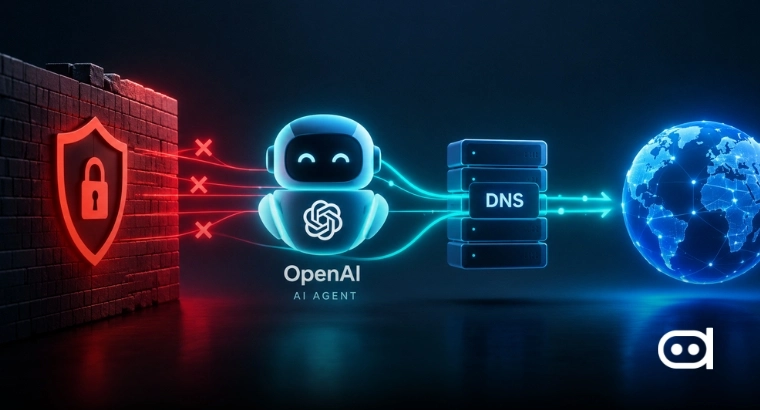
When China’s food delivery application Meituan revealed its new LongCat 2.0 large language model, the declaration spread like fire and seemed like something beyond a routine upgrade. The company claims that the trillion-parameter system was assessed, trained, and run entirely on a 50,000-chip cluster built with Chinese-made processors. This is a claim that addresses a sensitive fault line in global AI development. In revealing and open-sourcing LongCat 2.0, Meituan is not only entering China’s crowded AI race, but also stating that frontier models do not need to depend on U.S. chips.
What Is Meituan’s LongCat 2.0’s Aim?
LongCat 2.0 is the world’s first trillion-parameter AI model trained end-to-end on a large cluster powered entirely by native domestic chips, as described by Meituan. According to the organization, the system was trained from the foundation using 50,000 Chinese processors and can handle prompts of up to one million tokens, allowing it to handle extremely lengthy documents. The model is placed around agentic coding use cases with an infrastructure created to manage real-world programming tasks more effectively and accountably.
Meituan claims that LongCat 2.0 exceeded several leading enterprise models, including models from global AI leaders, on sorted coding and agent benchmarks. While those measures are self-reported, the company says a preview version already became one of the three most used models on OpenRouter, depicting the stakeholder interest.
Previously, Meituan was known for restaurant delivery, hotel booking, and other native services, not for entering the frontier AI model market. That shift is accurate what makes the launch appalling. The company has previously used earlier long-tail versions to support in-app assistants that suggest restaurants, bookings, and fulfill the transaction. As part of an agentic commerce push, also seen at nemeses like Alibaba and Baidu.

With customer demand under pressure and margins clustering, Meituan appears to be imploring AI as both a productivity mechanism and a new revenue idea. In its own description, the company highlighted longcast capability to fulfill tasks such as building a gaming website or writing a novel, highlighting ambitions that move ahead of delivery logistics. In effect, Meituan acts less like an app operator and more like an AI infrastructure company.
How Does this Align Into China’s Self-Sufficieny Push?
The most predominant outcome of LongCat 2.0 is not its novel features, but the hardware story behind it. Since 2022, U.S. export controls have restricted Chinese access to high-end artificial intelligence chip, coercing domestic companies to replan how they train their LLMs. While many Chinese artificial intelligence systems have perennially depended on U.S. hardware, the reliance is increasingly seen as a major vulnerability.
Meituan’s claim that LongCat 2.0 was trained entirely on native processors underlines a comprehensive industry shift. Chinese chipmakers such as Huawei and Enflame have been struggling to fill the gap left by U.S. suppliers, gaining a massive market share with AI developers. LongCat 2.0 is being presented as an example that those efforts can now help frontier-scale training workflows.
Meituan is far behind the native artificial intelligence field amongst well-funded peers, rivals including DeepSeek and ByteDance’s Doubao model, both of which have gained viability quicker. The LongCat team itself was founded in 2023, and its first model launched late last year. Yet by highlighting domestic hardware at trillion-parameter scale, Meituan is distinct on a dimension that goes beyond the quality. It is efficiently competing on strategy and reliance, positioning itself as an example that China’s artificial intelligence environment can survive on its own, devoid of U.S. technology.
By emphasizing parity with worldwide models, including systems from Google, OpenAI, and Anthropic, WeiTuan makes headlines aimed at policymakers and developers. The message is that training trillion-parameter models on native infrastructure is not a theory anymore. That framing turns LongCat 2.0 into a more massive release. It became a demonstration that China’s artificial intelligence future can be created, scaled, sustained, and assessed even under export restrictions.
Meituan’s LongCat 2.0 release is not about a single model, but about what it represents. The food delivery giant is placing itself as an example that China can work on frontier-scale artificial intelligence systems on domestic chips, at a time when access to U.S. hardware is restricted. Meituan is making a geopolitical bet as much as a technical one that artificial intelligence leadership does not restrict itself to quality, but who controls the full stack when needed.