Key Highlights:
- OpenAI is shifting Codex into a desktop “superapp” that can autonomously operate software, handle tasks, and coordinate multiple agents across workflows.
- This move comes as competition heats up with Anthropic’s Claude Code, which is gaining ground as a strong, developer-focused coding agent.
- Together, these changes point toward a bigger trend in the industry: AI is moving from assistants to autonomous systems that actually complete real-world tasks.
The updates to Codex mark a shift in how AI tools are built and used. OpenAI doesn’t see Codex as just a coding assistant anymore, it’s turning it into a system that works across your whole computer. Recent reports say the upgraded Codex can run desktop programs, automate workflows, and keep multiple agents working in the background, so it’s more like a workplace automation engine than a single-purpose helper.
Anthropic’s Claude Code jumped into the market and quickly became a real player among AI coding tools, which has pushed OpenAI to pick up the pace. We’re not just seeing a race to add more features, there’s also a deeper split in philosophy, one side chasing full autonomy, the other focusing on close human AI collaboration.
OpenAI Codex: The “Superapp” Approach
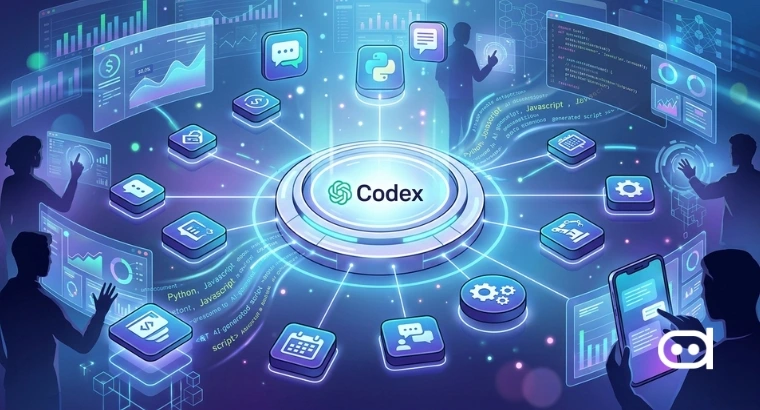
Codex is moving from merely offering assistance to actually executing tasks. Instead of just giving code suggestions, Codex is starting to handle entire jobs from start to finish, navigating apps, running commands, and remembering what’s going on in different workflows.
One standout feature is its ability to run multiple agents at once. This lets Codex split up big tasks into smaller ones and tackle them all at the same time. So it acts less like one assistant and more like a team working behind the curtain. When you couple that with integrations into browsers and enterprise tools, Codex starts to look like a unified digital workplace.
The “superapp” strategy fixes a big problem with AI: fragmentation. Till now, users bounced between chatbots, IDEs, and automation tools just to complete a workflow. By bringing all these capabilities under one platform, Codex wants to smooth out those bumps and make it easier to get things done.
But bigger ambitions bring new headaches. When a system acts on its own, people start to worry about reliability, supervision, and what happens when things go wrong. Even if Codex runs complicated workflows on its own, human intervention would be required to monitor, especially when the stakes are high.
Also read: OpenAI releases GPT-5.3-Codex just moments after Anthropic dropped Claude Opus 4.6
Claude Code’s more Controlled Approach towards AI
Claude Code, on the other hand, is taking a more focused and, conservative route. Instead of branching out as a general system, it’s built to work deeply inside the developer’s environment.
Its advantage is in understanding context. Claude Code can study big codebases, figure out how files connect, and carry out complex plans with real accuracy. That makes it great for refactoring, debugging, and planning architecture.
Unlike Codex, which aims for maximum independence, Claude Code keeps people in control. Developers review every step, approve actions, and work closely alongside the AI. This boosts reliability and fits with current development practices, where oversight and feedback are critical.
Structurally, Codex leans toward cloud-based operation with parallel agents, while Claude Code sticks with a more synchronous and local model. Each has its pros and cons:
- Codex scales and automates.
- Claude Code goes deeper with more precision.
The gap is gradually getting smaller. Anthropic is testing things like multi-agent coordination and better desktop UIs. So even the “focus-first” approach is picking up features from broader automation systems.
Wrapping Up
Comparing Codex and Claude Code isn’t really about which is “best”, it’s about what kind of future people want. OpenAI’s vision is of an autonomous system that can run whole workflows with barely any input, basically acting as a digital operator. Anthropic wants a partnership model, where AI works with humans without taking over completely.
What’s clear is both approaches are heading in the same direction: building AI that can plan, reason, and carry out complex, real-world tasks. The line between assistant and agent is blurring fast. As these tools evolve, the real question will be how much control users want to hand over, and where they’ll draw the line.