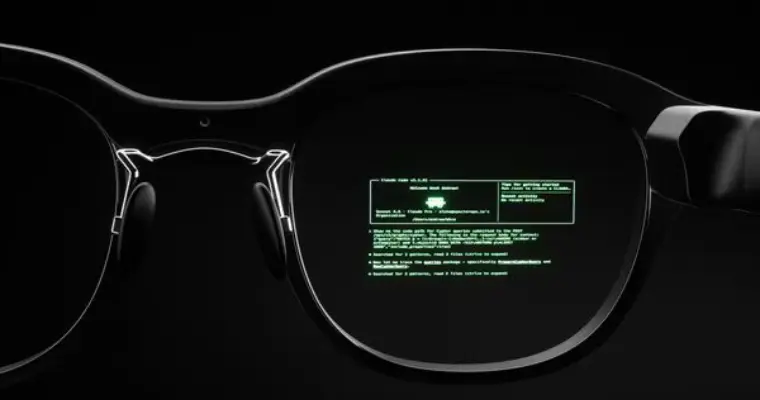
- Monako Glass, the first sole Linux wearable computer in glasses form, presents itself for developers and AI users.
- The glasses facilitate on-device AI coding and agentic infrastructures, containing a lot of code and code tools with gesture control.
- Unlike consumer-centric glasses, Monako Glass emphasizes privacy as its core feature, avoiding surveillance controversies seen in Meta Ray-Ban glasses.
Custom wearables step into the market during a critical phase influenced by AI and developer necessity. As artificial intelligence comes in close proximity to users, it aims to make the workflow feasible for users. A Chinese startup has launched Monako Glass, claiming it to be the world’s first wearable Linux computer built into smart glasses.
The target audience is developers, AI users, and researchers, turning it into a computing platform. Instead of depending on cloud systems, the glass runs Claude Code and Codex with a heads-up display. Product is an example of evolving productivity towards form factors that integrate AI without affecting security.
What is Monako Glass?
Monako Glass resembles ordinary glasses but functions as a full-fledged computer. It weighs about 48 grams, including smart glass components such as a camera, speakers, and display. What makes it different is that it runs a custom Linux-based operating system, MonoOS, locally on the system rather than depending on a cloud backend.
MonoOS uses a Lua-based application layer that allows apps to run with small memory footprints between 200 and 500 kB. This structure enables Monako Glass to act as a computing platform, making it distinct from existing smart glasses.
How Does Monako Glass Handle AI Production and Gesture Control?
Monako Glass revolves around the idea that users demand what they want, and AI agents execute that command. During the launch, creator Candy Yue demonstrated how users can do research, create presentations, and build entire applications through mere voice commands. The glasses also contain coding tools such as Claude Code and Codex, which allows the developers to interact with the agents from a heads-up display.
During a demonstration, an AI agent created a custom app from a voice prompt and informed the user once it was completed. These personalized apps can be placed across business niches such as education, business, software development, conducting research, and gaming.
Monako Glass contains a unique component, which is its bone conduction microphone, placed near the user’s nose to capture vibrations. This helps the device to bifurcate the user’s noise from the background sound, even in loud environments. Additionally, the glass includes an inbuilt engine powered by a 0.5 TOPS NPU, which facilitates gesture interaction.
If users raise their hand, they can summon menus and tap to select apps, and even adjust volumes with physical gestures. The blend of precision and gesture control reduces dependency on external factors and boosts productivity through the glasses.
Also Read: Meta is Reportedly Developing an AI Pendant that Records and Summarizes Daily Conversations
Monako Glass Distinct Nuance from Meta AI Glasses?
Technology comes with a hefty price, which is a constant worry for security. According to Forbes, it is particularly witnessed in wearables that contain cameras and microphones, Meta’s Ray-Ban smart glasses, highlighting constant, consistent concerns around data collection and unwanted capturing in public spheres. Monako glasses are different as the artificial intelligence agents run natively on a Linux-based system, which minimizes the need for interaction. It focuses on computing with developer-centric cases and thus positions Monako Glass as a tool for creativity. This feature primarily addresses the security concerns associated with such wearables.
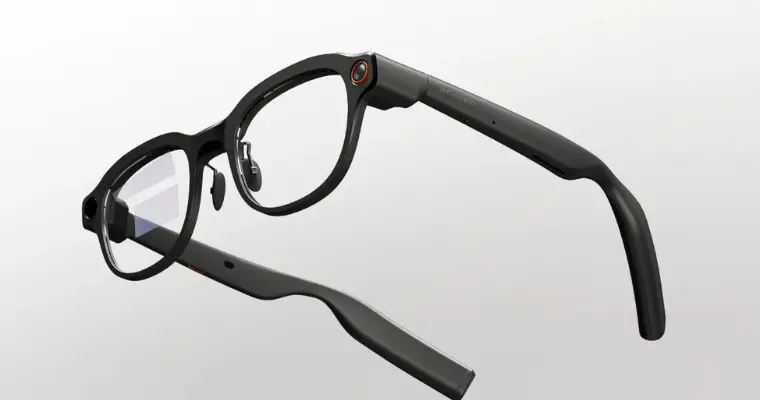
Monako Glass is a milestone in the smart glass industry, prioritizing workflows and privacy concerns. By adding a sole Linux operating system, AI coding tools, and gesture interaction, it redefines smart glasses as a device for essential productivity. While the reach is still limited, it offers an appalling glimpse into a future where AI productivity moves further into the wearable industry without compromising autonomy.