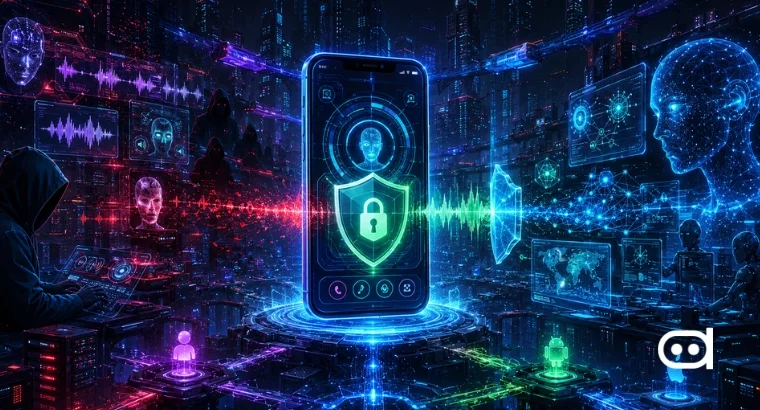
- Google just announced a new Fake Call Detection feature for Android in June 2026, stepping up against the surge in AI-powered voice impersonation scams.
- With this tool, when you get a call from someone saved in your contacts, your device and the caller’s device run a quick verification check, but only if both people use the Phone by Google app on Android.
- This way, you know the call is actually coming from that person’s device and not just someone pretending.
This technology definitely steps up security for people in Google’s Android circle. Still, there’s one thing: it doesn’t help if you’re talking to iPhone users or anyone outside Google’s ecosystem, since the verification won’t work across platforms.
Scammers keep getting trickier as AI raises the bar for phone fraud. It’s now easy for con artists to use voice cloning tools to fake someone’s voice after listening to just a short clip. They combine this with caller ID spoofing to make their impersonations almost seamless. At this point, you can’t trust that the name on your screen actually means you’re talking to your mom or someone else.
How Google’s Fake Call Detection Verifies Trusted Callers
Google rolled out Fake Call Detection to fight back against these scammers. The idea is simple: verify that a call really comes from the contact’s device. Google sees this as a new trust signal when it’s getting harder to tell what’s real and what’s fake. But unless both caller and recipient use Android with the Phone by Google app, some people are left out which means the system’s reach is only as broad as its ecosystem.
Taking a closer look, Fake Call Detection depends on verification between Android devices using Phone by Google. When someone calls, their device sends a secure signal for your phone to check. If it matches, you’re good. If it doesn’t, or if it’s missing, you get a warning that things might not be what they seem.
Fake Call Detection tackles a huge flaw in the current phone system, where it’s way too easy to spoof caller IDs. Scammers can make any number pop up, so people think they’re talking to someone they trust. Tying trust to the device itself and not just the number on the screen makes life harder for impersonators.
The stakes keep rising as these AI scams get more sophisticated. It’s become common for fraudsters to clone voices and push fake emergencies that pressure people to send money or give up sensitive information. Device-level verification adds a roadblock. Faking a phone number or even a voice isn’t enough if you can’t fake the device, too.
Google rolls out fake call detection to protect against AI deepfake impersonation scams https://t.co/ZHrj6bUKtM
— TechCrunch (@TechCrunch) June 2, 2026
Why Cross-Platform Calls Remain a Security Challenge
For Android users on this system, it’s a real defense. But talking about cross-platform, the shield drops. The feature relies on both caller and recipient using the technology; it doesn’t work if one side is on iOS or a brand that doesn’t support Google’s system.
That leaves a big gap. If a scammer pretends to be a family member with an iPhone, the Android user won’t have reliable verification. If an iPhone user gets tricked by a “Google contact”, they can’t check either. So, as it stands, scammers can just focus on people outside Google’s ecosystem, kind of like how email security wasn’t bulletproof until most companies got on board with the same standards.
Without cross-platform compatibility, the feature risks becoming a powerful but partial solution, one that raises security for Android users while leaving significant portions of the mobile ecosystem exposed.
Also read: Gemini in Chrome Could Transform Everyday Android Web Browsing
Google’s new Fake Call Detection is a smart move and a solid answer to new kinds of AI-driven fraud. Switching trust from caller ID to device-level checks makes impersonation much tougher. But to truly shut down phone scams, the whole industry: other smartphone makers, carriers, and standards bodies, need to work together. Until then, this feature is a strong start, but it doesn’t protect everyone. Only a broader, unified approach can close all the loopholes.