Grok /goal and Claude Artifacts are two artificial intelligence coding agents, but they are unique in how they address the problem of managing massive, lengthy technical work without manual intervention.
Grok Build has introduced /goal, a mode designed for sovereign task execution that runs until the task is verified. On the other hand, Claude Code has introduced artifacts, a method for converting live coding sessions into consistently updating shareable web pages. The common aim is to reduce oversight in complex technical workflows, but they differ in how work is tracked and executed.
What is Grok Build’s /goal and Claude Code’s Artifacts Approach?
/goal in Grok build contains continuous independent execution. Instead of a consistent back-and-forth movement between a developer and the AI, the agent facilitates a task end-to-end. Once a goal is completed, the agent plans an approach, breaks the work into a checklist of progress steps, and begins executing. The agent consistently works until the task is completed and verified. This may include inspecting web pages, reviewing code, or executing scripts.
Users can still add extra instructions while the agent is performing, but the core aspect is to reduce oversight. Monitoring tools allow users to track progress, and once the work is complete, the interface switches to a state in which all checklist items are marked as done. Conclusively, /goal treats AI as a sovereign executor, emphasizing work completion rather than just assisting with steps along the way.
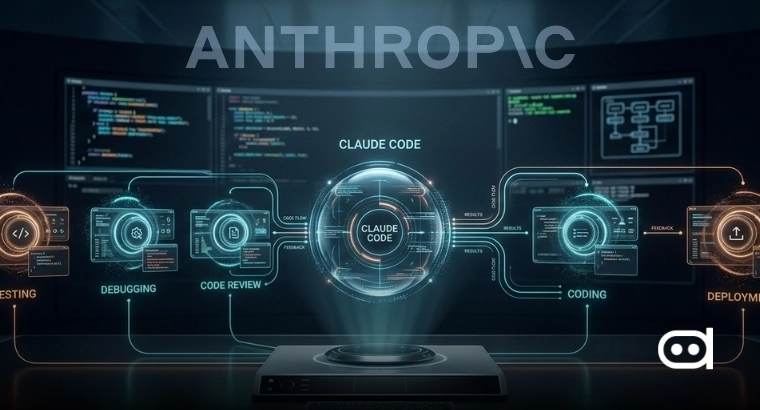
Claude Code has a slightly different approach. It emphasizes shared visibility rather than sovereignty, and after a Claude Code session, you can convert it into a live artifact, a web-based page that shows the development, the progress, and outputs in real time. These artifacts do not summarize the outcome, but evolve from the coding session itselfIntroducing Grok Build. Artifacts can work for debugging investigations, pull request walkthroughs, release checklists, or dashboard system maps.
They work on everything present in the session: the code base, the conversation, the metrics, the tests, the connected tools, and contextual reasoning. As Claude Code evolves, the artifact updates itself, and collaborators can view and edit it while the work is ongoing. Every update is stored, allowing teams to review changes or restore earlier states. The artifact becomes a common reference point.
Also Read: Claude Sonnet 5 Leaks: What Users Can Expect & Other Details
Why Autonomy and Visibility Give Rise to Different Models?
The difference between /goal and Claude Code artifacts depicts the contrasting assumptions about collaboration. Grok /goal decreases human intervention during execution. The agent organizes, verifies, runs, and completes tasks on its own, with users stepping in to guide. This model focuses on speed and task completion over moment-by-moment visibility. On the contrary, flawed code artifacts focus on accountability. The work remains visible at all times, even when it is in progress.
Teams can follow investigations as they develop, see failed outcomes, partial findings, and changing metrics. This is useful in debugging, incident response, or cross-functional reviews when shared commitment matters, and information matters as much as the outcome. Neither approach replaces the other. They are utilized for different kinds of work. Forward execution suits implementation tasks, while live artifacts offer exploratory review-heavy workflows.
With /goal, employees can manage implementation tasks such as script execution, code review, or output validation for any agent until completion. Executing the checklist makes development measurable without supervision. Claude code artifacts function on live documentation. Legal teams can build license audits, security teams can tie findings to specific lines of code, SREs can turn incident pages into post-mortems, and managers can track several requests from a single artifact type into real-time work. The key differentiation is that /goal focuses on doing the work, while Artifacts focuses on showing the work as it evolves.
Grok’s /goal mode and Claude Code artifacts deal with lengthy tasks as two sides of a coin. One focuses on independent completion with fewer interruptions, and the other focuses on shared understanding through consistent updates. Both decrease manual intervention in different ways. Altogether, they depict how artificial intelligence transitions into execution and collaboration force models with different needs.