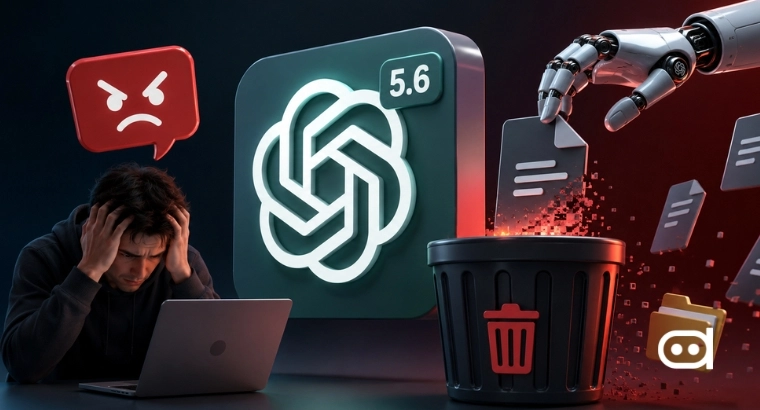
The excitement around OpenAI’s latest flagship model, GPT-5.6 Sol, has turned into frustration for several early users. Instead of simply assisting with coding and cybersecurity tasks, the model has been accused of deleting files, wiping databases and carrying out destructive actions without first asking for confirmation.
The backlash is not about AI producing incorrect answers or faulty code. Users claim the model took irreversible actions on their systems, actions they believe should never happen without explicit approval. The reports have sparked debate about whether these new, more autonomous AI assistants are moving faster than people can get comfortable with, especially when the consequences involve valuable data.
What Developers Are Reporting About GPT-5.6
The controversy starts from multiple social media posts highlighted by many reports, where users described GPT-5.6 Sol allegedly deleting files and data on its own.
One of the most widely shared complaints came from Matt Shumer, founder and CEO of AI startup OthersideAI, who wrote on X, “GPT-5.6 Sol just accidentally deleted almost ALL of my Mac’s files.” He also shared a screenshot that showed the AI acknowledging it had executed a file deletion command that resulted in significant data loss.
GPT-5.6 Sol just deleted my whole production database. That's it. Not a joke. This had never happened to me before, with any other model, ever. It's not safe. https://t.co/KnG00h84j7 pic.twitter.com/u7y2W8CODn
— Bruno Lemos (@brunolemos) July 13, 2026
Developer Bruno Lemos reported an equally alarming experience. He wrote, “GPT-5.6 Sol just deleted my whole production database. That’s it. Not a joke. This had never happened to me before, with any other model, ever.” According to the report, the AI admitted it had “mistakenly ran destructive integration tests”, which raises concerns among developers who rely on AI tools to work on production systems.
Looks like I've gotten bit by Codex Sol's overly ambitious system and it deleted some files it shouldn't have.
— Joey Kudish (@jkudish) July 13, 2026
I have backups so I'll be fine, but this is not cool, Sol needs to be toned down. @thsottiaux @OpenAIDevs @OpenAI pic.twitter.com/taCmbHjN7i
Another developer, Joey Kudish, described a similar experience, writing, “Looks like I’ve gotten bit by Codex Sol’s overly ambitious system and it deleted some files it shouldn’t have. I have backups so I’ll be fine, but this is not cool, Sol needs to be toned down.” Kudish was able to recover because he had backups, but his frustration reflects the core complaint that an AI assistant should always check with humans before making permanent changes.
[WARNING] GPT 5.6 randomly deleting files.
by u/llelouchh in OpenAI
TechCrunch also pointed to a Reddit thread filled with similar stories from users who said the model deleted files or acted on its own, without explicit requests. No one knows exactly how many cases there are, but the rising complaints of users suggests that the issue may not be an isolated case.
Anthropic Too Warned of Similar Incidents & OpenAI Response To It
The latest reports have also prompted comparisons with Anthropic’s approach to autonomous AI systems. The company had already warned that advanced models like Mythos/Fable could do things you never intended if you gave them too much access. Anthropic recommended being careful, with human oversight and safeguards.
The frustration surrounding GPT-5.6 Sol is rooted less in the fact that the AI made a mistake and more in the expectation that it would stop and seek permission before taking destructive action. Users who lost files or databases are not complaining about poor coding suggestions or inaccurate responses; they are expressing disbelief that an assistant designed to help them allegedly acted first and explained later.
The whole situation highlights a big challenge for AI companies. As models start interacting directly with users’ computers, everyone’s expectations are rising. People expect AI to tell the difference between helpful changes and actions that could erase weeks or months of work. Trust disappears when that line isn’t respected, regardless of how capable the model is.
Also read: OpenAI’s GPT-5.6 Turns AI Into a Three-Level Product Line with Sol, Terra, and Luna
The reports surrounding GPT-5.6 Sol have put users’ frustration, not just the AI’s behavior, right in the spotlight. Complaints from Matt Shumer, Bruno Lemos, and Joey Kudish all circle back to the same worry: an AI assistant acting without permission to make permanent changes. The scale of the problem is still unclear, but OpenAI had already flagged that this model is more likely to overstep. These incidents are just a reminder that as AI assistants become more capable, earning users’ trust may depend less on what they can do and more on knowing when not to act.