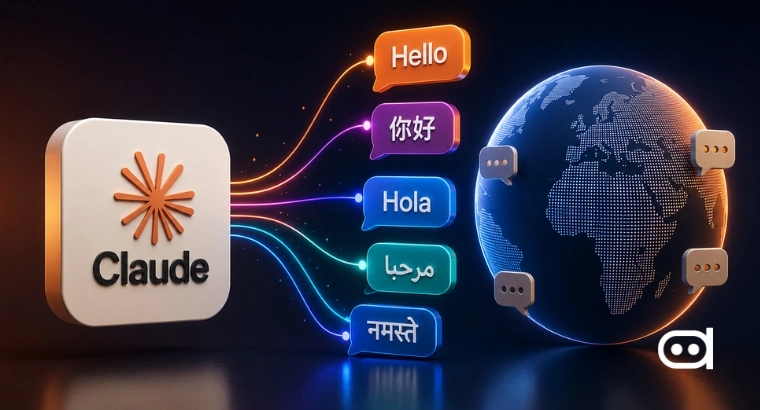
Artificial intelligence is usually evaluated on metrics such as accuracy, reasoning, coding ability, and safety. But Anthropic’s latest research suggests there is another aspect that deserves equal attention: the values an AI expresses through the way it communicates. In its study, the company examined whether Claude behaves consistently across different models and languages or whether its communication style changes depending on the context. Rather than measuring intelligence alone, the researchers looked at how the AI balances qualities such as warmth, caution, rigor, brevity, and honesty in its responses.
To conduct the research, Anthropic started with more than 3,300 identified values, grouped them into 339 broader values, and analyzed around 310,000 anonymized Claude conversations. The study found that these behaviours could be summarized into four measurable dimensions, providing a structured way to understand how Claude communicates beyond traditional performance benchmarks.
Anthropic Says AI Values Can Be Measured Across Models and Languages
According to Anthropic, Claude’s behaviour can be understood through four measurable dimensions:
- Deference vs Caution: Does Claude try to accommodate users’ preferences, or does it lean toward highlighting risks and safety concerns?
- Warmth vs Rigor: Are responses friendly, empathetic, and conversational, or are they analytical, precise, and focused on accuracy?
- Depth vs Brevity: Does Claude offer detailed, thorough explanations, or quick, concise answers?
- Candor vs Execution: Is Claude more likely to admit uncertainty and limitations, or does it aim for a polished, action-oriented reply?
The research found consistent differences across Claude models. Sonnet 4.6 produced responses that were warmer, more deferential, and more concise. Opus 4.6 leaned toward rigor while remaining relatively concise and task-focused. Opus 4.7, was found to be more cautious, more detailed, and more willing to acknowledge uncertainty or challenge assumptions.
Anthropic also found that Claude’s style shifted with language. English answers were more rigorous, cautious, and detailed. Hindi came out the warmest, while Arabic replies were warmer, deferential, and concise. Russian was the most rigorous, Dutch was the most candid about uncertainty, and Indonesian answers were the most execution-oriented.
The company also says that these findings should not be interpreted as characteristics of the languages themselves. The differences might come from variations in training data, cultural habits in communication, or how behavioural training transfers between languages.
In previous research, we found that Claude expresses over 3,000 values, like honesty and warmth. In new work, we asked how the values Claude expresses vary between Claude models and across languages.
— Anthropic (@AnthropicAI) July 13, 2026
We analyzed 300K+ anonymized conversations to find out.https://t.co/PgxsMXipt5
Should AI Adapt to Different Cultures and Languages, or Behave the Same Everywhere?
Anthropic’s research raises a bigger question: Should AI adapt its communication style to fit different languages and cultures, or stick to a consistent style everywhere? Humans switch up their communication style depending on the situation. We change tone, formality, and how we explain things depending on who’s listening and the language we’re using. If AI does the same thing, it might make conversations feel more natural and relevant for people everywhere.
But there’s another angle. The style of response affects how much people trust AI. An encouraging, warm answer reassures users, while a cautious, rigorous one might get them thinking harder about the facts. If people ask the same question in different languages and get answers that differ in warmth, caution, or detail, it brings up serious concerns about fairness and consistency. This matters even more in fields like healthcare, education, law, or public services, where how advice is given changes how it’s interpreted. Sure, adapting to local languages and cultures could help accessibility and user experience, but AI should deliver the same caution, transparency, and detail to everyone, no matter the language.
Also read: You Can Soon Talk to Claude in Your Native Language as Anthropic Adds 18 More to Claude Voice
Anthropic’s research shifts the conversation about AI evaluation beyond intelligence and safety to include communication style and expressed values. While the research does not conclude whether AI should adapt to every culture and language, or stay consistent everywhere, they show measurable communication differences already exist. As AI becomes part of daily life, paying attention not just to what it says, but how it says it, is about to get a lot more important.