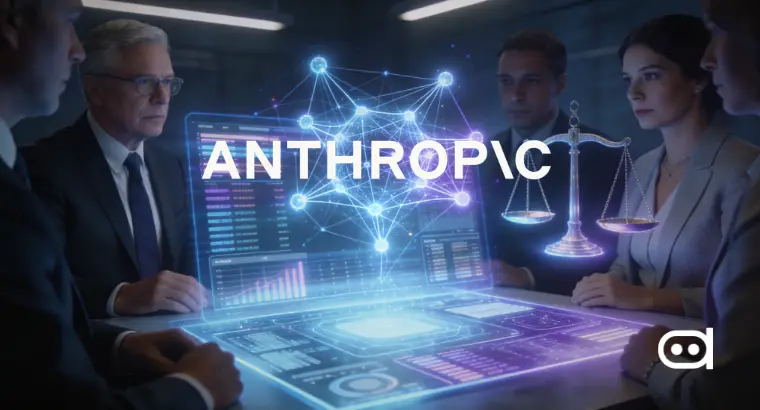
- Anthropic has suggested that advanced AI systems should come with clear, predefined conditions for when development needs to stop and just as clear criteria for when it’s safe to start up again.
- The idea has started another round of debate about AI safety, but it also surfaced a trickier question: who actually has the authority to say an AI system has become so risky that it should be stopped? Right now, as AI companies race to roll out stronger and smarter models, there’s no recognized authority to make that call.
Anthropic’s newest warning says we need to draw clear lines in advance; lines that, if crossed, force us to stop building until we understand the risks. And, just as importantly, they want the rules for resuming work to be set ahead of time. That gap matters, because that pause isn’t just a technical or scientific question. It affects governments, companies, investors, workers, and whole economies. And as things stand, there’s no obvious institution with the authority to issue that order.
Anthropic Wants to “Pause” on AI but Who Gets to Decide when AI Becomes Too Dangerous?
Anthropic’s logic behind wanting too ‘pause’ on AI sounds reasonable enough. If future AI systems become capable enough to create unacceptable risks, developers should slow down or stop until those risks are better understood. On paper, that sounds reasonable. But the trouble starts as soon as you try to take this idea from theory to the real world.
Imagine a new AI model displays some skill that a bunch of researchers call unsafe. Who says that skill crosses the red line? Who checks the evidence? Who actually verifies all this? None of those are technical problems. They’re questions about authority.
We don’t have a global institution equipped to make these kinds of calls. Sure, governments regulate industries, but the reality is AI is moving fast in labs all over the world, under all sorts of laws and priorities. There’s no worldwide AI regulator whose decisions everyone respects.
Getting the leading AI companies to hold that power doesn’t add much clarity either. Firms like Anthropic have amazing technical talent, but they’re also direct participants in the race to launch the next big model. Leading AI companies are talking about needing an emergency brake for technology that could reshape everything, but there’s nobody officially in charge of when or if those brakes get hit.
Why a Pause may be Impossible without a Global Authority
One reason Anthropic’s proposal stands out is it points at a tough reality that no major AI company can hit pause by itself. All the major firms talk about safety but if one slows down and the rest stay in the race, the cautious company just falls behind.
Competition is not the main concern here, but it’s part of why figuring out authority is so crucial. If one company sees danger and stops, and its rivals race ahead, that pause becomes a self-inflicted wound which is why no one wants to take initiative.
In practice, a pause only works if several firms agree and group action only sticks if there’s an accepted decision-maker whose decision everyone trusts. Without that, every warning about dangerous AI comes down to opinion. One research team might see a red alert; the next sees a manageable risk. Governments won’t always line up either; one says stop, while another pushes ahead for strategic reasons.
The real issue isn’t whether AI will eventually reach a point where stopping makes sense. It’s about whether anyone, anywhere, will have the legitimacy and power to get everyone on the same page when that moment comes.
Anthropic is calling for top AI labs to weigh slowing the pace of development, suggesting that AI systems are advancing so rapidly that they may soon be able to improve themselves without human intervention in ways that could pose societal risks. https://t.co/8c7xkeX17B
— The Wall Street Journal (@WSJ) June 4, 2026
Also read: Is Anthropic’s Opus 4.8 Really “Honest,” & How So?
By laying out clear criteria for pausing and restarting AI work, Anthropic assumes somebody out there will have the authority to enforce those rules. Right now, that person or institution doesn’t exist. There’s no global regulator and no single group empowered to make decisions that affect the world.
So, the real challenge uncovered isn’t technical. It’s all about governance. Before the world figures out when to stop AI, it first has to decide who gets to make that call.