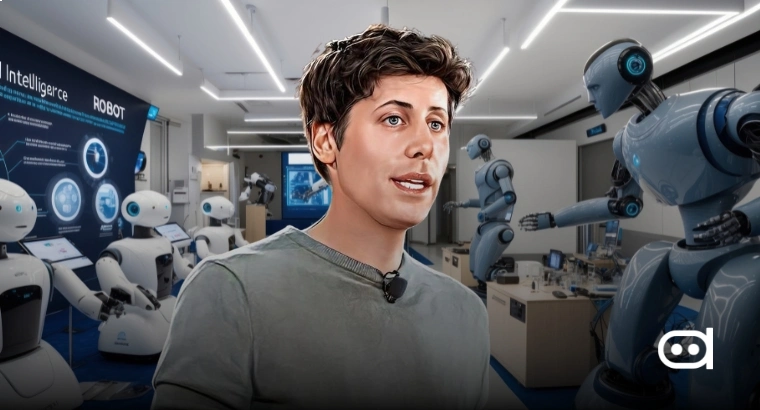
- OpenAI’s CEO Sam Altman went on CNBC on June 1 to reinforce confidence in Stargate which is the company’s massive AI infrastructure project because he believes demand for artificial intelligence will easily justify investing huge amounts in computing power.
- This project isn’t small, OpenAI and its partners expect to invest more than $45 billion into building out the infrastructure that advanced AI systems need.
- Rather than portraying Stargate as a risky move, Sam Altman framed it as a necessary response to surging AI demand. He says, the bigger risk is not having enough capacity to support future growth of AI.
As scrutiny grows around the huge amounts of money going into AI infrastructure, Sam Altman insists Stargate isn’t a costly gamble; he calls it a long-term plan that’ll drive big returns. In his conversation with CNBC’s David Faber, he sounded certain that demand for AI services will keep exploding. All this growth means the world desperately needs more computing power and data centers.
His timing couldn’t be more critical for the industry. Tech firms are investing billions in chips, data centers, and energy just to keep up with powerful models. Some investors worry that everyone’s overspending, but Altman says the opposite: the real struggle is keeping up with customers, not finding them.
Sam Altman Says “People are Right to be Anxious About AI”
In an interview with CNBC, Sam Altman to warn people that the world still isn’t ready for how much people will want AI. He and his team at OpenAI are convinced we’re just at the beginning, and the wave is only going to grow across everything, from consumers to big industries and even governments.
Right now, the biggest constraint for AI companies is raw computing power. More infrastructure leads to better models, which pull in even more users and open up new businesses. So for Altman, investing tens of billions on data centers isn’t some speculative bet, it’s just smart business.
ChatGPT and other OpenAI products are pulling in users fast, which only deepens management’s belief that current investments in infrastructure are well worth it. This isn’t about hoping a market magically appears in a few years, Sam Altman says OpenAI already struggles to keep up with the accelerating interest in its tech.
That’s a big reason Stargate matters so much to OpenAI. The project aims to massively boost the capacity to train and run advanced AI models. With Stargate, OpenAI wants to make sure it’s always ahead of demand, not struggling to keep up.
Stargate live updates: OpenAI’s Altman says ‘people are right to be anxious’ about AI https://t.co/hGflMayISk
— CNBC (@CNBC) June 1, 2026
Why Stargate’s $45 Billion-Plus Investment Matters
Stargate is one of the most ambitious AI-era infrastructure projects out there. OpenAI and its partners are betting that the value AI creates in the future will outweigh what it costs to build the foundation now.
Sam Altman compares this kind of investment to building railroads, phone networks, or today’s cloud computing. Companies that invested early in foundational infrastructure often captured outsized returns once demand matured. OpenAI appears to believe AI will follow a similar trajectory.
He’s not pretending it’s going to be easy. Data centers this size come with their own issues like supply chain constraints, finding enough electricity, building delays. Sam Altman gets that, but his worries are about getting the job done, not whether people will come. To him, the only question is whether the industry can ramp up fast enough.
That kind of confidence says a lot about Stargate’s role. OpenAI isn’t hedging its bets on uncertain demand, it’s investing like AI adoption will be so huge that, years from now, today’s major spending might actually look small.
Also read: Sam Altman Warns Government of Future AI Disruption
When Sam Altman sat down with CNBC, he made OpenAI’s strategy clear. He sees AI demand racing so far ahead that the real danger is coming up short on capacity. If he’s right, Stargate could end up being the standout investment of this AI era, one where the returns justify its extraordinary price tag.