Key highlights:
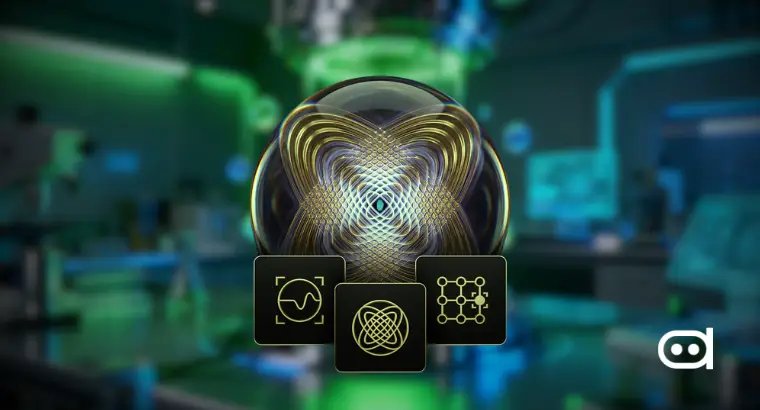
- NVIDIA has launched a new family of open AI models called “Ising” which is meant to improve quantum computing systems by handling error correction challenges.
- It was announced in April 2026, as a part of NVIDIA’s push into quantum computing and hybrid AI quantum infrastructure.
- To stabilize quantum hardware, these models use advanced machine learning techniques which makes systems faster, more reliable, and close to practical real world use.
NVIDIA’s recent push into quantum computing shows the industry is shifting its focus on one of technology’s toughest frontiers. Instead of going after better quantum hardware, the company is investing in artificial intelligence as the way to unlock real quantum performance. Its new Ising models are meant to sit between fragile quantum processors and practical uses, working as a stabilizing and optimizing layer.
Quantum computing has always made big promises like drug discovery, cryptography, and large-scale optimization; but even after years of effort, these systems still make mistakes. The Ising models are a practical move in that direction as they offer tools that could push quantum machines closer to being useful instead of experimental.
AI as the Missing piece of Quantum Computing
The main issue with quantum computing hasn’t been how much math it can do, but about making sure it actually works reliably. Qubits, or quantum bits are extremely sensitive to environmental disturbances. Fixing these errors usually takes heavy manual calibration and complex protocols, both being time consuming and limited in scalability.
That’s where NVIDIA’s Ising models step in. By using machine learning within these quantum systems, the models can tune hardware settings and spot errors in real time. Early signs show they can speed things up and make results more accurate, which lightens the load for researchers and engineers.
What’s really interesting here is Nvidia’s open model strategy. By letting anyone try out these tools, they’re bringing together academic researchers, startups, and big business. That kind of openness might finally break down some of the walls in a field that’s long been tricky, expensive, and isolated.
AI isn’t just for crunching data or handling automation anymore, it’s becoming a key building block in the next era of computing. In quantum, it might be the bridge that finally turns theoretical potential into practical application.
Also read: DeepSeek to Buy NVIDIA’S H200 AI Chip With Some Conditions, China Green-Lights
Hybrid Computing
NVIDIA’s announcement isn’t just about quantum, it also shows a big-picture strategy based on hybrid computing. Rather than betting everything on quantum machines one day replacing classical ones, they see a world where CPUs, GPUs, and quantum chips each play their part, doing what they do best.
Reportedly, GPUs, the heart of NVIDIA’s business, will train and run the AI systems that keep quantum computers running smoothly. Ising models are an expansion of NVIDIA’s AI dominance into the quantum world.
This hybrid approach is gaining attention across industry. Quantum computers excel at solving tough problems like complex probabilities, optimization; but they aren’t built to replace traditional systems for everyday computing tasks. By blending in AI-powered control systems, companies like NVIDIA make it possible to incorporate these new technologies into a single, practical workflow.
This announcement alone has already caught the attention of investors who see AI-boosted quantum computing as the smartest route to real business results. We are still years away from building truly scalable, error-free quantum computers, but tools like Ising could make some real progress in the industry.
These models would still need to prove they can work across various quantum hardware and unpredictable conditions. And this is a fast-moving field with plenty of competition from other major firms. If NVIDIA succeeds, it’ll be about both how well these models work and whether the rest of the quantum world adapts to NVIDIA’s ecosystem.
Wrapping Up
NVIDIA’s Ising AI models mark a real milestone in the path of quantum computing. By tackling hardware setbacks with smart software, NVIDIA is taking aim at one of this field’s toughest issues. The launch also highlights a growing understanding: the future of computing won’t belong to a single technology, but will be all about combining different systems and getting them to work together. If it works, this move could finally bring the long-hyped benefits of quantum computing closer to something we can use, not by dodging complexity, but by managing it smartly.