Key Highlights:
- AI factories consider intelligence as an ongoing output, calculated in tokens per second and watts.
- Regulated inference and agentic workloads redefined infrastructure requirements across NVIDIA’s full-stack system.
- Performance per watt and price per token become the core centric of AI production.
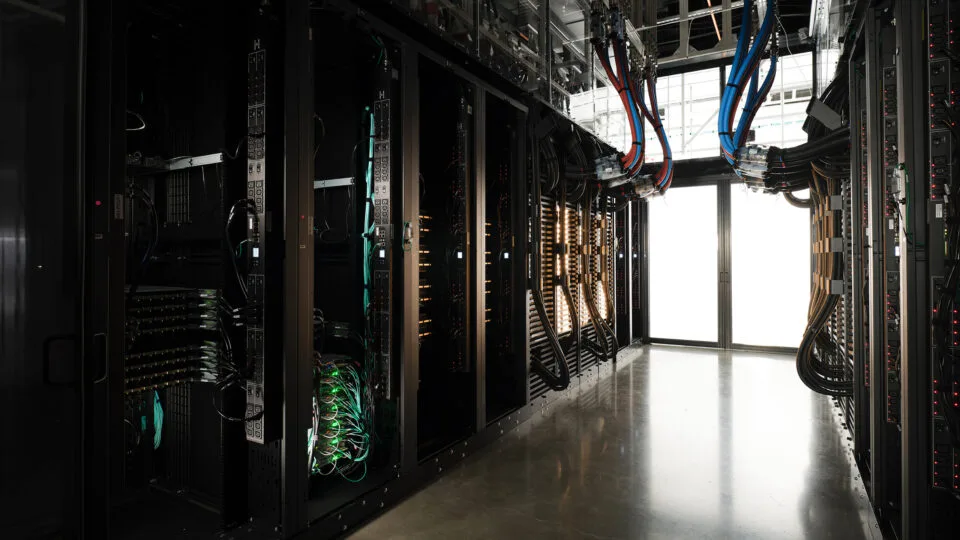
Artificial intelligence is not limited to software or workflows. As the models develop and autonomous agents start to take on real-time updates, AI embeds itself into infrastructure. At the center of this change is AI factories, powered by NVIDIA, which are the new class systems designed to produce intelligence repeatedly.
In this emerging stance, new systems no longer generate fixed outputs yet and convert energy into tokens, which are the fundamental unit of AI. This change reshapes how AI infrastructure is built and regulated.
What is NVIDIA’s AI Factory & It’s Importance
According to NVIDIA, these factories depict a shift from using AI to repeatedly generating outputs. Unlike rigid data centers that store data, AI factories are created to run autonomous systems serving billions of requests. These systems align with resources and orchestrated environments where the intelligence is constantly refined and generated.
The output is not static, but is full of ideas, creativity, and decisions. AI factories are already operating and optimized across the entire stack, including models, compute, memory, and power, to ensure that intelligence is a core part of the output.
How Agentic AI affects the Workload
The availability of agentic AI affects the infrastructure where responding to tool prompts, planning, and retrieving data takes place. They can also create sub-agents that learn skills of specific niches and adhere to them. This makes the AI’s workflow lengthier, deeper, and significantly more compute-intensive. Inference is an ongoing multi-step process that must remain interactive at every point in time.
Infrastructure actions are dependent on workflows. So intelligence stays in production for the upcoming decision. Agentic AI also creates training data, new ideation scenarios, and cases that allow autonomous systems to continuously develop.
As an outcome of this practice, the boundary between inference and practice becomes placid, placing further demands on flexibility.
Also Read: Meta is quietly testing premium subscription plans for its AI chatbot
Why Inference is an Orchestration Challenge
As the AI workflow becomes more responsive and lengthier, inference acts as an orchestration problem. AI factories must streamline requests, store memory, and coordinate services with utmost utilization across the system.
Autonomous agents depend on computing that contains faster memory, great storage, networking, software, and CPUs for execution. Workflows move strategically across the stack with tight constraints.
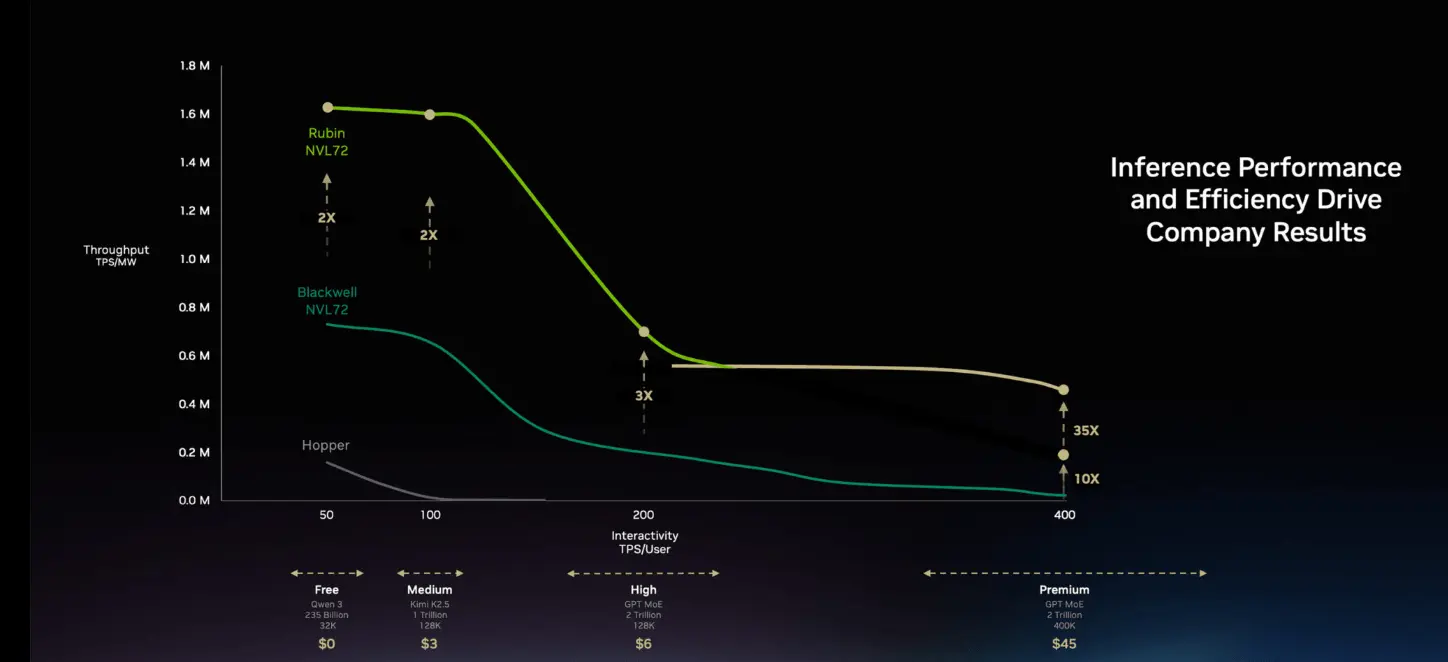
This makes the full-stack co-design crucial. Networking, hardware, storage, and software must be woven together and thoroughly optimized to reduce the cost per token and create a suitable output. In AI factories, the software efficiency aligns and determines how much output the system produces, with higher revenue.
How AI Factory Economics Work
Considering the AI factory AI Factories Evolve to Manufacture Intelligence in Real Time model, economics are defined by certain metrics, such as tokens per second, tokens per watt, uptime, and cost per token. Performance per watt refers to direct revenue for AI producers, while cost per token shows how AIs can scale with profit.
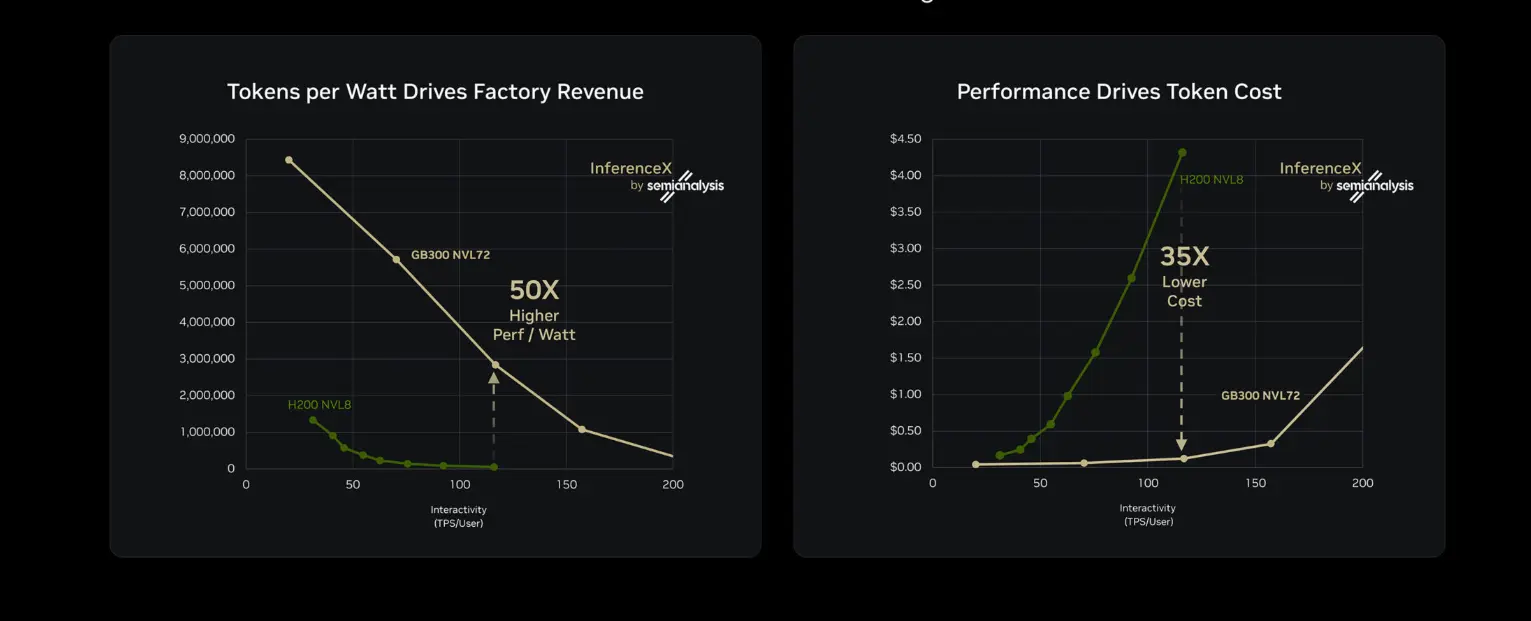
Platforms built on NVIDIA’s Blackwell Ultra GPUs show how higher tokens per watt can drastically affect lower unit costs and increase output within fixed power and space.
According to the blog, what began as a GPU modem transforms into full-stack AI factories with high-speed liquid-cooled systems and autonomous agents. These systems proceed with the help of global partners, including Cisco, Dell, HPE, and Lenovo. AI factories can be embedded across various industries, from the financial and manufacturing sectors to healthcare and public sectors.
They can gradually start by taking up a small load and transform into high-end gigawatt-plus systems. NVIDIA also operates an internal enterprise AI factory where autonomous agents assist in engineering and software operations. This shows that AI factories can transform organizations and embed intelligence smoothly.
Conclusion
NVIDIA AI factories embark on a shift where intelligence is measured and scaled by converting the energy into tokens rather than static data. They turn infrastructure into a mode of action. As the agentic AI evolves, the ability to create efficiently will be a cornerstone for enterprises.