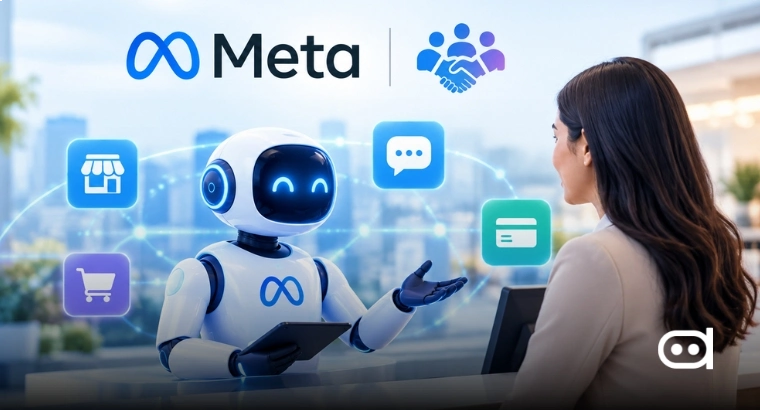
Meta is facing a lawsuit over alleged AI-assisted employee monitoring and productivity scoring used in selecting workers for layoffs. Twenty-six employees have asked a U.S. federal court to halt layoffs scheduled to begin on July 22. They claim the company relied on AI-generated productivity metrics that enabled bias and disadvantaged workers with disabilities, those on medical leave, and employees caring for family members. Meta denies that AI made the layoff decisions. But the lawsuit draws attention to a wider issue. The question is whether workplace surveillance tools that assess employee activity can introduce hidden bias once they feed into employment decisions.
What Does the Lawsuit Allege About Meta’s Workplace Surveillance?
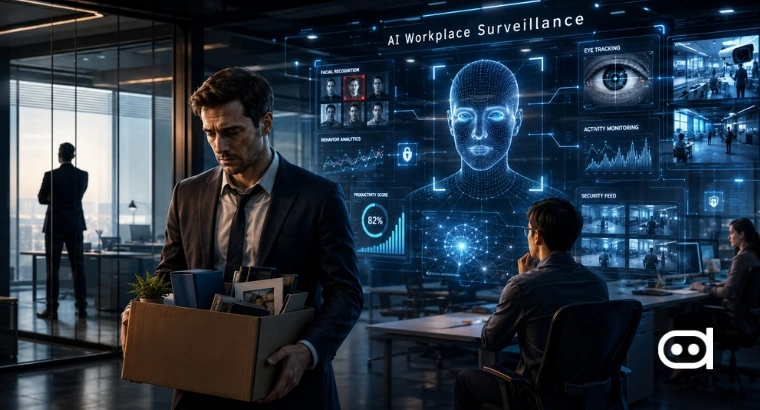
As per the lawsuit, Meta used several AI-assisted internal systems to evaluate employees before deciding who would be laid off. Among the metrics cited are productivity scores, AI token usage, and internal ranking platforms that allegedly helped identify employees for termination. The complaint goes further by describing how those productivity scores were produced. It states Meta collected data from employee keystrokes, screen activity, emails, browsing history, and workplace communications to generate AI-assisted evaluations of performance.
The lawsuit arrives as Meta pushes to expand AI across its daily-use platforms. The complaint also references internal tools including MetaMate, Meta’s large language model assistant, described as an employee-trained second brain that handled workplace documents and communications. Meta has said these decisions were made by humans, not AI. The lawsuit claims that AI-generated productivity benchmarks nonetheless shaped the information managers relied upon.

The complaint argues that productivity-focused AI systems can penalize employees who temporarily work differently because of legitimate circumstances. Workers who apply for medical leave, require workplace accommodations, are pregnant, or care for family members may naturally produce lower activity metrics than colleagues working uninterrupted schedules. If an AI system evaluates digital activity rather than actual job performance, these workers could receive lower productivity scores despite doing their jobs effectively.
The plaintiffs claim this disproportionately affected workers protected under federal and state anti-discrimination laws. They also allege Meta failed to audit its AI systems for potential bias as required under recently adopted California and New York City AI employment regulations. Rather than arguing that AI independently fired workers, the lawsuit questions whether AI-assisted calculations introduced bias into a human decision-making process. None of the allegations have been proven in court.
How Does This Extend the Debate Around Workplace AI?
The lawsuit highlights a shift in how artificial intelligence is being used inside companies. Earlier workplace AI focused on supporting employees through writing tools, coding help, and automation. Now AI is being used to assess output, evaluate work patterns, and support managerial decisions. That raises difficult questions about workplace surveillance.
Monitoring keystrokes, browser history, emails, and screen activity can supply large volumes of behavioural data. It does not necessarily capture the quality, creativity, or difficulty of an employee’s work. Knowledge work often involves planning, organising, mentoring, or problem-solving that may not show up in digital activity metrics. As companies adopt more AI-powered workforce management, employers may face scrutiny over how monitoring data is gathered, interpreted, and used in decisions affecting careers.
If the plaintiffs succeed in obtaining a preliminary injunction, the case would become one of the earliest legal tests of how AI-assisted employee surveillance intersects with employment discrimination law. Whatever the outcome, the lawsuit will influence how companies design AI-based productivity platforms. Businesses may face pressure to show that employee monitoring tools are accountable, reliable, regularly audited for bias, and used only as one factor among broader evaluations. The case also highlights an emerging divide between AI used to assist employees, which is generally less controversial, and AI-generated benchmarks used to assess or remove them.
The claims move the conversation beyond artificial intelligence toward workplace surveillance and algorithmic decision-making. As AI becomes embedded in enterprise operations, organizations may need to show not only that a human made the final decision, but that the AI-generated data behind it is unbiased, accountable, and does not disadvantage protected groups. The lawsuit could become a key marker in defining how employers can use AI-driven monitoring as part of workforce management.