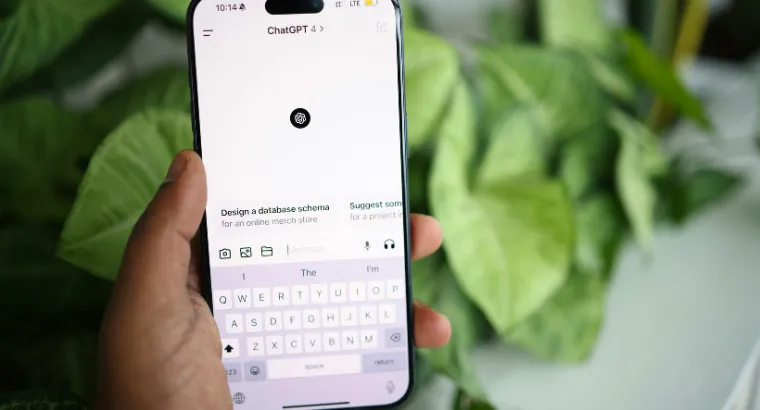
OpenAI has added ChatGPT back to WhatsApp in the European economic area, while also stepping into the South Korean market through KakaoTalk. It has also expanded to Viber in select markets, highlighting how artificial intelligence organizations are working towards stepping in platforms that people already use every day. The move comes after Meta removed ChatGPT from WhatsApp in January 2026, a decision to promote Meta’s own AI vision inside the ecosystem. The recent trend shows that the AI conflict is no longer about the model quality but about who controls the messaging platforms and other daily use platforms.
Why WhatsApp Is the Real Prize for AI Companies
WhatsApp is key to this arrangement as it is one of the most widely used communication apps. When an AI model embeds it within its ecosystem, it will have access to a huge habitual user base. OpenAI returning restores a connection that had been cut off when Meta changed its rules to block general-purpose artificial intelligence chatbots. That removal portrayed how artificial intelligence firms can become on platform owners that control the user dynamics. For Meta, WhatsApp is not just a messaging platform, but a strategic channel.
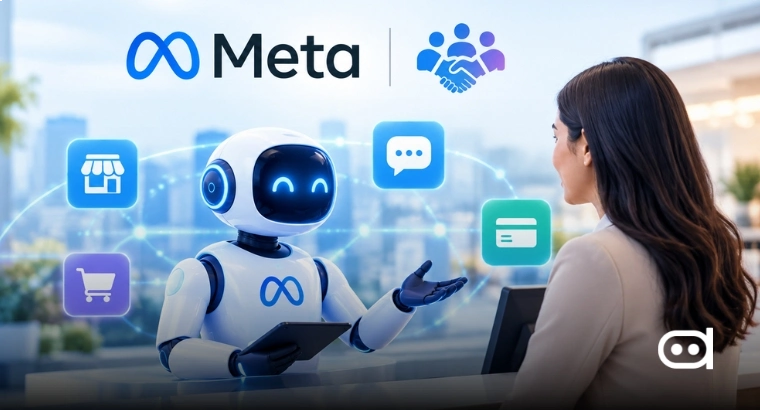
If Meta AI is the default assistant within WhatsApp, the organization can push its product in regular use through chats, searches, summaries, and tasks. That makes Meta AI habitual and easier to normalize, especially because users do not have to leave the app to access it. Strategically, the organization that owns the app has a benefit over the organization that only supplies the underlying AI.
ChatGPT’s return also emphasizes how oversight can reshape platform control. In the European economic area, where regulators have been vigilant in speculating gatekeeping behavior, OpenAI finds a way to re-enter WhatsApp. That is essential because it shows how the artificial intelligence market is formulated by competitiveness and platform rules.
What It Means for Meta’s Ecosystem
WhatsApp is a fragment of Meta’s large ecosystem. Facebook and Instagram already give the organization stature, and both applications have been created to keep users within Meta’s ecosystem for a long time. If artificial intelligence becomes embedded across these platforms, Meta could turn them into an integrated artificial intelligence network, rather than full social media platforms.
That would give Meta AI multiple entry points. On Facebook, it could help with feed summaries, content creation, and customer interactions. On Instagram, it could push creator tools, message lists, shopping assistance, and discovery. Across these platforms, the company could make AI feel natural rather than optional, which is necessary because most users do not want a separate artificial intelligence application for small tasks.
This is where Mark Zuckerberg’s strategy becomes evident. The company does not need to build a standalone chatbot if it can make its own assistant the easiest one to achieve. This means that Meta can use its magnitude to shape user dynamics and make Meta AI the default mechanism across its services. Even as competitors dwell in, Meta still controls the surface area where the interaction begins.
Also Read: Meta Increases Hyperion AI Data Center Investment to $50 Billion as Compute Demand Surges ChatGPT
Is AI Really Needed in Every App?
The question arises as to whether embedding AI is actually quintessential or not. Having AI within WhatsApp or any other social media platform can remove friction and latency and make the smaller tasks easier. Users can ask a question, create text, summarize a message thread, or get help without switching apps. For smaller quick tasks, that ease matters. But there is also a limit. If artificial intelligence is embedded everywhere because Meta wants to amplify its ecosystem, users may see it as a clutter.
Not every app needs a chatbot, as a center, and not every use case benefits from AI being immediately available. The key issue is whether Meta AI can outpace a standalone assistant in accountability, transparency, depth, or whether it mainly wins because it is already there. It is already present. That is why the comparison with ChatGPT matters.
OpenAI’s product is generally seen as a focused, general-purpose tool, while Meta AI has the advantage of distribution. ChatGPT may stand out for a strong experience, but Meta can win if convenience, defaults, and regular use are more important than depth. The competition is therefore not just about intelligence, it is about whether users choose a dedicated AI destination or simply use an assistant built into the daily use app.
The shift is reflected through a change from model race to distribution. OpenAI’s return on WhatsApp along with its extension into KakaoTalk and Viber, reflects that artificial intelligence companies want to tap the high-frequency platforms. Meta, meanwhile, has every medium to tighten its control over WhatsApp, Facebook, and Instagram, so that Meta AI becomes the prevalent choice for billions of users. That makes the next phase of artificial intelligence conflict much bigger than chatbots.
It is about who owns the regular users platforms, who controls the interface and hooks them to be a part of the everyday cycle. The companies that win the distribution may end up deciding how people use AI, far more than companies that build the models alone.