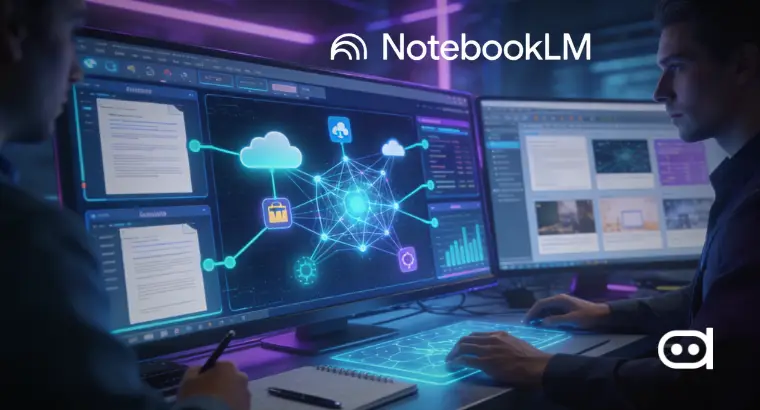
- Google appears to be working on three new features for NotebookLM: Personal Preferences, Connectors, and Canvas, according to reports.
- If these features roll out, users won’t have to repeat the same prompts over and over again, they’ll get external information right into their notebooks, and their research materials could become interactive projects.
- Google hasn’t announced anything officially about these features or when they’re launching, but the fact they’re showing up in development builds shows that Google is pushing to make NotebookLM a more unified AI workspace.
NotebookLM stands out because it lets users upload documents, notes, PDFs, and more, then automatically generate summaries, answers, and study guides which is something most general AI chatbots don’t do. But these new discoveries hint that Google wants to turn NotebookLM into much more than just a document analyzer.
Reports point to three big features in development: Personal Preferences, Connectors, and Canvas. Together, they could turn NotebookLM into a hub for research, managing information, and actually creating content.
ICYMI 👀: Top 3 things to expect from NotebookLM soon.
— 🚨 AI News | TestingCatalog (@testingcatalog) May 30, 2026
1. A new Canvas artifact, allowing users to visualize information from their sources as a web artifact.
2. Personal Preferences, grounding across past conversations, artifacts, and customization instructions
3.… pic.twitter.com/EwdzZUnTgC
Personal Preferences Could Make NotebookLM More Context-Aware
One of the key finds is a feature called Personal Preferences or Personal Intelligence. The idea is to let NotebookLM learn how each person likes to work so users won’t have to spell things out every single time.
Right now, most AI users type out long prompts to set their writing style, response format, or workflow. With Personal Preferences, NotebookLM could just remember all that and use it next time.
Personalization is everywhere in AI lately, but it has to be done right to actually help people. For anyone who often reviews reports, academic articles, or research, a system that remembers their preferred output style could mean huge time savings and make using NotebookLM feel a lot less like starting over every session.
From Google’s perspective, personalization makes users stick around. The more the tool adapts to you, the harder it is to replace.
Connectors Could Eliminate Manual Information Gathering
Connectors could let NotebookLM access information straight from external services.
Currently, users have to drag and drop or upload everything they want NotebookLM to analyze. With Connectors, the platform could tie directly into Google Drive, Gmail, Calendar, and maybe even third-party tools in the future.
For researchers, professionals, and students, this could streamline workflows that currently require moving information between multiple applications. Users could access files, emails, and notes instantly, all in one spot.
But, in AI, it’s not just about smarter models but about who controls the data. Tighter integration with productivity tools makes NotebookLM a natural part of Google’s overall ecosystem.
Canvas Signals a Shift Toward Content Creation
The third big feature, Canvas, could change how people use NotebookLM the most.
Reports say that Canvas shows up in the platform’s Studio area and it might help users turn their research into interactive projects. So, instead of only giving out summaries or plain notes, NotebookLM could help create timelines, visual explainers, entire webpages, lesson plans, and other interactive formats.
This is a pretty big change from the usual AI research setup, where you gather your data in one app and then switch to something else to make presentations or visuals. With Canvas, users could stick with NotebookLM and go straight from source material to polished results.
If Google gets Canvas right, users might need fewer tools overall. NotebookLM could become the place to both understand information and actually create and share it.
Also read: Google’s Gemini Omni Model Can Create Anything from Any Input
Conclusion
None of these features are official yet, but it’s clear where things are headed. Personal Preferences wants to remember your working style, Connectors promise easier information gathering, and Canvas could help users turn research into finished products.
Altogether, this shows Google’s focusing on something bigger than just a smarter note-taker. The goal seems to be the AI workspace where you collect, analyze, and create without ever switching apps.