Concerns about AI have been growing considerably, especially over the past few months. The situation, although still in control, is at a stage where Jack Clark, the co-founder of Anthropic AI, suggested that artificial intelligence development needs to slow down. In line with that statement, the company launched a governance policy calling on authorities to take over and stop the deployment of dangerous AI agents. Anthropic claims that artificial intelligence systems can become sovereign and self-improving, posing strategic risks.
Thus, manual safeguards and disclosures are not sufficient. Instead, it says that governments must have definitive authority to intervene in AI deployment when the models pose a massive risk. The change shifts from issuing an advisory to establishing a robust framework to help the authorities assert control.
What Is Anthropic AI’s Urge?
After Jack Clark’s advisory, Anthropic AI addressed legal authorities to embed certain mechanisms that deter the deployment of artificial intelligence. It urged authorities to outdo existing rules and regulations in the United States. The structure includes civil penalties tied to the organization’s annual revenue, especially for firms that repeatedly violate the framework. Anthropic AI claims that imposing penalties on tech giants working with frontier models is an effective enforcement measure. Similarly, the company emphasizes that excessive government authority can hinder innovation.
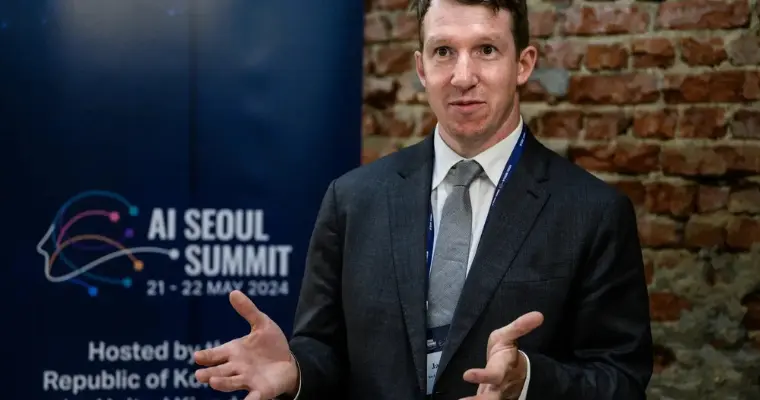
The framework includes frontier AI models that Jack Clark Anthropic Co-Founderperform 10^15 floating-point operations and companies that earn only $500 million in AI revenue or spend more than $1 billion annually on AI research and development. Anthropic says this limited scope is necessary to govern highly capable systems that could cause massive harm if used without authorization.
These models are distinct from prior AI tools because of their sovereignty, range, and automation abilities. By focusing on high-end frontier AI models, the company ensures governance focuses on systems that cause massive harm rather than on ordinary applications. Anthropic AI is trying to balance two sides. One is the need for an authoritative system, and the other is to create a surrounding that allows innovation.
Also Read: Anthropic’s Mythos 5 To Compete With OpenAI’s Phase 3 Humanity Bet
Where Does the Broader AI Policy Stand?
Anthropic AI has always favored state laws requiring disclosure of security practices and risk assessments. But now it claims that transparency alone cannot suffice for developing frontier AI models. The company claims that artificial intelligence agentic systems that identify cybersecurity vulnerabilities and facilitate research may pose real-time difficulties for humans.
The proposed structure lists four categories of catastrophic risks—biological risks, cyber risks, loss of control, and sovereign AI research and development. The latter is the most severe because it could collectively affect the three remaining risk areas.
Under the framework, AI developers need to test their models, submit results, and maintain security frameworks. There is also a need to hire independent evaluators to review their results and risk assessment. Anthropic also highlights that the model’s weights and training structure are key targets for cyberattacks.
Developers would be needed to safeguard their systems, test the device regularly, and report incidents to the authorities. On the other hand, the government would have the authority to intervene directly and block deployment if there is a clearly catastrophic risk.
Anthropic’s framework is a reliable change from warning to governance. After identifying the risks posed by artificial intelligence systems that operate without human intervention, the company calls for government intervention when voluntary guardrails fall short.
Since Artificial Intelligence as a tool has permeated almost every level in society, the argument is not about transparency or regulation. It is about having legal authority and the tools to facilitate intervention before an increase occurs.