- The latest model launched by Anthropic is designed for research with a stark focus on protein design, biology, and therapeutics.
- OpenAI also claims to enter a third phase, which aims to make AI widespread to support daily goals and economic growth.
- Altogether, these different approaches reflect comprehensive human benefit, with one focusing on science and medicine and the other on society expansively.
After a long-standing AI reign focusing on benchmarks, companies have started focusing on the people. Anthropic and OpenAI are presenting different but similar visions. Anthropic plans to embed AI for biology research, protein engineering, and therapeutic discovery. On the other hand, OpenAI is about to develop the third phase of AI, distributing power and benefit as widely as possible. Altogether, this project suggests a vast shift in how to induce AI to benefit people.
What Is Anthropic’s Emphasis Through the Mythos 5 Model ?
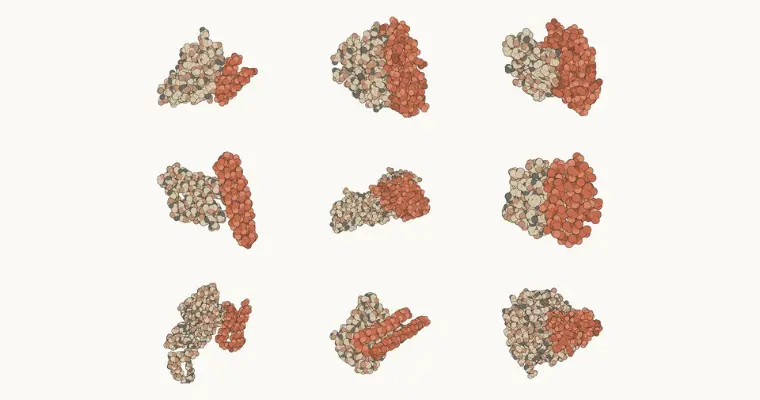
Anthropic introduced Claude 5 and Claude Mythsos 5 for their extensive impact. The company claims that Mythos-class models are capable of performing biological research. Mythos 5 pushed the drug design process around 10 times, functioning workflows handled by scientists. These workflows include identifying protein-binding sites, running protein design and bioinformatics tools, modification after failure, and refining the outcomes without manual intervention.
Out of 14 protein targets, 9 of them had strong drug design candidates that Anthropic states are now under scrutiny. Moreover, Anthropic claims that Mythos 5’s ability can hand out scientific ideas. Its molecular biology hypothesis is 80% better than those of the previous models.
The models also carry out sovereign genomic research, integrating massive single-cell datasets across 138 animal species, and training a machine learning model. Similarly, Anthropic emphasizes restraint, as these biological abilities have a twin use; full access is restricted to trusted users.
For ordinary users, Fable 5 falls back to Claude Opus 4.8 for most biological and technology queries. It possesses immense benefits and certain hidden risks.
Also Read: What Anthropic’s AI Pause Proposal Reveals about the Industry’s Governance Problem
How Is OpenAI Going About Its Third Phase?
OpenAI looks forward to a wider stance. Rather than focusing on one niche, such as biology, it uses AI as a general-purpose feature. AI’s real value does not stem from technological advancements, but from what people achieve with it. OpenAI claims to be documenting a third phase.
The first phase was about AGI research. The second phase is embedding the research in real-life instances. The third phase focuses on making AI widespread, reliable, and secure for everyone, including autonomous users, proprietary organizations, and institutions.
Key to the support is the idea that AI should work for people, not against. OpenAI does not support total automation, highlighting that creativity, guidance, and human judgment are critical for AI to grow and sustain. It also states that concentrated power is unethical and that a suitable future consisting of AI requires scrutiny and public oversight.
While OpenAI’s layers and AI system will help with the necessary research, it emphasizes that the progress made brings conformity, sustainability, and crucial.
Why Are These Approaches Two Sides of a Coin
Abreast, Anthropic, and OpenAI demonstrate two strands of the same chain. Anthropic illustrates AI development across science and medical niches with potential implications for drug discovery. OpenAI states that such power does not remain concentrated but succumbs to human capability and prosperity. Both of these focus on security, uniformity, and reliability with appropriate access. Yet the difference lies in functioning; Anthropic measures the outcome in scientific terms, and OpenAI grounds it in societal structure.
Artificial Intelligence becomes a bearer of physical outcomes. One scales in scientific fields, whereas the other’s third phase frames an extensive vision that answers who gets to use this power. Altogether, they point towards the same outcome that the coming AI will be used to serve humanity.