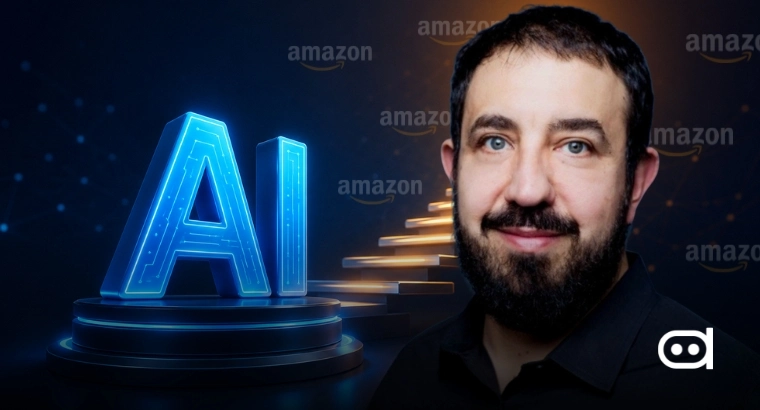
Despite artificial intelligence’s rapid development, the most crucial breakthroughs are still on their way, according to Amazon AI’s Senior Vice President Peter DeSantis. At VivaTech 2026 in Paris, DeSantis claimed that today’s progress, while substantial, accumulates only phases of innovation. He highlighted that current artificial intelligence systems are restricted to managing real-time human interaction, in-depth reasoning, and deeply embedded hardware-software design. Rather than concluding, DeSantis framed the present moment as the beginning, one where improvements in AI chips, models, and ecosystems architecture must merge before AI fully transforms.
What is Amazon AI SVP‘s Perception?
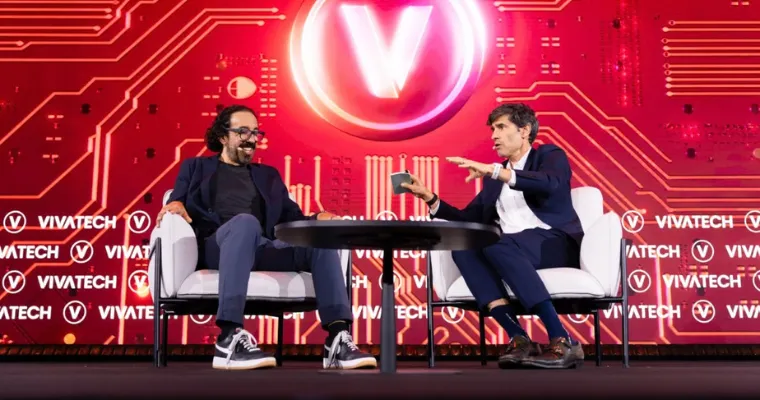
Peter DeSantis, Amazon AI’s Senior Vice President, vision for foundation AI models, customer silicon, and quantum computing, which stems the argument. With 27 years at Amazon, DeSantis has been involved in the company’s development from the early times of EC2, helping lead the acquisition of Annapurna Labs. At the VivaTech event in Paris on 17th June, DeSantis spoke in an engaging conversation with Nick Thomson, the CEO of The Atlantic. His message was concise and clear, where he claims that artificial intelligence is yet to mature and develop fully.
The scientist said that while artificial intelligence models have witnessed massive improvements over the past one or two years, the progress has not delivered substantial outcomes. According to him, AI still needs a couple more orders of magnitude of development before it revamps how work and innovation converge. He also emphasized that today’s transformer-based architecture is powerful but not sufficient enough.
As transformers will develop, future artificial intelligence systems will require novel model structures to support advanced use cases. These upcoming systems must be capable of human interaction at normal speeds and correspondingly respond to subtle cues in conversation and movement. Moreover, the scientist highlighted that humans will remain key to artificial intelligence’s most difficult innovations for the future, regardless of how advanced the technology becomes.
How Do New Chips Shape AI?
One of these scientists’ key ideas is that the future is based on converging hardware and software. He said that the progress slows down when chip designers and model developers work alone. If model designers are clueless of the upcoming hardware abilities, they cannot use them for leading to delays after new chips are released. When done accurately, DeSantis describes this collaboration as a flywheel. Better chips enable better models, while cutting down costs and improving effectiveness, facilitating innovation.
He argued that this chip-model iterative loop remains underrated across the artificial intelligence sector. The scientists also emphasized that AI systems need to adopt human interaction speeds, which are described as operating on a 40-millisecond clock. Achieving that level of awareness and responsiveness will lead to new approaches for both hardware and software, reinforcing his view that the industry is yet to begin.
As for this analyst, early indications of the flywheel phenomenon are already visible. Artificial intelligence startups build world model systems that simulate physics rather than generate text. They’re choosing training and achieving more than the industry average computer efficiency. These examples depict how interconnected coupled advancements in models can unlock substantial gains before the most crucial infrastructure breakthroughs arrive. For this analyst, this development supports the comprehensive claim that the real change will come from interconnected innovation across the entire artificial intelligence stack, not from solo developments in models.
DeSantis’s comments at Viva Tech 2016 in Paris redevelop today’s artificial intelligence progress as a new beginning rather than an end. While substantial gains and novel applications continue to develop, he claims that true transformation of AI will require several leaps in responsiveness, interaction, hardware-software integration, capability, and efficiency. He also witnesses human at the core of the biggest innovation that AI is capable of with the next segment unfolding as he plans the most quintessential breakthrough in artificial intelligence will come through.