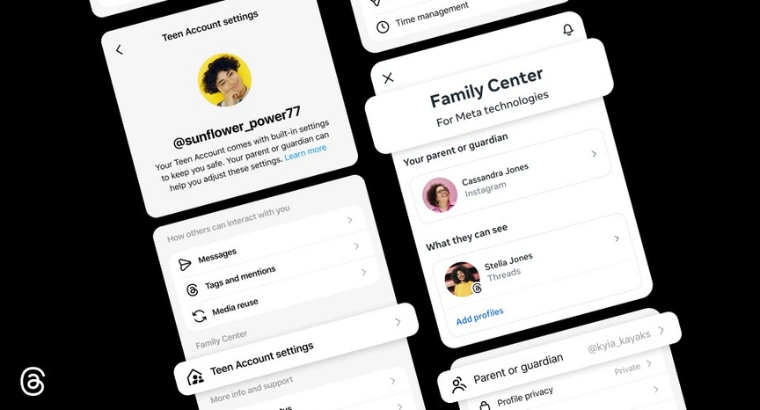
Meta is extending its parental supervision system to Threads, its text-based social app. The company announced the change on July 21, 2026. The feature will rollout starting next week in the United States through Family Center, the same dashboard parents already use for Instagram, Facebook, and Messenger.
Mark Zuckerberg’s move leans towards a pattern rather than breaking new grounds, given how Meta has spent 2026 wiring teen protections across each of its apps one by one. However, Threads was the last remaining gap to be filled. The timing of the incident is also crucial given that the tech giant is doing this while fighting lawsuits and regulators over how its platforms treat minors.
What Parental Supervision on Threads Actually Does
Once a parent sets up supervision, the tools sit inside Family Center. Parents can see how much time a teen spends on Threads each day over the past week, including a weekly average. They can set daily time limits and block access during chosen days and hours. If a teen uses Threads on more than one device, the limit covers total time across all of them.
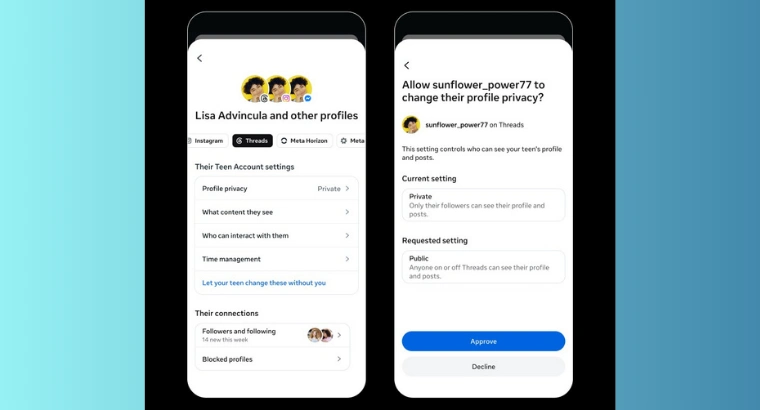
Sleep mode can restrict or block access at night. Meta says notifications mute and auto-replies switch on by default between 10 PM and 7 AM. Parents can also control who tags their teen, and approve some privacy and sensitive-content settings.
There is one clause worth reading closely. Meta says parents can decide whether teens under 16 are allowed to loosen the built-in protections at all. Teen Accounts on Threads already default to private profiles and limited content. The supervision layer decides who holds the keys to change that, and the report puts that decision with the parent.
Why Meta Is Adding Threads Supervision Now
A major reason behind Threads getting parental oversight controls is also the commercial and legal backdrop. Dozens of US states are suing Meta over claims its apps drive teen addiction and anxiety, and the company has faced consecutive losses in child safety cases. In the EU, the Digital Services Act restricts profiling-based advertising to minors. In the US, the Kids Online Safety Act would force stronger default settings for younger users if it passes.
Starting next week in the US, we’re bringing parental supervision to Threads.
— Meta Newsroom (@MetaNewsroom) July 21, 2026
When supervision is set up, parents can view their teen's time spent on Threads, set daily time limits, adjust sleep mode, and manage privacy settings — all through Family Center.…
Against that, a single supervision system spanning every app can prove to be efficient. It gives Meta one product structure to defend to regulators rather than a patchwork. It also puts the daily enforcement work on parents, and not on Meta itself. However, critics have long argued that the harder problems, enforcement and transparency, remain the weak points, and supervision tools do not resolve them.
Meta in its defense has cited data claiming Instagram Teen Accounts in the default setting saw far less mature content than rival experiences. Those figures come from Meta and its chosen measurement partner, not an independent audit, so they warrant caution.
How Threads Compares to Meta’s Other Teen Tools
Threads now sits roughly level with Facebook and Messenger on supervision, though it lacks some of Instagram’s newer alerts. Instagram, for example, notifies supervising parents when a teen repeatedly searches self-harm terms. Meta has not said whether that specific alert is coming to Threads. For a platform positioned as a rival to X, matching Instagram’s floor rather than its ceiling is a notable choice.
The broader industry is moving the same way under the same pressure. Rival platforms are adding age-gating and content filtering that could reshape how much time young users spend on each app. Meta getting there first across its full lineup is partly strategy and partly the cost of being the most-sued company in the category.
Whether these controls change outcomes for teens is the open question. Supervision gives parents visibility and levers. It does not, by itself, prove the underlying feeds are safer. That test will come from regulators, courts, and independent researchers, not from a Family Center dashboard. Until one of them confirms Meta’s safety claims, the numbers remain the company’s own.
You may also like to read – How to Use Claude Tags in Slack to Automate Everyday Work