South Korea is accelerating artificial intelligence and semiconductors with one of the biggest coordinated funding pushes in its lifetime. The federal authority has declared plans to fund alongside industry tech giants to build a substantial semiconductor complex and new AI data centers, depicting how central chips and computing power have become key to the country’s economy. Supported by Korea’s dominant chipmaker, the plan reflects a comprehensive pattern in the market. Countries with clear artificial intelligence and semiconductor champions are placed better to substantiate capital, boost stock benchmarks, and shape the next phase of the industrial sector.
What Is South Korea’s Investment Plan?
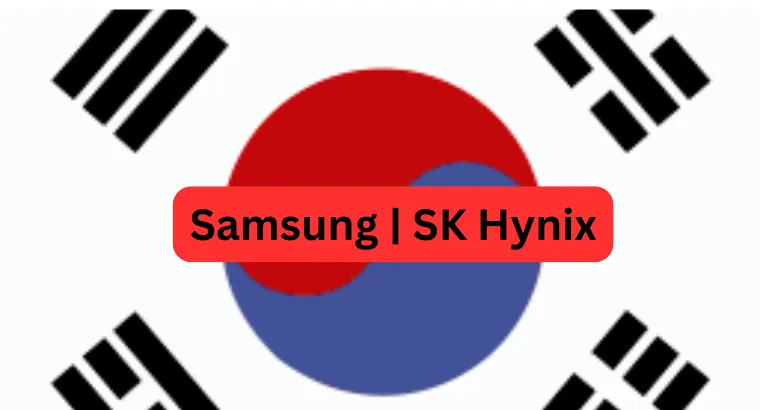
At the foundation of the 800 trillion won, $519 billion funding by the country’s leading chipmaker and the federal authority is to build a large-scale semiconductor complex in the country’s regional areas. The effort is guided by Samsung Electronics and SK Hynix, two companies already key to the worldwide artificial intelligence supply chain through advanced AI chips and high-bandwidth memory.
With semiconductors, the federal authority plans to build AI data centers in the same region. These mechanisms will be backed by 550 trillion won in funding from major companies such as SK Group, GS Group, and Naver. The data centers are created to deliver an initial 8.4 gigawatts of power, with a high-end goal of expanding to 18.4 gigawatts by 2035, highlighting Korea’s compute sensitivity in an AI-driven economy.

The funding is a segment of three crucial megaprojects declared by the government focusing on physical artificial, tangible artificial intelligence, AI data centers, and semiconductors. Altogether, they plan to boost South Korea’s artificial intelligence-led industrial transformation, ensuring that algorithm advances are on the same wavelength as domestic strength in hardware and architecture.
This embedded procedure depicts a strategic lesson from the global AI race, where leadership depends on controlling multiple layers of the stack. Chips enable data centers, data centers enable high-end artificial intelligence deployment, and artificial intelligence deployment creates a higher demand for semiconductors. By resonating with the policy, capital, and big tech giants, the country is in a loop that reinforces its preeminent strength rather than building it from scratch.
How Does This Resemble South Korea’s Stock Market Leadership?
Korea’s substantive push into AI architecture reflects what stakeholders achieve in equity markets. Unlike China, India, or Hong Kong, where the market cluster has decreased due to the absence of an AI boom, on the other hand, Korea’s stock market has become top-heavy. The country’s benchmarks have been lifted by the influence of Samsung Electronics and SK Hynix, which contributed to the growth of the supply chain. The clustered effect is striking. Korean stock companies now have a higher market capitalization than last year, reflecting how AI earnings pull entire indexes higher. This is the exact quandary of what has played out in more diverse markets, where boosts have been thinly spread across legacy sectors, and benchmarks have struggled to keep up with the global AI rally.
Beyond global competition, this initiative is being used as a mechanism for countryside development. Semiconductor complex and artificial intelligence data centers built in the southwestern region, while connected to high-tech investments, are integrated across the central and southeastern parts of the country. This spread is meant to annihilate all AI-driven growth from being concentrated around Seoul and current industrial hubs.
By powering new regions to global competitive industries, federal authorities aim to replicate the economic spillovers in established tech giants, ranging from better employment opportunities, supplier system, and architectural boost. In effect, artificial intelligence semiconductors are not being used as growth mechanisms, but as a push to balance the economy.
South Korea emphasizes a key dynamic of the current AI cycle, which is that markets and economies with one dominant technology winner flourish. Samsung Electronics and SK Hynix already push enormous influence in the worldwide chip supply, and fundings are created to deepen the benefit by adjoining manufacturing leadership with domestic AI compute capacity. As AI workloads rise, countries that can offer both the advanced chips and the architecture to adopt them stand to capture a higher share of value. Korea’s position is in contrast with markets where artificial intelligence exposure is fragmented across several sectors without clear concentration in momentum.
South Korea’s substantial commitment to semiconductors and data centers underlines how capital markets, the industrial sector, and technology are interconnected. By investing in chip-making giants and surrounding them with large-scale AI architecture, South Korea develops a model in which a cluster is a competitive advantage. In an AI-driven global economy, the country ensures that dominance is not just about participating but about reshaping the trend.