Key Highlights:
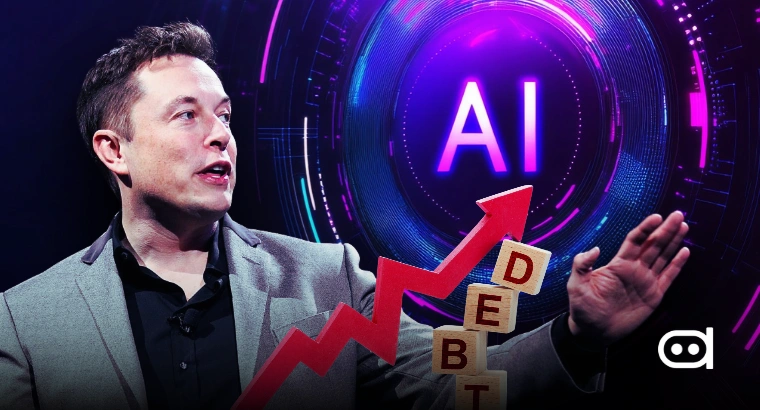
- Elon Musk advised on X that more than 200 specialized AI cloud providers could face consolidation and failures as debt financing becomes harder to get.
- SpaceX secured $40 billion in debt financing for GPUs, with Musk citing his investment grade status and income from Starlink and launch contracts.
- Gartner separately forecasts that more than 80% of new cloud providers will cease operating independently by 2030 amid concerns about AI infrastructure costs and returns.
Elon Musk had advised that more than 200 firms providing computing infrastructure for artificial intelligence could face substantial financial difficulties as debt markets become less willing to fund businesses that depend heavily on AI data centers. The advisory followed his disclosure that SpaceX had closed a $40 billion debt financing deal to buy graphics processing units, the chips used to train and run AI systems.
Elon Musk said SpaceX could secure the funding because of its investment-grade status and income from businesses outside AI infrastructure. His remarks emphasized a growing divide in the market, where firms with diversified income sources may have an easier time accessing credit than providers that depend primarily on renting out computing capacity.
What Did Elon Musk Say About AI Companies Facing Financial Trouble?
Elon Musk shared his warning in X posts on October 25, as concerns grew about financing the rapid expansion of AI computing infrastructure. Responding to a discussion about access to debt financing, he wrote that debt markets had almost entirely shut off funding for companies without substantial income independent of AI data centers.
Elon Musk then connected that warning to SpaceX’s own financing, writing that the firm had closed $40 billion in debt for GPUs but had investment-grade credit and income from Starlink and rocket launches. Elon Musk predicted a severe shakeout among specialist AI cloud providers. He wrote, “That means the 200-plus new clouds are going to see a pretty-level death and consolidation.Some will make it through, but not many.”
BREAKING: 🇺🇸 Elon Musk warns 200+ AI companies could face massive failures as debt markets shut off funding. SpaceX secured $40B in debt for GPUs, but Musk warns the AI infrastructure boom could turn into a bloodbath and only a handful will survive. https://t.co/kwCglI7ouu
— Bull Theory (@BullTheoryio) October 26, 2026
Neocloud companies that specialize in providing cloud computing capacity for AI workloads, often through data centers equipped with a large number of GPUs. Their business models can require massive upfront spending on chips, data centers, electricity, and related infrastructure before they create enough revenue to cover those costs. Elon Musk’s warning was directed at these specialist providers rather than the entire AI niche. Companies with diversified businesses and established income streams may be better positioned to fund infrastructure investment, while providers that rely heavily on AI data center income face greater exposure to changes in lending conditions and customer demand.
The $40 billion financing also demonstrates the magnitude of capital needed to expand AI computing capacity. Reuters reported that the debt would primarily support GPU purchases expected to arrive in the first half of 2027. Musk described the financing as primarily callable debt and said it would be a salient factor for the current quarter.
Why Are AI Infrastructure Companies Facing Funding Risks?
The concerns extend beyond Elon Musk’s remarks. On October 14, research firm Gartner forecast that more than 80% of neocloud providers would cease operating independently by 2030. The firm attributed the risk to mounting infrastructure costs, insufficient returns and the difficulty of differentiating services in an increasingly competitive market.
Gartner estimated that AI providers would spend nearly $1 trillion on infrastructure in 2026, followed by another $6 trillion between 2027 and 2030. It also estimated that AI data-center owners would need approximately $8.5 trillion in cumulative income by 2030 to cover announced capital spending, financing costs and a 12% return on invested capital. However, enterprise and consumer AI revenue attributable to AI data centers was forecast to reach no more than $3.6 trillion over the same period.
That probable gap raises questions about whether the revenue generated by AI services will justify the cost of building and operating the infrastructure needed to support them. GPUs also lose economic value as newer generations become available, increasing pressure on providers to generate returns before their equipment becomes less competitive.
Neocloud providers face a particular drawback because they must keep investing in computing capacity while securing customers willing to pay enough to cover operating costs and financing. Larger cloud companies have more diversified income streams that can support infrastructure spending even when returns from AI services take longer to materialize.
The funding environment has also become more strenuous for some AI infrastructure borrowers. Investors were selling bonds tied to data centers and AI infrastructure as concerns grew about debt burdens, construction delays and the ability of AI-related revenues to support investment.
Musk’s warning and Gartner’s forecast point to a possible consolidation phase in the AI infrastructure market. If smaller providers cannot obtain financing or generate sufficient revenue, some may be forced to restructure, sell assets, merge with competitors or stop operating independently. However, the forecasts do not mean that every specialist provider will fail.
For the broader AI sector, the challenge is turning heavy infrastructure investment into sustainable revenue. Demand for AI computing may continue to grow, but providers will still need to manage financing costs, equipment depreciation and competition. As lenders become more selective, access to capital and the ability to generate revenue beyond AI data centers could become increasingly important factors in determining which companies remain independent.