- SpaceX plans to roll out solar-powered AI data centers in space.
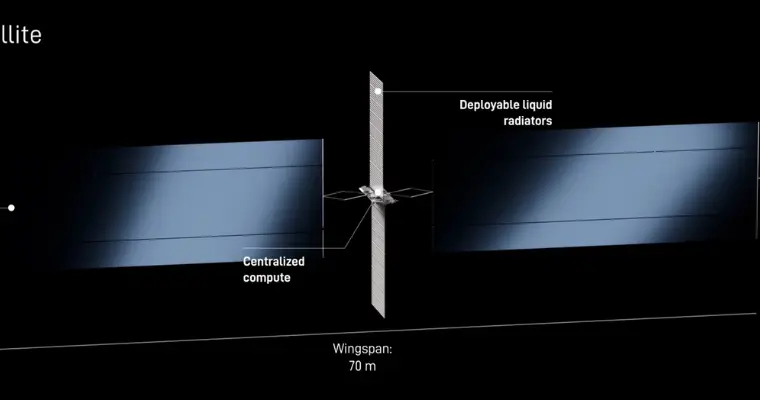
- The first AI satellite powers up to 150 kilowatts of AI computing power.
- SpaceX believes Earth’s constrained ability to generate power will affect artificial intelligence.
As artificial intelligence expands, Earth’s power restraints become visible. Data centers powering modern AI models require large amounts of power, cooling, and land that are unavailable to meet the current AI capabilities. This has led tech giants to search for alternatives to meet future AI needs.
Elon Musk contemplates that the solution may lie in space. In a recently released video, SpaceX offered insights into its future plans to deploy AI data centers in space. SpaceX states that AI infrastructure in space is a suitable way to overcome Earth’s power constraints and expand its power resources.
Why is SpaceX Launching AI Data Centers in Space?
The company contended that the $26.5 trillion AI market will remain unsuccessful due to Earth’s power constraints. As AI models diversify, they require an enormous electric source that Earth’s limited power fails to suffice. This nuance resonates with the Kardashev scale, which categorizes space objects by energy.
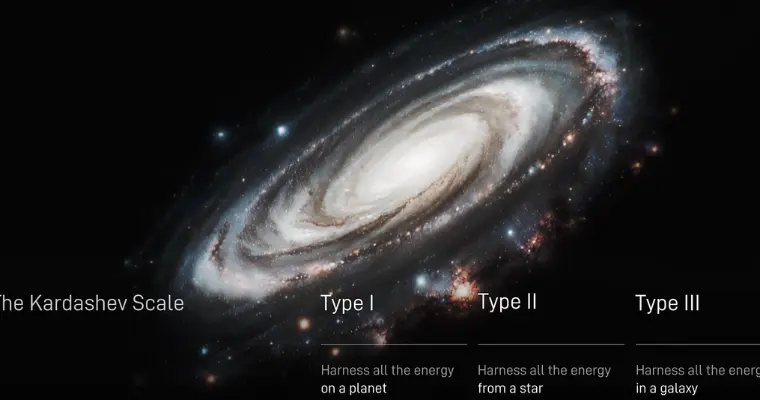
Earth is part of a Type 1 civilization that possesses fewer energy resources. According to SpaceX, they plan to inculcate Type 2 infrastructure, where AI would be powered by solar energy rather than terrestrial grids. By shifting data centers into space, the company SpaceX plans to use solar power as an unlimited source of energy.
While these AI satellites build a Starlink technology to serve a different purpose. Starlink satellites are used for communication, coverage, and data transmission. Their computing power exists to manage networking. On the contrary, AI satellites have space data centers. Their core function is to generate AI compute, not deal with internet traffic.
The design unveiled by SpaceX shows that AI satellites can handle 150 kilowatts of AI computing power compared to the NVIDIA GB300 racks used in physical data centers. These satellites will be linked via laser links and could also be embedded with the Starlink constellations.
Also Read: Amazon is Turning Warehouse Robots into Physical AI Assistants with Proteus
What Limits Space AI Computing?
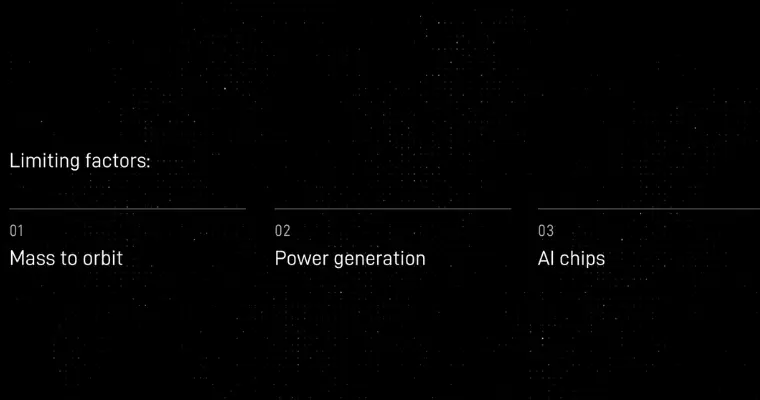
SpaceX accepts that AI computing in space does possess certain restrictions. The first limiting factor is mass to orbit, as power systems, thermal management, and AI hardware move in bulk into low Earth orbit. This turns out to be costly, even with reusable rockets.
The second restriction is power generation. While the space possesses massive solar energy reaching from hundreds of kilowatts to gigawatts and terawatts, require massive solar arrays and streamlined distribution systems.
The third limiting factor is the terawatt of AI chips. High-end performance AI accelerators are limited in supply, and producing them at a massive scale for space AI data centers requires new manufacturing techniques and supply chain management.
To deal with these issues, SpaceX plans to cut down costs using the Starship rocket and create its own AI chips through TerraFab. TerraFab is a facility that involves partners like Tesla and Intel. The company has applied for regulatory approval to launch its AI satellites far ahead of its competitors.
Elon Musk plans to reach one gigawatt of AI computing power by the end of the year 2027. It remains more impactful than what SpaceX highlighted in its IPO filing, projecting deployments around 2028 and monetization at the end of the decade.
If this works, this project would place SpaceX as a hub of scalable AI infrastructure, reshaping upcoming data centers. Rather than finding ways to expand computing across land, AI computing can shift into orbit powered by solar energy.
The AI satellite project reflects a major energy constraint. By comparing AI compute directly with land data centers, the company places space as a way of improving existing AI infrastructure. While AI chips and power availability remain the key problematic components, SpaceX states that these challenges require a suitable amount of time and engineering techniques.