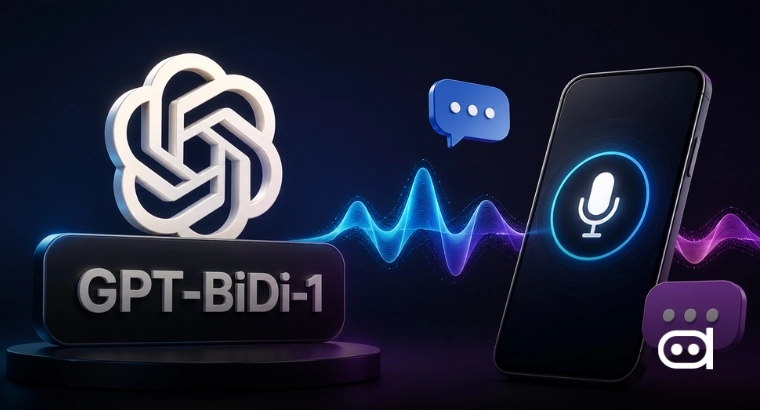
OpenAI is preparing to make another major leap in voice AI. According to reports, references to a new model called GPT-BiDi-1 have appeared, sparking speculation that the company is developing a more advanced voice experience for users. The company has not made anything official yet, but these findings suggests that work is underway. They seem focused on making the whole conversation with ChatGPT less robotic and a lot more like talking to a real person.
Over the last year, OpenAI has leveled up ChatGPT’s voice features with Advanced Voice Mode, letting people have real-time, spoken conversations with the AI. GPT-BiDi-1 could be the next step, pushing things further with smoother exchanges, better handling of interruptions, and more human-like dialogue.
What is GPT-BiDi-1 and What can Users Expect?
There aren’t any official details yet, but plenty of users think GPT-BiDi-1 is all about voice, built on the idea of bidirectional communication. “BiDi” usually refers to systems that can exchange information both ways, at the same time. For voice AI, that could mean ChatGPT might soon listen and speak more fluidly instead of the usual one-at-a-time, turn-based interactions that most voice assistants stick to.
Right now, most AI voice systems follow a standard procedure: you speak, it turns your words into text, the AI figures out what you want, creates a reply, then turns it back into speech. This works fine, but it still feels a little slow and you have to wait for the assistant to finish before you can continue.
GPT-BiDi-1 could change that experience significantly. With a more continuous, two-way flow, ChatGPT might start picking up cues if you want to interrupt, steer the conversation in a new direction, or just add something while it is still talking. It is almost like talking to a person.
If OpenAI eventually rolls this out to everyone, users could see some real upgrades, like:
- Conversations that sound and feel more natural.
- Quicker voice responses.
- Smoother handling when you interrupt or ask a follow-up question.
- Shorter pauses between talking and answering.
- Stronger real-time communication overall.
OPENAI 🔥: More details about the upcoming voice mode upgrade for ChatGPT.
— 🚨 AI News | TestingCatalog (@testingcatalog) June 16, 2026
> It will be advertised as a "major leap in intelligence". Factoring that current experience is powered by 4o it is quite expected.
> Users will be able to choose between Instant, Medium and High… pic.twitter.com/QpiPUpqwAY
Arguably, the most exciting upgrade is smarter interruption management. Real conversations aren’t perfectly staged, people interrupt, clarify, and shift topics in the middle of a thought. GPT-BiDi-1, which is a bidirectional voice model, could help ChatGPT adapt to these behaviors more effectively, allowing conversations to continue smoothly without requiring users to restart or repeat their requests.
This upgrade could also help with longer chats. Rather than treating each voice command as an individual request, GPT-BiDi-1 may be able to maintain a more continuous understanding of the conversation, resulting in more relevant and accurate responses.
The technology could have practical applications across multiple use cases which include personal AI assistants, customer service interactions, educational tutoring, language learning platforms, workplace productivity tools, and accessibility-focused experiences. With a system like this, using AI could start to feel less like talking to a computer and more like getting help from someone who understands you.
OpenAI hasn not confirmed GPT-BiDi-1, released technical details, or set a launch date yet. Everything we know right now comes from snippets reported by TestingCatalog and like so many other early discoveries, there is no guarantee this feature will roll out the way it looks now.