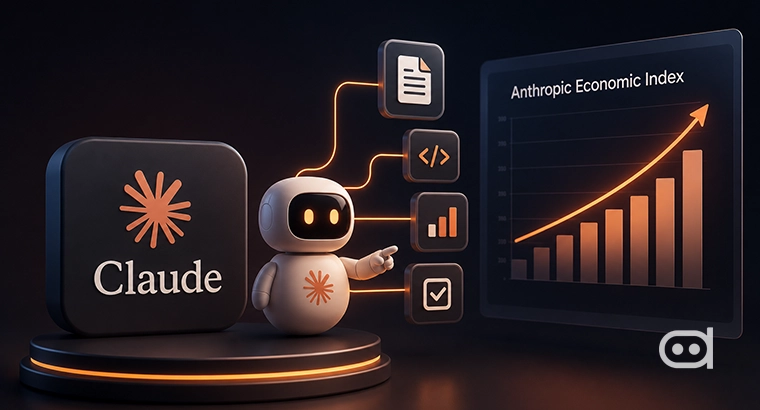
Anthropic is about to change how it calculates the economic impact of its artificial intelligence by swerving away from conversation logs towards more structured outputs that are a testament to real work. As Claude is extensively used for coding, research, and collaboration, Anthropic states that the conventional chat-based assessments no longer capture what the models are actually doing. Instead of assessing Claude as a message-centric application, the company is now assessing it as a system that produces useful metrics and outputs. This shift depicts a comprehensive view where Claude is becoming a window into how AI boosts economic activity, not a mechanism that people talk to.
What is Being Measured by Anthropic?
Anthropic’s new method bifurcates Claude’s usage into different categories depending on how the model is being used and what output it produces. Rather than combining everything into a chat, the company now separates activity into Cowork, Chat, and API usage. Every category reflects a distinct mode of conversation, from collaboration, task-oriented work, context, conversation, and coding. Mainly, the company is bifurcating sessions by their key output artifact, instead of assessing a conversation as static data of conversation and responses.
Anthropic is focusing on what output it is actually generating, such as code, documents, text, analysis, opinion, or other measured metrics. This framework treats Claude’s output as units of work, not just static data, resonating more closely to how users derive the output from the ecosystem.
The procedure has become more granular, and Anthropic now measures the use on an hourly basis, allowing it to track how Claude engages over time rather than single conversations. This time-based mechanism helps bifurcate lightweight queries from lengthy sessions when Claude functions with higher autonomy and produces crucial outputs. Users’ data is then merged with surveys about user perceptions and expectations. This interconnection allows Anthropic to pair quantifiable signals with the time spent, output type, and mode, with qualitative feedback on how users perceive Claude’s role in their data. Similarly, the company overlooks the range of sovereignty in Claude outputs, assessing whether the model is just assisting the user or handling multi-step tasks.
Also Read: NSA Revokes Anthropic’s Model After Export Controls
How Does This Affect the AI Narrative?
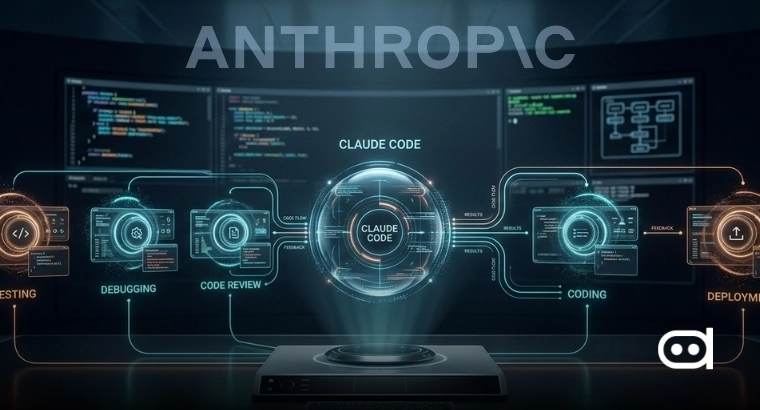
The foundational argument behind the change is that Claude does not limit itself to conversations. In workflows, particularly in CoWork and Claude Code, the model will produce artifacts that will organize, edit, or ship the information. Calculating economic impact to chart log changes this reality, as it treats all conversations as equivalent, regardless of the output. By focusing on deliverables, Anthropic is redefining economic gains in AI terms. A lengthy conversation that leads to an analysis or a report is not the same as a short conversation, even if they both look the same. The company’s structure understands the value, and from the outcomes, not from the number of messages exchanged back and forth.
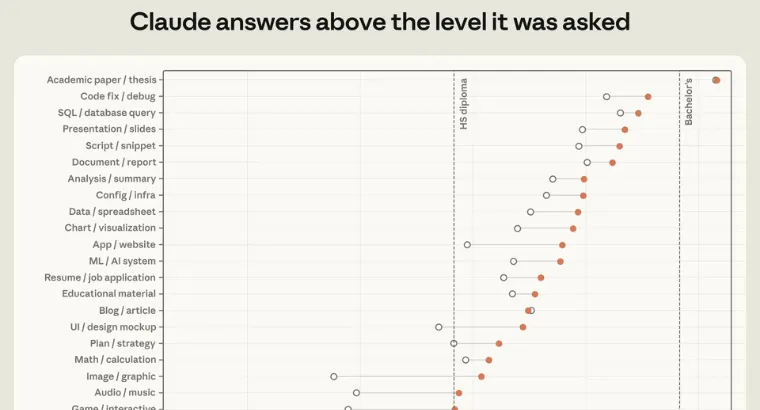
Anthropic’s analysis also questions the idea that artificial intelligence systems like Claude might replace human oversight. The data suggests that Claude is enhancing human work instead. Users tend to adopt the model on crucial tasks such as drafting, analyzing, and coding, where human oversight and direction are key. According to this, Claude acts as a participant that boosts or augments existing workflows rather than replacing them as a substitute. Measuring autonomy in an ecosystem rather than in a binary allows Anthropic to look at how responsibility is shared between users and the model. The focus on efficiency resonates with the company’s comprehensive claim that Claude changes the work strata and does not disappear.
Anthropic’s new economic cadence strategy shows how artificial intelligence’s impact is calculated by tracking hourly usage, bifurcating outputs, and linking user expectations to organization-wide Claude as a window into economic change rather than a single product. The change from prompts to complex deliverables reiterates strategic intelligence performance around real-time work produced, not just conversations. As Claude moves ahead into proprietary workflows and office proceduresClaude Redefines AI Impact suggest that the most quintessential question is not how much people talk to AI, but what is the output that artificial intelligence helps them to generate.