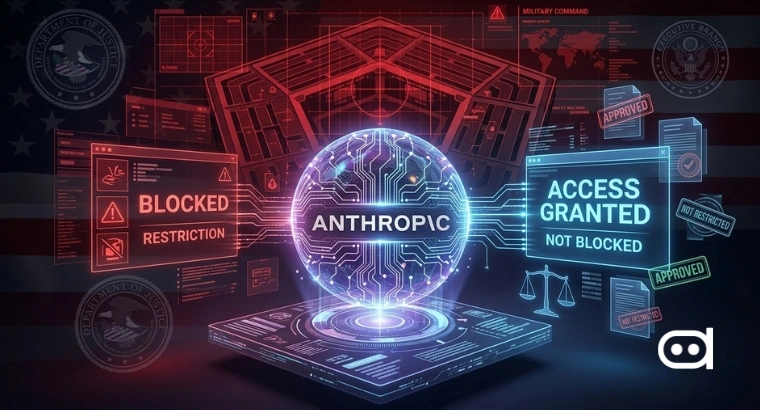
- Anthropic CEO Dario Amodei, reportedly met with senior U.S. officials at the White House on April 17, 2026, to talk about advanced AI systems and national security concerns.
- The conversation focused on Anthropic’s powerful new AI model, which has raised concerns about being used for both defending against cyber threats and carrying out offensive cyber operations.
- The meeting increases tensions between Anthropic and U.S. defense agencies over safeguards, signaling that both sides are struggling to balance innovation, regulation, and the global AI race.
A major AI executive heading to the White House is not a novelty but a sign of where power is moving. When Dario Amodei showed up for the high-level talks, the question wasn’t just about the technology, it was about who’s actually in control. AI is gradually becoming a tool for geopolitics, and companies like Anthropic find themselves negotiating directly with governments about how far their technology should reach.
Right at the center of these talks is a new version of AI models: systems that can pinpoint vulnerabilities in digital infrastructure with incredible accuracy. That kind of power is a big win for defenders but the same system can be used to attack those weak spots.
Balance between Moving Fast and Keeping Control
The conversations expose an ongoing push-and-pull between the drive for innovation in Silicon Valley and Washington’s push to regulate. AI companies are rolling out models that outpace traditional cybersecurity tools, automate complex tasks, and could potentially reshape intelligence. But governments worry about letting such tech roam free with no monitoring.
Anthropic seems to favor caution, it isn’t eager to loosen its safeguards, and doesn’t want its systems used more broadly for military or surveillance projects. From a business angle, it’s about managing risk because once you release a powerful tool without constraints, it’s almost impossible to reel it back in if things go wrong. But for the government, holding back means risking that adversaries who might not play by the same rules,race ahead.
This isn’t just Anthropic’s problem. It’s part of a bigger argument: Who should get to set the rules for powerful new tech? Should companies decide what’s safe and what isn’t, or should governments step in for the sake of national security?
Tech Issue or a Global Strategy?
The U.S. knows AI leadership is about more than just gadgets; it shapes economic power, military edge, and diplomatic standing. If America hesitates, rivals may seize the advantage.
But these are real, not hypothetical, risks. A top-level AI model that can find and exploit software holes on its own could cause chaos in financial systems, critical infrastructure, or defense networks if it ends up in the wrong hands. This is about the backbone of national security and worldwide stability.
That’s why these meetings matter. They’re an effort to bring government and the private sector together. Both see the immense promise of AI, but they disagree on how to manage danger. This moment also highlights how the tech landscape has shifted. In the past, major innovation often started in government labs. Now, private companies lead the way, and that forces policymakers to interact as partners, not just as authorities.
Also read: Safety or Strategy? Anthropic’s Latest AI Model that is “Too Powerful to Release to the Public”
Wrapping Up
This White House meeting isn’t just about one new AI model, it’s about rethinking how we govern technology when intelligence isn’t just human anymore. Corporate labs and government offices are now tangled together, needing each other, but each one worried about who gets the upper hand.
As AI keeps moving forward, these face-to-face negotiations will happen more often and they’ll get more intense. The big challenge isn’t just building powerful tools; it’s making sure they’re used responsibly without shutting down progress. How we strike that balance will shape not only where AI goes next, but also the political and ethical lines that guide the whole field.