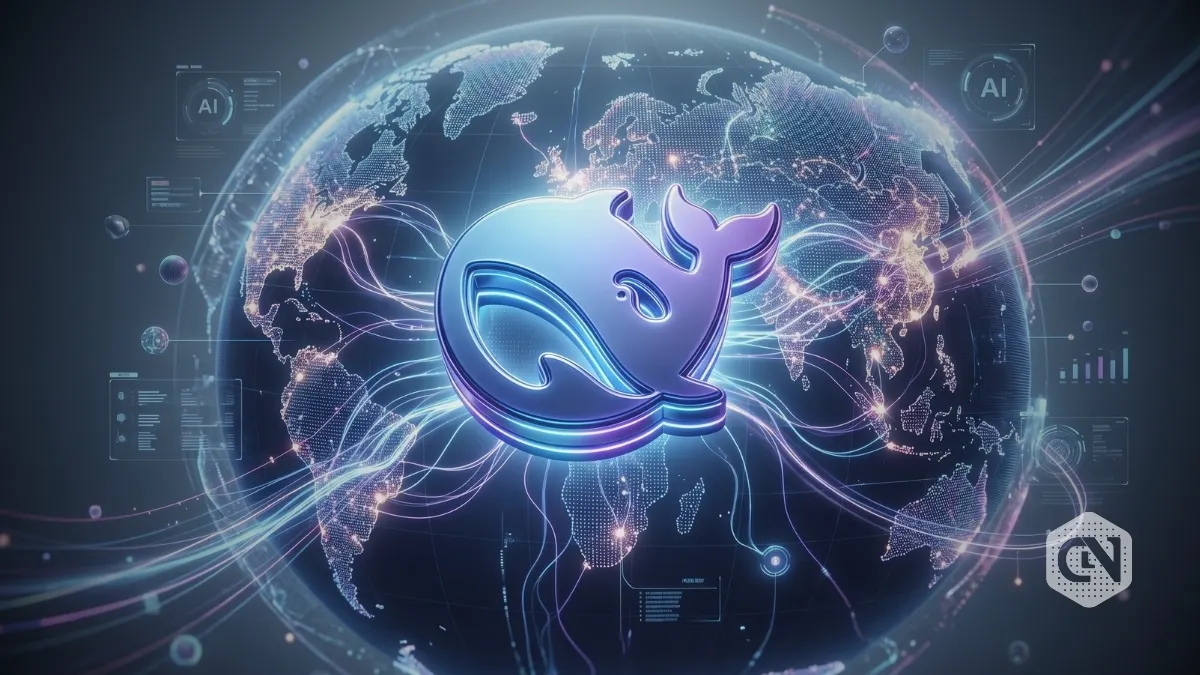
- Chinese AI start-up DeepSeek previewed its V4 model on April 24, 2026, showing China’s push for open-source artificial intelligence.
- This follows the “DeepSeek moment” of 2025, when the company claimed it had built a high-performing model for a fraction of what rivals like OpenAI and Anthropic spend.
- From Taipei to San Francisco, and cities like Lagos and Kuala Lumpur, Chinese open-source models are gaining traction worldwide because they’re affordable and accessible.
The launch of DeepSeek V4 ramps up the fast-paced global AI race, where accessibility now matters as much as raw performance. Back in January 2025, DeepSeek’s claim of building a competitive model for much less money challenged the idea that only big U.S. labs could lead in advanced AI. That changed a lot of minds in the industry.
Since then, Chinese firms have put out dozens of open-source systems. These models accounted for about a third of global AI usage by the end of 2025. DeepSeek’s new release comes just days after Moonshot AI launched Kimi 2.6, highlighting how quickly Chinese firms are competing against each other.
Deepseek Launched V4 Open-Source AI, Soon After OpenAI’s GPT5.5, But Why?
Reportedly, DeepSeek’s V4 model really excels in writing computer code, outperforming other open-source systems, based on benchmarks tracked by Vals AI. Vals AI’s CEO Rayan Krishnan says their model is “neck-and-neck” with competitors like Moonshot AI.
The timing is interesting. Releases like DeepSeek V4 line up with expectations for next-generation systems from companies like OpenAI, called “GPT-5.5.” While those models will likely keep the lead in broad reasoning, safety, and multimodal abilities, DeepSeek’s approach is different. Rather than trying to compete across every benchmark, it focuses on high-impact tasks like coding and keeps prices low, with open access. The near-simultaneous pace of releases isn’t by accident; it’s a signal of competitive progress.
Coding has become the key battleground for AI. Systems that generate reliable code are powering AI agents like digital assistants that handle spreadsheets, emails, calendars. These tools are streamlining work, allowing human programmers to focus on bigger tasks while automation takes care of grunt work.
Open access is a real advantage in growing markets. Developers in Lagos and Kuala Lumpur use Chinese models for their lower operating costs to ease tight budgets. In Malaysia, officials plan to use DeepSeek technology to build national AI infrastructure. This widespread adoption feeds back into system improvements, as real-world use provides valuable data across robotics, logistics, and manufacturing.
The wider ecosystem is growing fast. Alibaba reported its Qwen model family has been downloaded over 1 billion times. ByteDance, TikTok’s parent company, invested $11 billion in AI infrastructure in 2024 and started sharing bits of its technology. Analysts like Wei Sun at Counterpoint Research believe DeepSeek set the stage for Chinese tech giants to embrace openness.
China’s Geopolitical Competition in AI Race
The rise of Chinese open-source AI is happening amid tough geopolitical rivalry. The U.S. has enforced export controls for three administrations to keep China from accessing advanced chips which are vital for training high-performance models. Despite this, Chinese companies keep innovating, with a strong focus on efficiency to work around hardware limits.
OpenAI and Anthropic accuse the company of using distillation techniques to copy proprietary systems by querying them at scale. These claims underline how competition is shaping the industry where rapid progress can blur lines between innovation and imitation.
The global impact goes beyond tech. Investors like Kevin Xu from Interconnected Capital call open source “soft power,” letting countries expand influence by providing widely used tools. Inside China, the strategy is fueling domestic growth too, as adoption across industries brings in real-world data, making these systems even stronger.
Also read: DeepSeek’s Two New V3.2 Models Are Immediate Rivals to GPT-5 & Gemini 3 Pro
Conclusion
DeepSeek’s latest launch shows how the global AI race is changing. It started as a disruptive claim in January 2025 and is now a smart strategy built on openness, cost efficiency, and speed. Chinese companies aren’t just trying to match U.S. performance; they’re reshaping the systems by making advanced tools widely available.
The AI balance of power may depend more on which systems fuel global innovation. DeepSeek, Moonshot AI, and other Chinese players are proving that influence in the AI era could be defined by reach and usability, not just technical superiority.