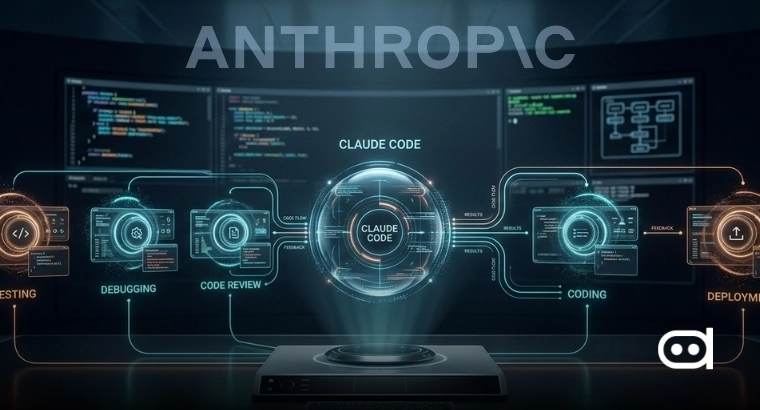
Anthropic is expanding Claude Code beyond the conventional single-session coding workflows with redesigned Projects. This lets Claude coordinate several coding sessions around one larger assignment. Instead of manually dividing work, switching between sessions and combining outcomes, the new Projects model introduces a coordinator. This coordinator scopes an objective, divides tasks to parallel threads, reviews their outputs and assembles the finished work. Each thread works as its own Claude Code cloud session with a distinct branch and copy of the repository. The system also introduces shared project memory and a file and artifacts library, developing a workspace for engineering tasks rather than sole prompts.
How Does The Claude Code Projects Coordinator Split Work?
The redeveloped Projects include two layers: threads that perform the work and coordinator that manages the wider assignment. When a developer starts a Project, they select a goal and provide the repository context. Claude can then recommend work it can take on and bifurcate the larger objective into small tasks. For example, a developer trying to reduce an application’s checkout p75 latency could ask Claude to profile individual endpoints, test potential optimizations, and open pull requests across parallel threads. A team retiring a deprecated v1 API endpoint could connect its API, web, and mobile repositories and have Claude create a thread for each repository.
Those threads can migrate callers, run tests, and open pull requests before the coordinator identifies which chain needs to be merged first. Developers can then check progress through the main Project conversation or individual open threads to inspect and redirect the work. The idea is to let users brief Claude in the same way they might brief a staff member, with the coordinator deciding where specific pieces of work should be put.
Projects now run from one conversation, starting in Claude Code. You describe what needs doing, and Claude directs parallel threads that keep working after you close your laptop.
— Claude (@claudeai) September 17, 2026
In beta today for select Pro and Max users in cloud sessions; coming to all Claude users soon. pic.twitter.com/GYzoKbxS23
Every thread is a Claude Code cloud session working on its own branch and copy of the repository. This distinction allows multiple tasks to correspondingly proceed, but it does not remove traditional software-development issues. If two threads modify the same code, the overlap is handled as a merge conflict, similar to what developers face with different pull requests.
The thread can also further delegate their assignments using Claude Code’s current subagents, loops and workflows when a task needs extra work layers. That creates a structure in which a broad engineering goal can be broken down multiple times rather than depending on one model session to finish every part.
Anthropic is placing the coordinator as a layer for supervision. Claude can check the outputs of individual threads and assemble the resulting work, rather than simply launching several sessions and leaving developers to combine everything.
What Shared Memory Adds To Claude Code Projects Threads
A big part of the redesigned Projects is shared memory. Information learned during one cycle becomes feasible to other works within the same project. This reduces the need for developers to recurrently provide background and decisions. Projects can retain details, such as the release being moved to Friday, the reason an export feature was dropped, or the sponsor needs to approve changes to the billing service. The context can then inform future work as the project continues over several days or weeks.
Claude also asks how the developer wants the project run, then remembers the answer. Users can set how many times to check in, when to start extra threads, and how detailed progress updates should be. Alongside memory, Projects now include a library that collects files added by users as well as artifacts produced by Claude. The combination is intended to make previous Project materials easier to find and give future threads access to work already completed.
The system also uses a practical consideration around usage. As each thread is a full Claude Code session, running multiple threads can cause Projects to reach plan usage limits faster. Users can track project-specific usage and select the model and effort levels used by the coordinator and worker threads.
Who Gets The Claude Code Projects Beta And What It Costs
The redesigned Projects are entering beta for select Claude Pro and Max subscribers who use cloud sessions in Claude Code and do not already have projects on the web or desktop. Anthropic says access will expand to more Claude Code users on those plans over the following week. The updated Projects will reach the rest of Claude, with Team and Enterprise plans following after that. The initial implementation is cloud-based. This could be important for development environments that depend on local tooling or systems that are not accessible through a hosted session.
The extended coordination model also comes as Anthropic faces questions around the reliability of coding agents. The wider change is not about giving Claude more coding sessions, Projects are being structured as a workflow in which one Claude coordinator can delegate work, monitor separate agents, carry project information forward and bring finished tasks together.
Anthropic is effectively moving Claude Code toward a model where developers supervise a coordinated group of agents rather than a sole interaction with one coding assistant.
Also Read: Anthropic Adds Built-In Browser To Claude Cowork For Web-Based Tasks