The Kimi K2.5 AI model and Claude AI by Anthropic currently stand among the two most popular emerging models for coding and research. The two systems maintain their individual strengths but differ in their methods to tackle programming and scientific tasks. Kimi AI uses multiple input methods to run its agent-based system, while Claude AI uses structured reasoning together with safety features to create efficient operational processes.
Kimi K2.5: The Multimodal Specialist
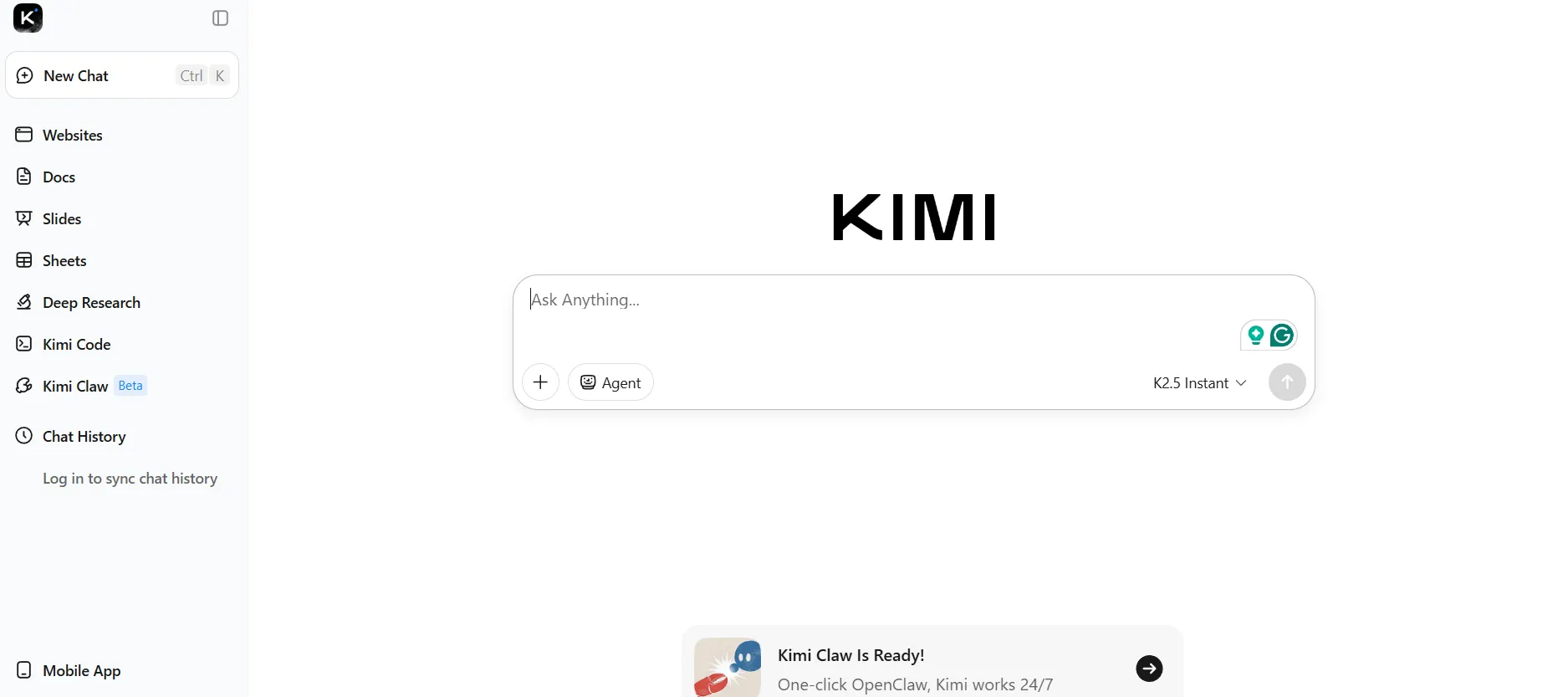
The Kimi K2.5 AI model stands as an advanced system that handles complicated tasks by processing multiple input formats. The introduction of this system introduced a new era of productivity where AI systems take on active roles by completing tasks through agent-based systems. Kimi offers an Agent Swarm feature, which enables multiple AI agents to work together in order to achieve their objectives, instead of depending on a single response loop, which enables it to handle sophisticated workflows with efficiency.
The platform demonstrates an advanced ability to create code from visual input. Developers can use Kimi AI to create functional code from their UI screenshots, diagrams, and rough sketches uploaded to the platform. It also provides essential benefits to frontend developers who engage in rapid prototyping work.
The Kimi AI tool supports open-source accessibility, letting developers test their projects and combine different systems according to their needs. It allows developers to create new solutions because it provides them with access to complete system components. Kimi provides specialised productivity agents, which perform document summarisation, dataset analysis, and automated report generation tasks. The agents automate test procedures that assist users in completing complex tasks through multiple phases of work. Kimi AI performs best when users need to handle different input methods and use automated processes and test new ideas.
Claude: The Speed and Workflow King
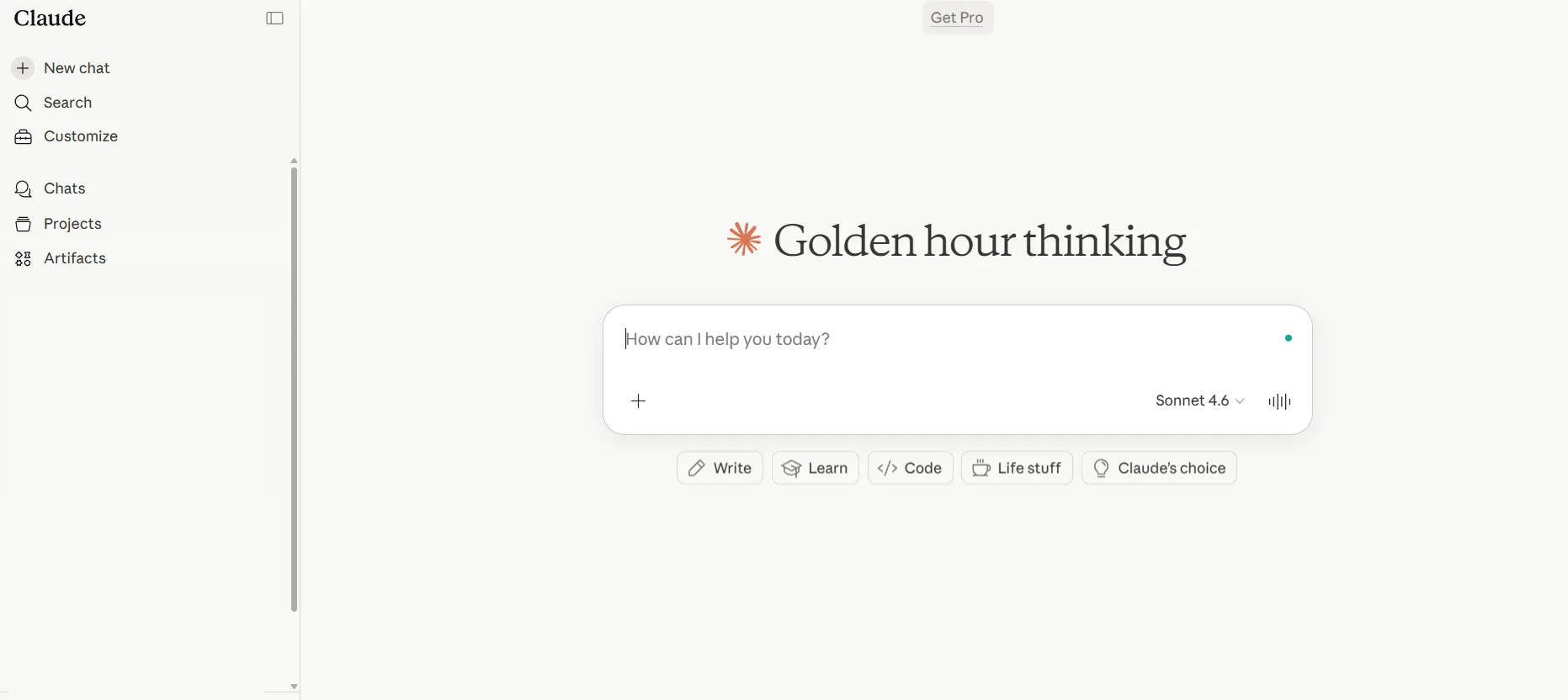
Anthropic developed Claude AI that has gained popularity among developers and research specialists because of its dependable performance, rapid execution, and organised thinking capabilities. Claude Code represents a significant development as it enables users to combine AI technology with their complete software development process. Developers can perform repository analysis and code system changes while maintaining current development operations.
Claude keeps documents, code base, and long conversation context throughout its operation, making research-intensive work more effective through this capability. The Model Context Protocol is a key element that enables Claude to access external systems through structured communication with other software tools, application programming interfaces, and databases. This establishes a connection between unchanging computer responses and active operational processes.
Claude has established scientific and business credibility through the successful execution of complex simulations and research partnerships. Claude AI demonstrates its superiority through its ability to manage structured tasks, extended reasoning capability, and effectiveness in real-world coding environments.
Capability Comparison Table (Kimi vs Claude)
| Capability | Kimi K2.5 (Moonshot AI) | Claude (Anthropic) | Notes |
| Model Architecture | Mixture-of-Experts (MoE), 1T total / 32B active params | Proprietary (details undisclosed, likely transformer) | Kimi is open MoE; Claude closed-scale. |
| Creativity / Quality | State-of-the-art on coding & vision tasks; excels at code-from-design. | Industry-leading text/vision generation; Opus top-tier reasoning | K2.5 beats peers on certain benchmarks; anthropic Claude opus 4.6 leads on agentic & reasoning. |
| Latency / Speed | Moderate (heavy MoE and Agent Swarm may add overhead); 256K context. | Varies: Opus ~moderate, Claude Sonnet 4.6 ~fast, Haiku ~fastest; 200K (1M beta) context. | K2.5’s PARL reduces latency (up to 4.5× over single-agent); Claude’s Haiku is optimized for speed. |
| API Availability | Open API (Moonshot platform), open weights (HuggingFace) | Claude API (Anthropic) and cloud (AWS, GCP) | Kimi offers an OpenAI/Anthropic-compatible API; Claude via API and cloud connectors. |
| Pricing Tiers | ~$0.60 input / $3.00 output per 1M tokens (cache miss) (free-tier usage limit). | Sonnet: $3/$15; Opus: $5/$25 per 1M tokens; free/quota for basic web use. | Kimi ~9× cheaper than Claude Opus. Caching can reduce Kimi’s price to $0.10 input. |
| Safety / Moderation | Unspecified – open model requires user-side filters; community discussions note basic content filters. | Rigorous: constitutional AI principles, external audits (e.g., UK-US AISIs), ASL-2 rated | K2.5’s PARL reduces latency (up to 4.5× over single-agent); Claude’s Haiku is optimised for speed. |
| Fine-tuning / Custom Models | Fully open-source: can self-fine-tune or extend model (MIT license) | Kimi can be self-hosted and specialised; Claude requires third-party (AWS) for custom fine-tuning. | Kimi’s open nature implies variable safety controls; Claude builds in defence against toxicity and falsehoods. |
| Plugins / Integrations | Kimi Code CLI (VSCode, Zed, etc. integration); web app for chat/code. | Plugin marketplace (Cowork); MS Office add-ins (Excel/PPT); web search via Claude Search (Explore). | Kimi’s tool ecosystem is emerging (code tools); Claude has a broader ecosystem and LLM gateway connectors. |
| Supported Modalities | Text, code, images, video (vision), audio/voice unspecified. | Text, code, images; limited vision (chart/diagram interpretation); Claude Mobile reads health data. | K2.5 native text+vision+video; Claude supports images and text input (no video). |
| Enterprise Features | Open model; can self-host for on-premises deployment. No dedicated enterprise plan. | Team/Enterprise plans with admin controls, analytics API, data residency, HIPAA-compliant option | Claude offers SLAs, management console; Kimi’s open nature allows “do-it-yourself” enterprise use. |
| Data Privacy | Open-source code means data stays with the user if self-hosted. Moonshot’s platform has a privacy policy. | Cloud service: data not used to train models (per policy); Bedrock and regional endpoints ensure data control | Kimi gives maximum data control if self-run; Claude provides enterprise confidentiality, but is still cloud-based. |
Recommended Use Cases & Example Prompts
Kimi K2.5: Ideal for design-to-code and visual-driven tasks.
Example: “Generate responsive HTML/CSS from this UI mockup image, using Tailwind classes”. Use Kimi Code CLI for coding tasks, and Kimi’s Agent Swarm mode for large parallel tasks (e.g. multi-file refactoring). Kimi can assist with technical content creation (e.g. “Explain this architecture diagram in simple terms”), leveraging its vision capability.
Claude (Sonnet/Opus): Suited for writing and knowledge tasks.
Examples: “Draft a landing page blog post on [topic] with an engaging tone.”; “Plan a social media campaign for product X with bullet points.”; “Analyse this chart (image attached) and summarise insights”. Claude Code (agent) excels for complex code reviews or debugging prompts. For creative ideation: “Brainstorm 5 innovative UI designs for a mobile app,” using Claude’s long-context to maintain context across suggestions.
Empirical Performance: Benchmarking the 2026 Frontier
The coding capabilities and complex reasoning of Claude Opus 4.6 make it the top software solution while Kimi K2.5 provides an open-weight solution that delivers exceptional performance value and unmatched parallel agent functionality.
- Top Performer (Quality): Claude Opus 4.6 shows an 80.8% to 80.9% score range on SWE-Bench Verified testing, which enables it to solve real-world GitHub problems better than its competitors do.
- Best Value/Open-Source: Kimi K2.5 achieved a 76.8% score on SWE-Bench Verified testing. Kimi K2.5 costs 10 times less than Claude and GPT-5.2, which makes it better for organisations that need to perform high-volume coding or run their own software.
- Visual Coding & Front-End: Kimi K2.5 establishes itself as the top solution for visual coding because it performs better than all other systems in OCRBench and OmniDocBench visual coding tests, which achieve 92.3% and 88.8% accuracy, respectively, for transforming UI mockups into code.
- Agentic Workflows: The Agent Swarm feature of Kimi enables up to 100 sub-agents to work together, decreasing execution time by 4.5x when compared to Claude’s sequential Agent Teams method.
- Context Window: Claude Opus 4.6 handles a maximum of 1 million tokens, which makes it better than Kimi K2.5, which has a maximum context window of 256k to 262k tokens, because Claude can process complete repository data.
- Deep Reasoning: Claude Opus 4.6 leads in complex reasoning tasks like legal reasoning and structured reasoning tasks, as per BigLaw at 90.2%
- Data Accuracy: The two systems deliver accurate results for fact-based data retrieval, but Kimi K2.5 generally supplies extra information through its answers.
| Benchmark | Claude Opus 4.6 | Kimi K2.5 |
| SWE-Bench Verified | 80.8% | 76.8% |
| SWE-Bench Pro (Public) | N/A (different benchmark) | N/A |
| Terminal-Bench 2.0 | 65.4% | N/A |
| OSWorld-Verified | 72.7% | N/A |
| GDPval-AA (Knowledge Work) | 1606 Elo (+144 lead) | N/A |
| ARC-AGI-2 (Reasoning) | 68.8% | N/A |
| Humanity’s Last Exam | 40.0% | 50.2% |
| Context Window | 1M tokens (beta) | 256K tokens |
Source: BuiltfastwithAIClaude AI dashboard
Strengths, Weaknesses, and Decision Guidance
Kimi’s Strengths:
- Demonstrates exceptional multimodal capabilities through its ability to process image, video, and audio inputs.
- The Agent Swarm system enables organisations to automate intricate processes.
- Strong visual-to-code capabilities, enabling user interface development and user experience design.
- Offers developers a more flexible ecosystem that provides better opportunities to create projects.
Kimi’s Weaknesses:
- Lower accuracy when reasoning about deep code due to decreased reliability.
- Displays output consistency problems during complex tasks.
Claude Strengths:
- Provides exceptional capacity to comprehend long texts beyond typical limits.
- Delivers dependable performance for programming, debugging, and academic research activities.
- The MCP framework provides organisations with a systematic method to connect their systems through various tools and application programming interfaces.
- Produces dependable output results that maintain high safety standards and output consistency.
Claude Weaknesses:
- Fewer multimodal functions than Kimi, which limits its capabilities.
- Restricted options for testing in open environments.
- Restricts users’ ability to fully customise their experience because it operates within a highly regulated environment.
Conclusion
Your workflow and main objectives determine which system, between Claude vs Kimi, you should select. The Kimi AI tool provides users with advanced testing capabilities to build their multimodal pipelines according to both automation and prototype development requirements. It excels at creative projects and experimental work due to its agent-based design. Claude, on the other hand, provides high precision and trustworthy performance through its organised reasoning capabilities, making it more suitable for corporate programming tasks and academic research activities. Active development of AI tools will yield maximum benefits when organisations use both tools together: Kimi handles creative work and execution, while Claude AI handles testing and improvement.