The whole Kimi vs Claude debate has changed a lot in 2026. Moonshot AI’s Kimi has moved from being primarily known for K2-series multimodal models to a new flagship, Kimi K3, released in July 2026. K3 is described as a 2.8-trillion-parameter Mixture-of-Experts model with 104 billion activated parameters, native vision features, and a 1-million-token context window. It is designed for long-horizon coding, reasoning, knowledge work, and agentic workflows.
Meanwhile, Anthropic’s Claude lineup has also advanced. Claude Opus 4.8, released in May 2026, strengthened coding, agentic execution, and professional knowledge work, while Claude Sonnet 5, released in June 2026, brought many Opus-class capabilities to a less expensive model. On top of that, Anthropic expanded Claude Code, which now supports dynamic workflows that can coordinate hundreds of parallel subagents, especially on large-scale engineering tasks.
Today’s Kimi AI vs Claude comparison 2026 is less about who gives the better answer, and more about which model actually matches your specific development or research workflow.
Kimi vs Claude: Capability Comparison Table
| Metric | Kimi | Claude |
| Latest Model | Kimi K3 | Claude 5 Family |
| Best For | Long-context research, coding, multimodal tasks, agentic workflows, and developers seeking open-model flexibility | Advanced coding, research, professional knowledge work, enterprise AI, and agentic development |
| Coding Performance | Strong frontier-level coding performance, particularly for long-horizon tasks, large codebases, and autonomous coding workflows through Kimi Code | Excellent coding performance, with Claude Code providing a mature agentic development environment for complex software engineering |
| Reasoning | Strong reasoning across coding, research, multimodal tasks, and long-context workflows | Particularly strong for complex reasoning, professional knowledge work, research, and multi-step agentic tasks |
| Context Handling | Up to 1M tokens with Kimi K3; well suited to large documents and codebases | Up to 1M tokens across current Claude models, supporting large documents, repositories, and extended conversations |
| API Pricing | Competitive pricing, with K3 starting at approximately $3/$15 per million input/output tokens | Sonnet 5: approximately $3/$15; Opus 4.8: approximately $5/$25 per million input/output tokens |
| Enterprise Readiness | Growing enterprise capabilities with API access, Kimi Code, and flexible deployment options | Highly mature enterprise ecosystem with Claude Code, API access, MCP, cloud partnerships, administrative controls, and enterprise plans |
| Overall Win | Best for flexibility, openness, long-context and multimodal workflows | Best for enterprise adoption, coding ecosystem, research, and mature agentic workflows |
Kimi: The Multimodal Specialist
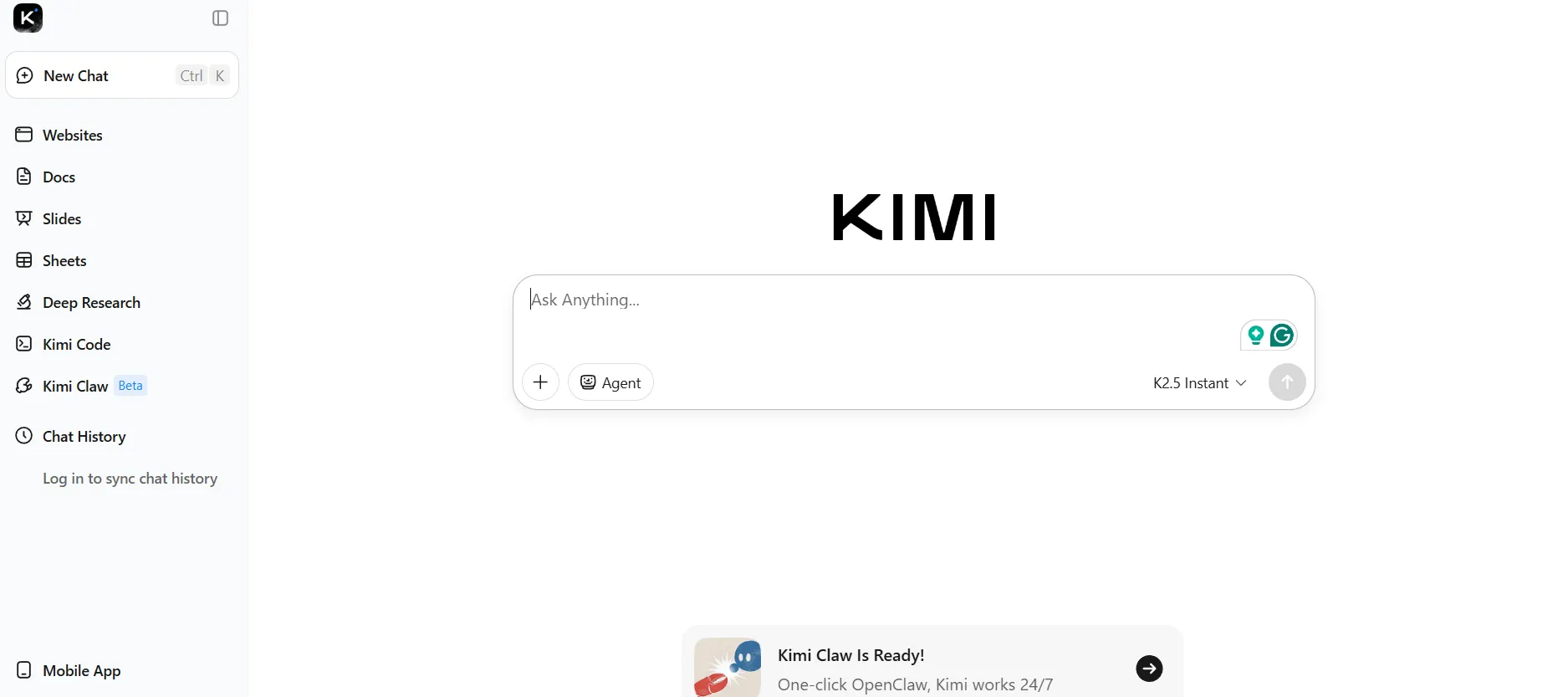
Kimi is Moonshot AI’s model built around long-context reasoning, coding, multimodal understanding, and agentic workflows. Its newest flagship is Kimi K3, which extends what the platform can do by adding a 1-million-token context window, native multimodal input, and stronger autonomous coding. The Kimi family has evolved across multiple generations and also offers specialized coding access through Kimi Code, aimed at software development, repository-level tasks, and agentic programming too. Another big differentiator is the platform’s open-model approach, which gives developers more room for experimentation and deployment than fully closed AI systems.
Kimi: Major Model Versions
Kimi K1
- Role: Early-generation Kimi model that established Moonshot AI’s focus on long-context AI.
- Key strength: Built to handle substantially longer documents and conversations than many other models from that same generation.
- Best for: Document analysis, research, summarization, and extended conversations.
Kimi K2
- Role: Big transition toward advanced reasoning, coding, and agentic AI, positioning Kimi as a serious competitor to leading frontier models, not only a long-context assistant.
- Key strength: Better coding and reasoning with a Mixture-of-Experts architecture that helps it allocate effort more effectively.
- Best for: Software development, technical research, reasoning, and AI agents.
- Significance: Kimi got
Kimi K2.5
- Role: Multimodal evolution that expanded Kimi beyond text-based AI and strengthened its ability to operate across different input types.
- Key strength: Kimi K2.5 brings text and visual understanding together, while keeping stronger coding and reasoning under the hood.
- Best for: Multimodal research, coding, visual analysis, and agentic workflows.
Kimi K2.7
- Role: Coding-focused advancement that helped establish the foundation for the dedicated Kimi Code development ecosystem.
- Key strength: improved software engineering, repository-level coding, and end-to-end autonomous development workflows.
- Best for: Developers, code generation, debugging, refactoring, and those more gnarly engineering tasks where you have to keep things straight in your head.
Kimi K3
- Role: This latest flagship Kimi K3 model represents Moonshot AI’s push toward frontier-level performance while still keeping the open-model stance more accessible.
- Key strength: long-context reasoning, multimodal understanding, coding, and autonomous agent execution.
- Architecture: large Mixture-of-Experts model with a 1-million-token context window.
- Best for: Large codebases, research, complex reasoning, multimodal tasks, and long-running agents.
Claude: The Speed and Workflow King
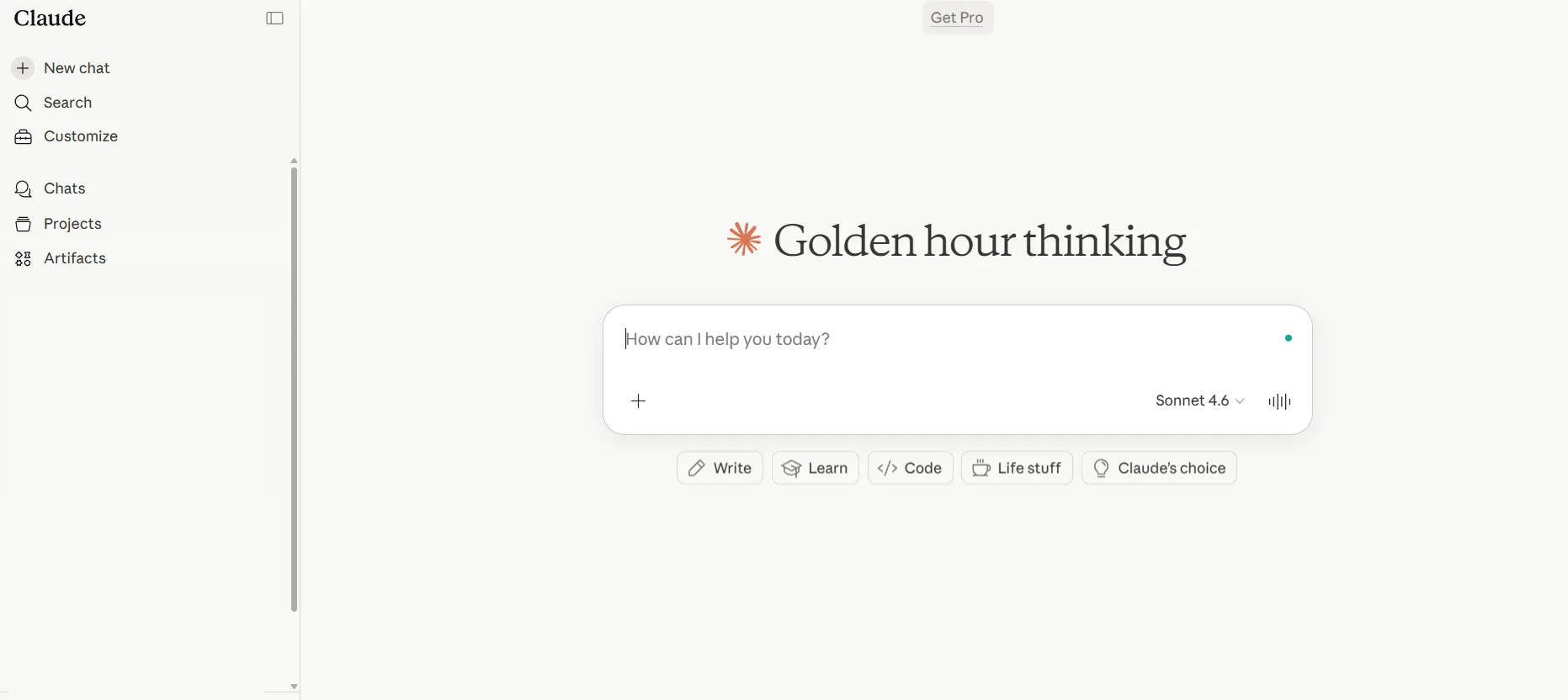
Claude is Anthropic’s AI platformClaude AI dashboard, built around reasoning, coding, writing, research, and enterprise-grade AI workflows. Claude’s current model family includes Claude Opus 4.8 and Claude Sonnet 5, with each tier aimed at different performance and cost requirements. Opus 4.8 is Anthropic’s flagship model for complicated reasoning, advanced coding, professional knowledge work, and autonomous agents, while Sonnet 5 leans into strong reasoning and coding performance at a lower cost. Claude’s ecosystem also includes Claude Code, which turns Claude into an agentic software development environment, capable of working across repositories, using tools, and coordinating complex coding tasks. Beyond individual models, Claude’s advantage is in the broader ecosystem, including API access, MCP integrations, enterprise controls, and workflow automation, all tied together.
Claude: Major Model Versions
Claude 1
- Role: Anthropic’s first Claude generation that set up Anthropic’s overall safety-first environment for large language models.
- Key strength: It stays focused on conversational AI, safety, helpfulness, and generally reliable instruction handling.
- Best for: Plain everyday conversations, writing, analysis, and knowledge-based tasks.
Claude 2
- Role: Major capability upgrade from the first Claude generation, pushing Claude’s usefulness beyond just chat-style applications.
- Key strength: Improved reasoning, coding, mathematics, and long-form answers.
- Best for: research work, programming, document digging, and professional writing tasks.
Claude 3 Family
- Role: The Claude 3 era added a three-level model strategy with Haiku, Sonnet, and Opus.
- Claude 3 Haiku: Built for speed, lower costs, and high-volume workloads.
- Claude 3 Sonnet: A balance of intelligence, responsiveness, and cost, good for general professional use.
- Claude 3 Opus: The top-tier model for the family, meant for complex reasoning and advanced analysis.
Claude 3.5
- Role: A performance-oriented evolution of Claude 3, which became especially well known for coding strength and helped improve Anthropic’s standing with developers, too.
- Key strength: Big boosts in coding, reasoning, instruction following, and computer interaction.
- Models: Claude 3.5 Sonnet and Claude 3.5 Haiku.
- Best for: End-to-end software building, content creation, research, and technical workflows.
Claude 3.7 Sonnet
- Role: A hybrid reasoning model, which marked a noteworthy shift toward systems where the model can dynamically allocate extra compute when the problem gets more complex.
- Key strength: It added extended thinking abilities alongside the usual quick replies you expect.
- Best for: Coding, math, deeper reasoning, and multi-step problems that need a careful route.
Claude 4 Family
- Role: The Claude 4 generation expanded reasoning noticeably and also added agent-like abilities. With Claude 4, the whole platform leaned further into autonomous AI agents and software engineering workflows.
- Claude Opus 4: A top-tier reasoning and coding model, aimed at tricky technical and professional work that’s more demanding.
- Claude Sonnet 4: A more budget-lean model, giving a pretty good mix of rapid responses and improved reasoning.
- Claude Haiku 4.5: The fastest near-frontier speed option, optimized for high-speed, low-cost utility.
Claude Opus 4.5
- Role: Advanced tuning of the Opus line that continued Anthropic’s push to get Claude to finish longer, more self-directed tasks without slowing down too much.
- Key strength: Better at coding and reasoning, computer use, and actually carrying out agentic tasks.
- Best for: Complex software engineering, research, analysis, and professional pipeline tasks.
Claude Opus 4.6
- Role: A further evolution of Anthropic’s main reasoning model that also reinforced Claude’s spot as a more enterprise-oriented frontier AI platform.
- Key strength: Stronger long-context reasoning, better coding, improved tool usage, and more reliable agentic workflows.
- Best for: Big-scale software development, research, enterprise automation, and serious knowledge work.
Claude Opus 4.8
- Role: The current flagship Claude model, representing the high-performance edge of the current Claude setup.
- Key strength: Advanced coding, reasoning, computer use, solid professional knowledge, and autonomous agents.
- Best for: Complex software engineering, research, enterprise automation, and the more demanding agentic workflows that take time.
Claude 5 Family
- Role: Next-generation Claude model family focused on advanced reasoning, coding, multimodal understanding, and long-horizon agentic AI.
- Claude Sonnet 5: Mid-tier flagship default model featuring a 1M token context window, designed for multi-agent execution and driving browsers or terminals autonomously.
- Claude Opus 5: Powerful reasoning model that closes the gap to top-tier capabilities with native thinking loops enabled by default.
- Claude Fable 5 & Mythos 5: State-of-the-art long-horizon autonomy models designed for critical, heavy enterprise tasks and deep problem-solving.
Claude Sonnet 5
- Role: The latest high-performance Sonnet model, faster and cheaper. It helps make more advanced Claude-level capabilities easier to reach for high-volume runs, especially when your budget is tight.
- Key strength: It brings advanced reasoning and agentic-style actions to a more cost-efficient tier.
- Best for: Coding, research, productivity, automation, and production AI apps where costs can’t just explode.
Claude Opus 5
- Role: High-performance reasoning model that closes the performance gap with Anthropic’s highest-capability research models while making advanced reasoning available through the mainstream Opus tier.
- Key strength: Advanced reasoning with native thinking loops, allowing the model to spend additional computation on difficult problems.
- Best for: Complex coding, deep research, advanced problem-solving, enterprise automation, and long-running agentic tasks.
Claude Fable 5 & Mythos 5
- Role: State-of-the-art models positioned above the conventional Claude 5 model tiers. These models represent Anthropic’s frontier-focused direction, extending Claude beyond conventional chatbot interactions toward autonomous systems capable of handling long-running, complex tasks.
- Key strength: Designed for long-horizon autonomy, deep reasoning, and highly complex problem-solving.
- Best for: Critical enterprise workloads, advanced research, complex agentic systems, and demanding professional applications.
- Access: Their availability is more restricted than mainstream Claude models, reflecting the additional safety and deployment considerations associated with frontier capabilities.
Kimi vs Claude: Based on Features
Coding & Software Development
When it comes to Kimi AI vs Claude for coding, both are now serious engineering models. Kimi K3 is pretty strong for long-horizon coding, visual development, and dealing with bigger repositories. The 1M token context can swallow very large codebases and documentation too, while Kimi Code gives you a more dedicated coding flow.
Claude Opus 4.8 still stays very competitive for production software engineering. Anthropic highlights upgrades in tool calling, coding stability, and autonomous execution. Also, Claude Code’s dynamic workflows can coordinate a ton of parallel subagents in the right setup. Sonnet 5 sits as the practical middle ground. It gives you many Opus-class coding abilities but at a lower price, which makes it ideal for everyday development.
Reasoning & Problem Solving
Kimi K3 was built for broad reasoning and long-horizon work, with reinforcement learning across general tasks, agentic behavior, and coding-related domains.
On the other hand, Claude Opus 4.8 is aimed at tricky reasoning where reliability and judgment are necessary. Anthropic also emphasizes its improved ability to identify uncertainty and catch flaws in its own work. Sonnet 5 narrows that difference quite a bit, especially when you enable higher reasoning effort, so in practice it can feel close enough depending on the task.
Writing & Content Generation
Claude is still solid for structured writing, revising work, research synthesis, and keeping a consistent voice over longer conversations. Sonnet 5 feels especially useful for everyday content pipelines, mainly because the cost is lower.
Kimi K3 is strong too for writing tasks, and it really shines with multilingual and multimodal input. It tends to be more helpful when the job includes images, docs, code, or other visual elements that need careful reading.
Long Context & Document Analysis
Both Kimi K3 and Claude’s newest models support context windows reaching up to 1 million tokens. What matters more now is workflow design. K3 is often picked by developers who want to pair huge context with an open model ecosystem. At the same time, Claude plugs long-context reasoning more directly into research, coding, and enterprise-style processes.
Speed & Response Quality
Speed depends on how much reasoning is being used, how complex the task is, what infrastructure you’ve got, and also what kind of agent setup you’re working with.
Claude Opus 4.8 has a fast mode that can reach up to 2.5× normal speed. Sonnet 5, on the other hand, is tuned for a better speed-to-intelligence tradeoff, especially when you’re dealing with high-volume production.
Meanwhile, Kimi Code offers a HighSpeed tier for supported workflows, and Kimi K3 also supports different reasoning-effort levels.
Multilingual Performance
Kimi has pretty solid multilingual abilities plus native visual understanding, so K3 tends to be handy for workflows where you mix languages, images, documents, and code together in one flow. Claude can also handle multilingual conversations well, and it has good document and image comprehension. Still, Kimi’s expansive multimodal setup can feel more appealing for certain visual development tasks and international workflows, depending on what you’re building.
Benchmark Comparison: Kimi vs Claude
The coding capabilities and complex reasoning of Claude Opus 4.6 make it the top software solution while Kimi K2.5 provides an open-weight solution that delivers exceptional performance value and unmatched parallel agent functionality.
| Benchmark | Claude Opus 4.6 | Kimi K2.5 |
| SWE-Bench Verified | 80.8% | 76.8% |
| SWE-Bench Pro (Public) | N/A (different benchmark) | N/A |
| Terminal-Bench 2.0 | 65.4% | N/A |
| OSWorld-Verified | 72.7% | N/A |
| GDPval-AA (Knowledge Work) | 1606 Elo (+144 lead) | N/A |
| ARC-AGI-2 (Reasoning) | 68.8% | N/A |
| Humanity’s Last Exam | 40.0% | 50.2% |
| Context Window | 1M tokens (beta) | 256K tokens |
Source: BuiltfastwithAI
Kimi vs Claude Price Comparison
| Model | Input / 1M tokens | Output / 1M tokens | Context |
| Kimi K3 | $3 | $15 | 1M tokens |
| Claude Sonnet 5 | $3 | $15 | 1M tokens |
| Claude Opus 4.8 | $5 | $25 | 1M tokens |
Recommended Use Cases & Example Prompts
Kimi K2.5: Ideal for design-to-code and visual-driven tasks.
Example: “Generate responsive HTML/CSS from this UI mockup image, using Tailwind classes”. Use Kimi Code CLI for coding tasks, and Kimi’s Agent Swarm mode for large parallel tasks (e.g. multi-file refactoring). Kimi can assist with technical content creation (e.g. “Explain this architecture diagram in simple terms”), leveraging its vision capability.
Claude (Sonnet/Opus): Suited for writing and knowledge tasks.
Examples: “Draft a landing page blog post on [topic] with an engaging tone.”; “Plan a social media campaign for product X with bullet points.”; “Analyse this chart (image attached) and summarise insights”. Claude Code (agent) excels for complex code reviews or debugging prompts. For creative ideation: “Brainstorm 5 innovative UI designs for a mobile app,” using Claude’s long-context to maintain context across suggestions.
Strengths, Weaknesses, and Decision Guidance
Kimi’s Strengths:
- Demonstrates exceptional multimodal capabilities through its ability to process image, video, and audio inputs.
- The Agent Swarm system enables organisations to automate intricate processes.
- Strong visual-to-code capabilities, enabling user interface development and user experience design.
- Offers developers a more flexible ecosystem that provides better opportunities to create projects.
Kimi’s Weaknesses:
- Lower accuracy when reasoning about deep code due to decreased reliability.
- Displays output consistency problems during complex tasks.
Claude Strengths:
- Provides exceptional capacity to comprehend long texts beyond typical limits.
- Delivers dependable performance for programming, debugging, and academic research activities.
- The MCP framework provides organisations with a systematic method to connect their systems through various tools and application programming interfaces.
- Produces dependable output results that maintain high safety standards and output consistency.
Claude Weaknesses:
- Fewer multimodal functions than Kimi, which limits its capabilities.
- Restricted options for testing in open environments.
- Restricts users’ ability to fully customise their experience because it operates within a highly regulated environment.
Kimi vs Claude: Which One Should You Choose?
Picking between Kimi vs Claude is less about the exact model specs, and more about what the platform feels like in day-to-day use.
Kimi is a strong choice for developers, researchers, and technical teams looking for long-context processing, multimodal capabilities, open-model flexibility, and greater control over how AI can be integrated into their workflows. Its ecosystem is particularly appealing for experimentation, large-scale document analysis, coding, and agentic applications.
Claude, on the other hand, offers a more mature platform for professional and enterprise use, with a strong emphasis on reliable reasoning, software development, research, workflow automation, and security. Its broader ecosystem, including Claude Code, API integrations, MCP support, and enterprise features, makes it easier for organizations to deploy AI across established business and development environments.
If flexibility, openness, and experimentation are priorities, Kimi may be the better fit; if reliability, enterprise readiness, structured workflows, and a mature AI ecosystem matter more, Claude is the stronger choice. Ultimately, the better platform depends on your team’s technical requirements, deployment environment, budget, and the type of work you expect AI to handle.
Conclusion
So, is Kimi better than Claude? Honestly, there isn’t a clean universal winner.
Kimi K3 has closed a lot of the gap with the top proprietary systems, and it feels extra compelling because it stacks frontier-level abilities with a 1M-token context window, multimodal reasoning, and an open-weight approach. Claude still tends to win overall for groups that care about managed enterprise workflows, tough software engineering tasks, research reliability, and a more mature agentic ecosystem.
If you’re thinking more like a developer, the Kimi code vs Claude code call mostly comes down to whether you prefer openness and flexible customization, or you want a polished, managed coding environment that stays consistent. For research teams, Claude often gives you an edge on structured reasoning and professional workflows. Meanwhile, Kimi is attractive for multimodal, multilingual, and large-context experimentation, where the setup can be wider and more experimental.
Probably the most practical method is to run both through your own repositories, docs, and actual agent workflows. Benchmark numbers are a starting line, but your day-to-day workload is what really decides.
FAQ
Is Kimi K3 better than Claude Sonnet 5?
Kimi K3 is competitive with Sonnet 5 across multiple frontier-style evaluations. It has a 1M-token context window, native vision, plus an open-weight strategy. Sonnet 5 has a more settled enterprise ecosystem and tends to shine on cost-efficient agentic performance. The better pick comes down to your workflow and how you deploy it.
Which AI model is best for coding?
Claude Opus 4.8 is one of the strongest choices for complex production coding, particularly when used with Claude Code. Kimi K3 is an excellent alternative for long-context, multimodal, and open-model development. Sonnet 5 is attractive when coding quality needs to be balanced against cost.
Which AI model offers better value for money?
Kimi K3 and Claude Sonnet 5 have comparable standard API pricing at $3 per million input tokens and $15 per million output tokens. Kimi’s $0.30 cached-input price can make repeated long-context workloads particularly economical, while Sonnet 5’s introductory pricing runs through August 31, 2026.
Is Kimi AI better than Claude?
It can be better for multimodal workflows, open model experiments, long-context tasks, and for developers who really want finer control. Claude can be better for enterprise-style coding, research workflows, polished professional writing, and more mature agentic patterns, where the system behaves in a “ready” way.
Which AI is stronger than Claude?
There isn’t really one model that wins across every benchmark or every workflow. Kimi K3, OpenAI’s GPT lineup, and other frontier systems can beat Claude on specific evaluations. The only real answer depends on what you’re doing, which exact version you’re using, what tools are involved, how much context you send, and how you evaluate.