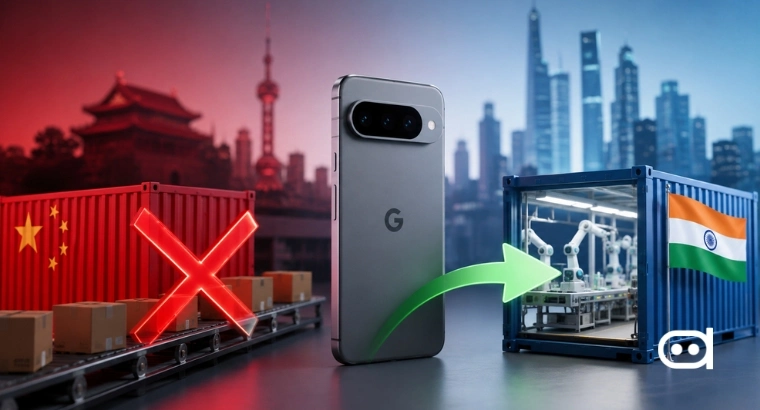
Google is preparing a major shift in its Pixel manufacturing, with Nikkei Asia reporting that the company plans to stop making Pixel smartphones, smartwatches and wireless earbuds in China from 2027. This move is part of Google’s broader push to reduce its reliance on China and boost production in Vietnam and India. While a lot of Pixel phones are still made in China, Google now believes it can complete the shift within the next year.
The company’s efforts in Vietnam have started to pay off, with high-end Pixel smartphones successfully developed and produced there this year. Building advanced smartphones is far more complex than making smartwatches or wireless earbuds, so managing it in Vietnam is a meaningful step for Google’s manufacturing plans. If everything goes according to plan, Google will become the second major smartphone brand after Samsung to fully shift production out of China.
Why Vietnam Is Central to the 2027 Plan
Vietnam is set to play a crucial role as Google aims to move Pixel production out of China. The company has been increasing manufacturing in both Vietnam and India, but being able to make high-end Pixel devices in Vietnam has boosted Google’s confidence in hitting its 2027 target.
Google’s progress in Vietnam suggests the country can handle that work, and the company began moving high-end Pixel development there earlier. Google also has an advantage Apple does not, since it does not sell Pixel phones in China. That means it doesn’t have to keep any production lines in China just to serve local customers.
The shift highlights how important Vietnam and India are now to Google’s manufacturing plans. Google is also working to boost Pixel shipments, even as the price of memory chips and other components keeps rising. The company has told suppliers it expects Pixel shipments to increase 8–10 percent this year from around 12 million units last year. That means Google is trying to grow its smartphone business while making a major change to how and where it builds its devices.
huge news.
— Tim Culpan (@tculpan) August 18, 2026
Part of a growing trend.
Exclusive: Google plans to stop making Pixel products in China in 2027 https://t.co/yKnPoFwrNN
Google Pushes Pixel Growth Despite Rising Memory Costs
Even as memory chip prices rise, Google isn’t giving up on higher Pixel shipments. Smartphones are becoming a bigger part of Google’s pitch to get more users onto its Gemini AI services, which is one reason the company keeps pushing to grow Pixel sales despite high component costs.
To strengthen its position with chip suppliers, Google is combining orders for chips used for its cloud-computing operations with those for its smartphones when negotiating with companies like Micron, Samsung, and SK Hynix.
Other major companies like Apple and Huawei are also pushing for higher shipments, while Xiaomi, Oppo, and Vivo have lowered their forecasts multiple times as expensive memory and other components put pressure on manufacturers.
The Pixel lineup could benefit further if Apple decides to raise iPhone prices. An executive from a supplier that works with both Google and Xiaomi said Google is one of the few phone makers not cutting shipment targets this year. The same executive said Google could grab U.S., Japanese, and European market share from Apple if iPhone prices go up.
Google has also increased Pixel’s starting prices with its latest launch. The Pixel 11 line now starts at $899 for 256GB of storage, compared with $799 for the Pixel 10, which came with 128GB at its entry price. Tariffs are doing much of the work here. Goods imported into the US from China have faced rates as high as 145%, against 46% from Vietnam and 26% from India, which has pushed Google to keep reassessing where it builds.
Apple is facing its own higher memory chip costs. CEO Tim Cook already warned that memory prices will be up across Apple’s entire lineup this quarter. The company has raised prices on some MacBook and iPad models and on iPhones in Japan.
Google is trying to do three things at once, shipping more Pixel devices, absorbing rising component costs, and relocating production out of China. Progress in Vietnam, along with a growing manufacturing presence in India, gives Google a high probability of meeting its 2027 goal. How well Google manages this shift could shape the future of Pixel and its role in the company’s broader Gemini AI ambitions. Building the Pixel 11 in Vietnam from scratch meant investing in testing equipment and tooling machines, then verifying and fine-tuning the production process. Nikkei had reported back in January that Google intended to develop and manufacture the Pixel 11 there. Google also benefits from the supply chain Samsung has already built in the country. Google India managing director Mitul Shah addressed the Pixel 11 price rise directly, saying India is not price sensitive but value sensitive.