Meta has launched Muse, a personal AI agent designed to carry out tasks for users rather than simply respond to questions. The company says Muse can work across everyday services, helping with activities such as email, travel, shopping and planning. It launched on September 8 for US users aged 18 and over, through iOS, Android, muse.ai and WhatsApp, with AI glasses support to follow. The launch puts more attention on AI systems that can take actions on a user’s behalf, rather than requiring people to complete each step themselves. At the same time, giving an AI access to personal services introduces questions around permissions, privacy and how users retain control over actions taken by the system.
Introducing Muse, your personal AI agent from Meta that gets things done across every part of life.
— Muse (@Muse) September 8, 2026
Download the Muse app and get started: https://t.co/KBjYWfshGo pic.twitter.com/1exp56xj93
What Muse Is Designed To Do
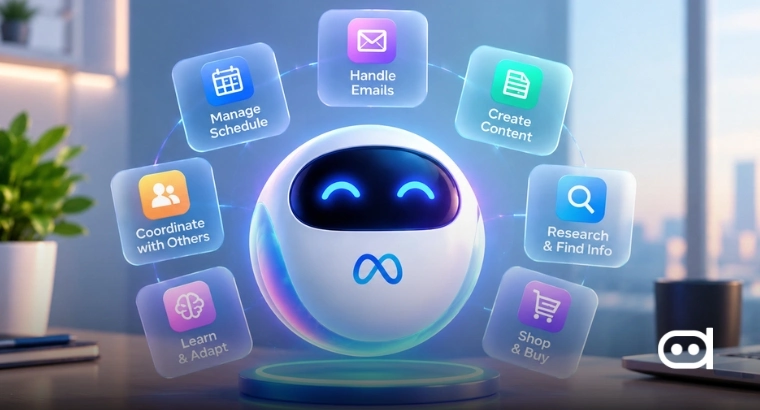
Meta describes Muse as a personal AI agent that can take a request and work through the steps needed to complete it. Unlike a conventional chatbot, it is designed to interact with websites and connected services, allowing it to carry out tasks rather than simply provide instructions. According to Meta’s announcement Muse can send emails, book travel, fill out forms and make purchases, connecting to categories including email, calendars, payments, health, shopping and smart home.
The official describes the product as a personal AI agent that “gets things done across every part of life.” The post is mainly a launch announcement, so its main value for the story is showing how Meta is positioning Muse rather than independently verifying all of the system’s capabilities. A separate service provides a longer list of tasks it says Muse can handle, including managing and sending emails, signing documents, shopping online, booking reservations and travel, and connecting with apps already used by customers.
Meta just launched Muse, its personal AI agent, today. Here's what you need to know.
— AGTP (@AGTPinsights) September 8, 2026
Muse is built to take real tasks off your plate, not just answer questions. It can shop online, manage and send emails, sign documents, book reservations and travel, and connect across the apps… https://t.co/uFQTMrVYxC
Some of those capabilities are also described in independent coverage of the launch. Reuters reports that Muse can access different categories of apps and perform tasks such as emailing, selling items and booking travel. Muse runs on Muse Spark, the model family Meta released version 1.3 of on September 2, built for coding and agentic work. The model is part of Meta’s work on systems that can use tools and complete longer-running tasks. The practical difference is that Muse is intended to handle several steps of a task instead of waiting for instructions after every action. That could mean researching a trip, filling in the relevant information and returning to the user when approval is required.
How Muse Secure VM and Sentinel Work
Users choose which apps Muse can reach and can distinguish read from write access, scoping permissions to a task, service or time period. Meta says the system requires approval for sensitive actions and provides information about what it has done and what it intends to do. Each user gets a dedicated cloud machine called Muse Secure VM, holding the agent, its data and connected-service credentials, isolated from other users’ agents. Meta says the model cannot read stored passwords or payment details. A separate agent called Sentinel reviews actions before they reach the internet and can require approval.
Those controls matter because an agent capable of sending emails, making purchases or booking travel needs access to information that a conventional chatbot may not require. Security has also been a consideration during development. Reuters reported internal testing found security and reliability problems. Vishal Shah, Meta’s VP of AI products, said an earlier April release was delayed to address them.
Meta’s policies do not allow it to look inside a user’s Secure VM, but it technically could, David Singleton, Superintelligence Labs VP of engineering for consumer products, told Wired. The planned Confidential VM would run each machine in a trusted execution environment with user-held keys, which Meta says would lock out even itself. It is due later in 2026. The company also plans to bring Muse to its AI glasses in the future, according to Wired. Muse is initially rolling out in the US through iOS, Android, the web and WhatsApp. Muse is free within a usage allowance, with heavier use tied to Meta’s AI subscription plans. Meta executives said requiring approval for every small action leads users to approve reflexively, which is why only sensitive actions prompt. That trade-off between friction and oversight is the design question the product now has to answer in practice.
You may also like to read – Meta Says Muse Spark 1.3 Beats GPT-5.6 Sol at Coding