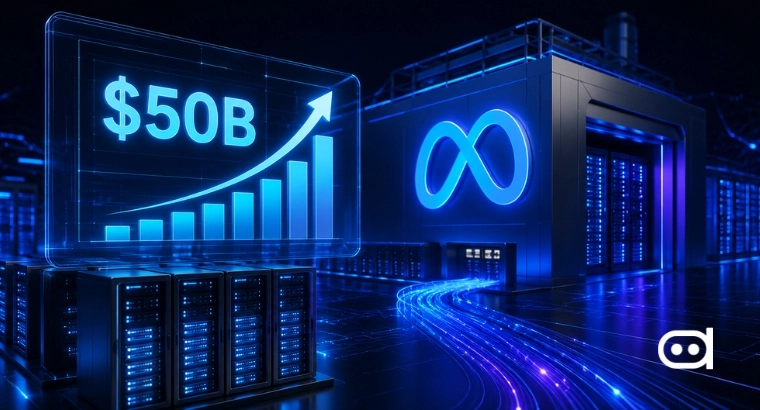
Meta has broadened its artificial intelligence infrastructure vision, declaring that its Hyperion data center supercluster in Louisiana has increased in cost. It has risen to $50 billion and will eventually scale to 5 gigawatts. The change is nearly double earlier calculations and depicts the company’s focus on acquiring computing power to support upcoming artificial intelligence models. As competitiveness increases among hyperscalers, the expansion also emphasizes how states are using tax exemption and energy resources to appeal to large-scale AI infrastructure projects. It is also rapidly growing to fulfill Meta’s long-term AI ambition.
Why is Meta Expanding the Hyperion Project?
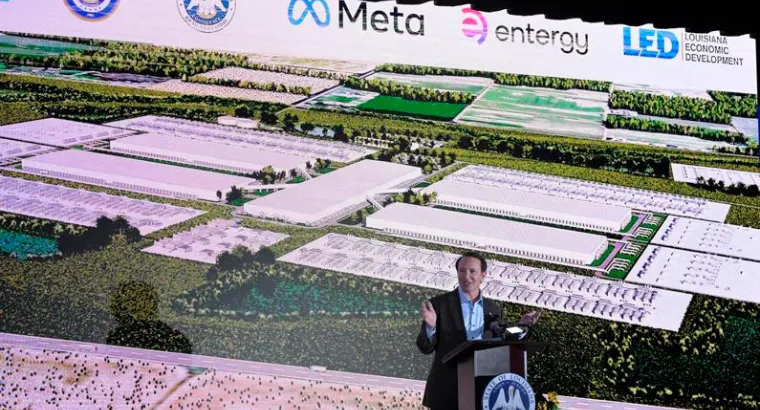
Meta’s plan to expand the Hyperion project is driven by one motive, which is securing the needed capacity for its long-term AI vision. Originally planned as a 2-gigawatt facility with a cost of $27 billion under an alliance with Blue Owl Capital, the project has now grown into a 5-gigawatt supercluster expected to cost more than $50 billion. Unlike conventional data centers, AI superclusters are built with massive GPUs and specialized hardware created for running advanced models. As artificial intelligence models grow, organizations need massive compute capacity to maintain dominance. Meta said Hyperion is expected to reach 2 gigawatts by 2030, while the full 5-gigawatt structure will take place over the coming years.
Louisiana positioned itself as a region for huge artificial intelligence architecture funding by offering exemptions that lower operating costs. In late 2024, the state introduced a 20-year sales tax incentive for data centers built before 2029. As part of its effort to acquire Meta’s investment, the organization is also investing more than $1 billion in native architecture development, including roads, water systems, and wastewater facilities.
Meta stated it will partake the full cost of energy, water, and other infrastructure needs for Hyperion, saying customers will not be liable to bear those expenses. Since the development began in December 2024, Meta said local businesses have already secured more than $1.6 billion in contracts related to the project, reflecting the monetary impact on the buildout.
What Does the Expansion Signify for Meta’s AI Strategy?
The expanded Hyperion project highlights how computing architecture is key to Meta’s blueprint. The declaration follows the company’s release of two major artificial intelligence models under Meta Super Intelligence Labs, led by AI chief Alexandr Wang. Stakeholders have focused on whether Meta’s gigantic AI spending will lead to long-term returns, making architecture a priority rather than just an investment mechanism.
CEO Mark Zuckerberg has previously described Hyperion as a huge cluster capable of a magnitude of 5 gigawatts, adding that Meta Super Intelligence Lab will have better levels of compute and the highest computing capacity per researcher. The new budget also highlights that Meta is spending more than initially planned to ensure sufficient AI architecture, as competition increases with Microsoft, Alphabet, Amazon and other hyperscalersMeta Hyperion.
Meta’s newest funding highlights a comprehensive industry trend in which artificial intelligence dominance relies on high-end computing infrastructure. States are contending to attract hyperscaler investments through tax exemptions, energy resources, and support, while technology companies continue to spend excessive money to expand AI-ready facilities. The Hyperion project’s cost has risen from an estimate of $10 billion when first announced to more than $50 billion today, which is a fivefold increase. This depicts how fast AI infrastructure is growing. Rather than halting investment despite increasing costs, Meta is fastening its buildout, suggesting that computing capacity is one of the major components.
Meta’s plan to extend Hyperion into a five gigawatt AI supercluster valued at more than $50 billion depicts the growing necessity of computing power in the AI niche. While Louisiana’s funding and architecture support have helped make the project feasible, the larger story is Meta’s urge to dramatically increase spending to secure AI capacity. It will require ahead, as hyperscalers continue to contend for artificial intelligence dominance. The race is increasingly being defined not just by model quality, but by who can build the most powerful computing architecture.