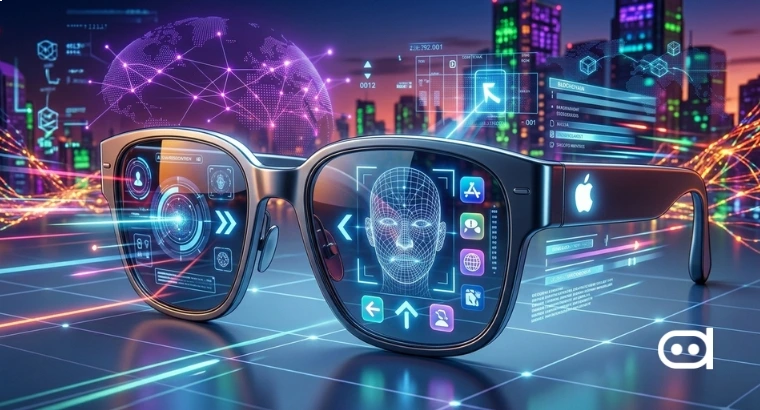
- Apple is developing AI powered smart glasses focused on cameras, audio, and voice interaction instead of full augmented reality displays.
- The devices are expected to be announced around late 2026, with a broader release likely in 2027 as they are still in testing with multiple styles.
- The push includes leadership changes and a renewed focus on wearable intelligence amid a broader shift in Apple’s AI strategy.
Apple’s next big bet might not sit in your pockets but on your face. According to recent reports, the company is currently testing a new generation of smart glasses that lean heavily toward artificial intelligence which marks a notable shift from its earlier ambitions in augmented reality. These glasses are being designed in a way they blend easily into daily life closer to a fashion accessory than a piece of clearly visible tech unlike the futuristic, display-heavy headsets that have dominated headlines in recent years.
The glasses aim to be an always available AI companion at their core. They are equipped with cameras, microphones, and speakers that would allow users to capture moments, interact with a voice assistant, and receive contextual information about their surroundings. The focus is on enhancing awareness through audio and smart interpretation and not on overlaying digital graphics into the real world. This way, the product is positioned as both a practical tool and a step forward towards more advanced wearable technology.
From Complex AR to Simple AI Environments
One of the most interesting things about these glasses is that they are not focused on computer-mediated reality. A lot of people expect Apple to create glasses that will show digital media right in front of their eyes. Maintaining battery life, heat, and making the device comfortable to wear for long periods of time is what makes this technology difficult to perfect.
Instead of following the difficult approach, Apple appears to be taking a simpler and more practical one. The glasses are being built around artificial intelligence which will help you understand what you are looking at and help you in real time. The glasses would be capable enough to recognize objects, give you information about places, and help you remember daily tasks. All of these things would only happen through audio, hence a visible screen would not be needed.
People would have an easier time accepting and adapting to these glasses with this approach. Most people are not comfortable wearing large high tech headsets in public, but daily wear looking glasses that subtly add useful features would feel much more comfortable and natural. This is a slower but smarter step forward.
Also read: Apple’s First Ever Foldable iPhone Might Not Release This Year; Here’s Why
Design and the Growing Competition
Apple is majorly focusing on how these glasses look. Reports suggest that the company is testing both rectangular and round frames in different colors. This reflects how Apple understands the fact that people would only wear these glasses if they like the way they look on them.
The glasses are being designed to be useful in daily life. Small and simple uses like giving directions to someone, taking a quick photo without using your hands, or listening to messages when you can’t check your phone, could make a big difference in how often people rely on this device.
But, Apple is not the only company working on this idea. Smartglasses with cameras and audio features have already been released by some companies. However, the success of these products has been a little mixed, hence, Apple will need to solve problems like users worrying about privacy because of built-in cameras and feeling that the features are still limited, if it wants its products to stand out.
Wrapping Up
Apple’s smartglasses are about slowly bringing technology closer to people in a way that feels natural and easy to use, and it’s not about just creating a futuristic world overnight. The company chose a more practical path, for now, by choosing to focus on voice, sound, and smart features instead of complex displays. They may not replace smartphones, but have the potential to become a useful and helpful companion which makes everyday tasks easier. These glasses could change how people use technology everyday if everything goes as planned.